
A curtsy lunge performed with a landmine-anchored barbell, stepping one leg back and across behind the other. Builds hip and glute strength through a rotational, single-leg loading pattern.
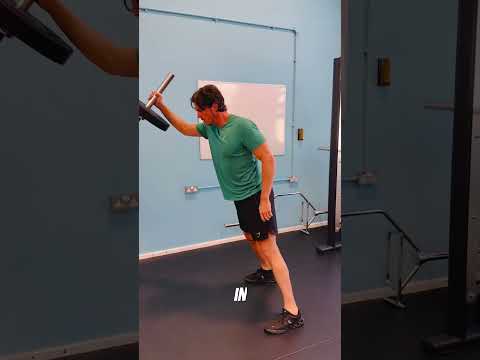
A thruster variation using a landmine-anchored barbell, combining a squat with a pressing motion. Builds power and strength through the hips and upper body together.
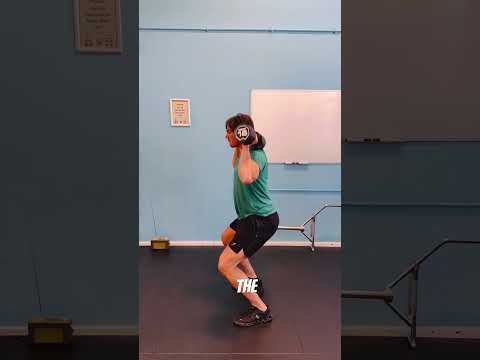
A combination squat-to-overhead-press movement performed with dumbbells. Builds full-body power and strength, integrating the hips, legs, and shoulders in one movement.

A Romanian deadlift variation performed with a landmine-anchored barbell, hinging at the hips under load. Builds hip and hamstring strength with a stable, guided bar path.

A full deadlift performed with a kettlebell, hinging at the hips to lift the weight from the floor. Builds hip, hamstring, and glute strength through a fundamental strength pattern.

A partial-range deadlift performed from an elevated position with a kettlebell, reducing range of motion while still loading the hip hinge. Builds hip and posterior-chain strength with less stress through the lower range.

A Romanian deadlift performed with dumbbells, hinging at the hips while keeping the knees softly bent. Builds hamstring, glute, and hip strength through a controlled hinge pattern.

A hip-hinge exercise performed with a barbell across the back, bending forward from the hips with a flat back. Builds posterior-chain and hip strength, and reinforces safe hinge mechanics for deadlifting.

A side-to-side lunge that loads one leg through a lateral range of motion while the other leg stays straight. Builds hip and groin strength along with lateral stability.

A lateral squat variation that shifts weight fully to one side, opening the hip into a deep, loaded range. Builds hip mobility and single-leg strength together.

A loaded barbell back squat performed through a full range of motion. Builds overall lower-body strength and hip loading tolerance, useful in later-stage strength and conditioning programs.
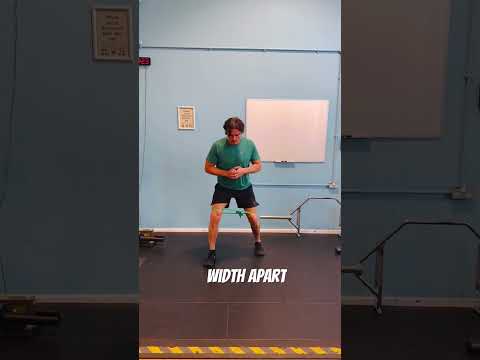
A quadruped bear crawl that challenges full-body coordination, core bracing, and hip and shoulder stability as the limbs move. Builds functional strength and control that carries over to more dynamic movement.

A lunge performed using a step to build single-leg strength and control. Lowering under control with the knee tracking over the foot loads the quads and glutes. A foundation lower-limb strengthening exercise.

A squat performed on a Bosu or wobble surface to challenge balance and control. Managing the unstable base recruits the stabilising muscles around the ankle and knee while strengthening the legs. A progression that adds a balance element to the basic squat.

A lunge performed with a foot on a Bosu or other unstable surface to add a balance challenge. Controlling the wobble while lunging builds single-leg strength alongside ankle and knee stability. A mid-stage exercise combining strength with balance training.

Jogging on the spot with brief holds added to challenge balance and control. The light, repeated foot contacts reintroduce running-style loading, while the holds test single-leg stability. A useful early return-to-running and calf-conditioning drill.

A bent-over row using free weights to build strength in the upper back and shoulder-blade muscles. Rowing toward the lower ribs while keeping a flat back works the scapular retractors and posterior shoulder. A staple pulling exercise for shoulder and posture rehab.

A bent-over rowing exercise using a resistance band to strengthen the upper back and shoulder blades. Drawing the hands toward the lower ribs trains the muscles that retract and stabilise the scapula, supporting posture and shoulder health. The band offers an adjustable, joint-friendly load.

A reactive press-up where you fall onto a waist-height surface and catch yourself, absorbing through the arms. The drop-and-catch trains the shoulders and chest to handle quick loads in a controlled, manageable way. A mid-level step toward more demanding plyometric push-ups.

An explosive push-up where the hands leave the floor for a clap before landing. This high-level plyometric develops upper-body power and the ability to absorb and produce force quickly. Suited to the final stages of rehab or to athletic conditioning.

A reactive shoulder drill controlling a gentle fall toward a doorway and catching yourself with the hands. The quick load-and-absorb action trains the shoulder to react to and control sudden forces. A higher-level exercise for building reactive shoulder strength and confidence.

An eccentric-focused wrist exercise that emphasises the slow lowering away from the thumb side with a dumbbell. Eccentric loading is often well tolerated and effective for building tendon and muscle capacity around the wrist. Used to progress radial-side wrist strength under control.

A weighted wrist exercise training movement toward the thumb side in both the lifting (concentric) and lowering (eccentric) directions. Working both phases with a dumbbell builds balanced strength and control in the wrist's radial deviators. A progression for later-stage wrist and forearm rehab.

A loaded version of the dart-thrower's motion, the natural diagonal wrist movement used in many everyday and sporting tasks. Adding a light weight builds strength and control through this functional pattern, from thumb-up extension toward little-finger-side flexion. A later-stage wrist exercise once basic range and strength have returned.


An RDL performed with a kettlebell to load the posterior chain.


A deadlift using a hex (trap) bar, which is often easier on the lower back.


A loaded knee extension to strengthen the quadriceps through range.

A squat holding a single weight at the chest, encouraging good depth and posture.

A guided single-leg hinge using the Smith machine for added stability.


An anti-rotation cable or band chop performed in a half-kneeling lunge.


A stationary split-stance squat with dumbbells to build single-leg strength.


Small, low-impact star jumps to introduce gentle hopping and ankle loading.


A maximal horizontal jump for developing lower-limb power and landing control.

An explosive split-stance jump alternating legs to build single-leg power.

A powerful press-up driving the body up off the floor to build upper-body explosiveness.
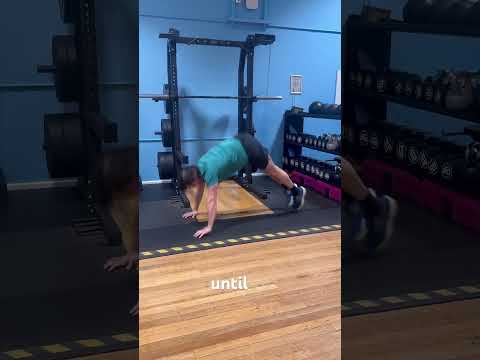
An explosive upper-body press-up where the hands leave the floor.

A fast, springy single- or double-leg hop training lower-limb stiffness and power.

A reactive plyometric linking a controlled landing to an explosive horizontal jump.


A back squat to a box that controls depth and teaches a confident sit-back.

A barbell squat with the load racked at the front to load the quads and trunk upright.

A foundational barbell lift for building posterior-chain strength from the floor.
