
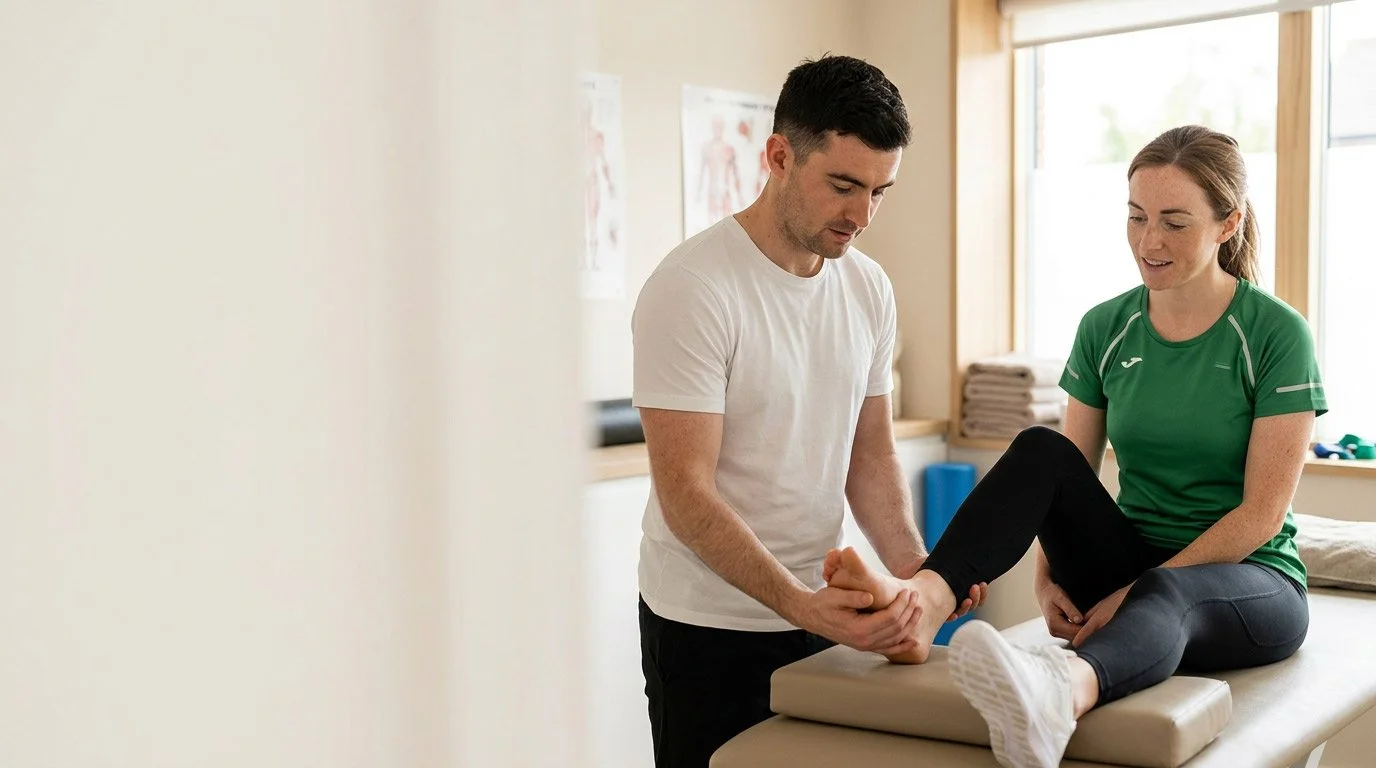
Foot & Ankle
Pain Treatment
Specialist physiotherapy to help reduce foot and ankle pain, restore strength and stability, and get you back to walking, running, training, and sport with confidence.
What Causes Foot & Ankle Pain?
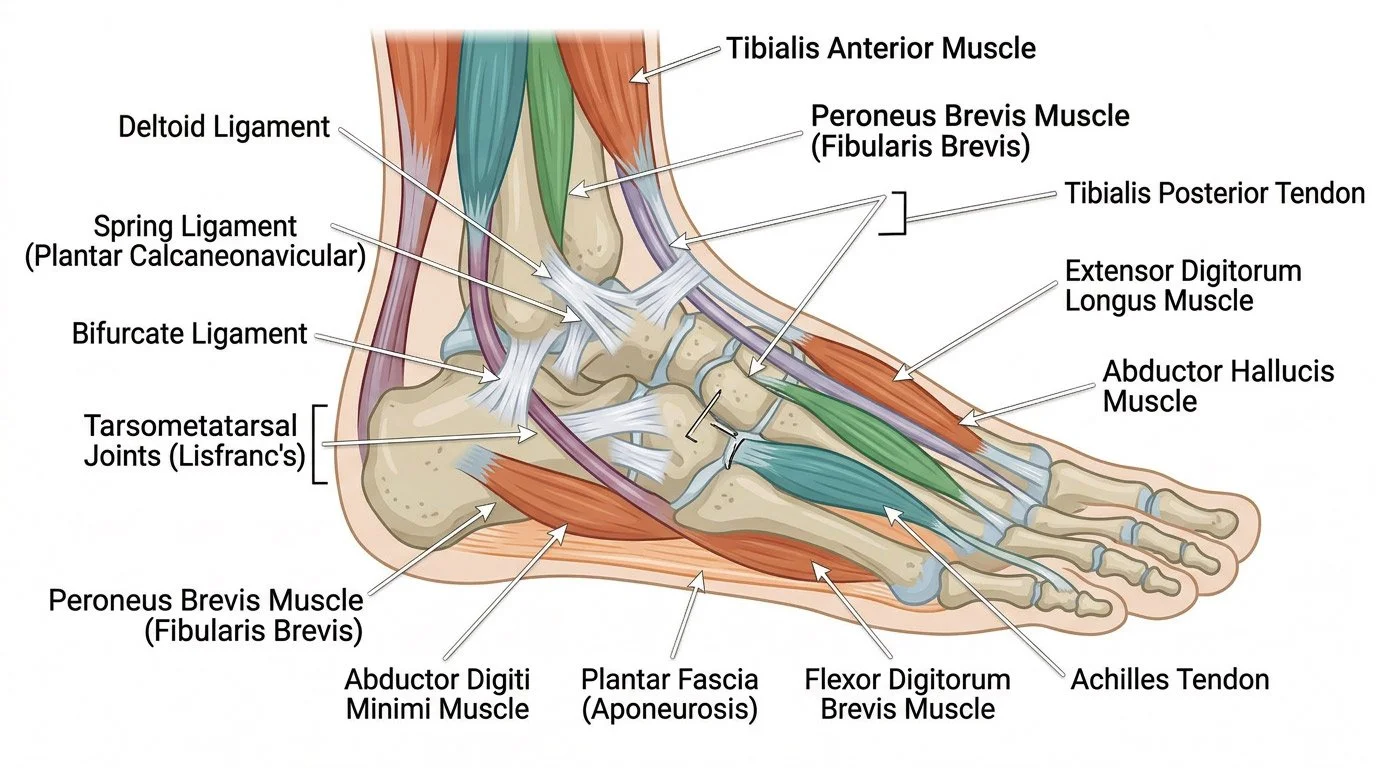
Foot and ankle pain can affect how you walk, stand, run, train, and move through everyday life.
The foot and ankle are designed to absorb force, provide balance, and support your body during movement. Because they take repeated load with every step, symptoms can develop when the joints, muscles, tendons, ligaments, or bones become irritated, overloaded, stiff, weak, or injured.
Pain can come on suddenly after a twist, fall, awkward landing, or sporting injury. It can also build gradually over time due to changes in training, footwear, running load, prolonged standing, weakness, reduced mobility, or poor movement control.
At Rebuild Physiotherapy, we look at more than just the painful area. We assess how your foot, ankle, knee, hip, and pelvis are working together so we can identify what is driving your symptoms and create a clear plan to help you recover properly.
Common Foot & Ankle Problems We Treat
-
Achilles tendinopathy is irritation or overload of the Achilles tendon, which connects the calf muscles to the heel.
It often causes pain, stiffness, or tenderness at the back of the heel or lower calf. Symptoms may be worse first thing in the morning, at the start of activity, after running, or following long periods of walking, jumping, or hill work.
This condition is common in runners, field sport athletes, gym-goers, and people who have recently increased their activity levels.
Physiotherapy focuses on reducing tendon irritation, improving calf strength, managing training load, and gradually rebuilding the tendon’s ability to tolerate walking, running, jumping, and sport.
-
A lateral ankle sprain happens when the ankle rolls outwards, overstretching or injuring the ligaments on the outside of the ankle.
It is common in sports that involve jumping, landing, twisting, or quick changes of direction. Symptoms can include pain, swelling, bruising, stiffness, weakness, and difficulty trusting the ankle.
Some people continue to experience ongoing instability after an ankle sprain, where the ankle feels weak, unreliable, or prone to giving way.
Physiotherapy helps restore movement, rebuild strength, improve balance and control, and reduce the risk of repeat sprains. Rehabilitation is progressed towards walking, running, jumping, landing, and sport-specific movements depending on your goals.
-
An ankle fracture is a break in one or more of the bones around the ankle joint.
This can happen after a fall, twist, direct impact, or sporting injury. Depending on the type of fracture, treatment may involve a boot, cast, or surgery.
After a period of immobilisation, it is common to experience stiffness, swelling, weakness, reduced balance, and difficulty walking normally.
Physiotherapy plays an important role in recovery by helping restore ankle movement, rebuild calf and lower limb strength, improve walking pattern, reduce stiffness, and gradually return you to daily activity, work, exercise, or sport.
-
Posterior tibial tendon dysfunction, often called PTTD, involves irritation, weakness, or reduced function of the tendon that helps support the arch of the foot.
It can cause pain on the inside of the ankle or foot and may be associated with a gradual flattening of the arch, difficulty walking longer distances, or discomfort during running, stairs, or standing for long periods.
PTTD often develops gradually when the tendon is exposed to more load than it can comfortably manage.
Physiotherapy focuses on reducing irritation, improving foot and ankle strength, supporting the arch, improving calf and lower limb control, and gradually rebuilding tolerance to walking, running, and daily activity.
Foot Resources & Treatments
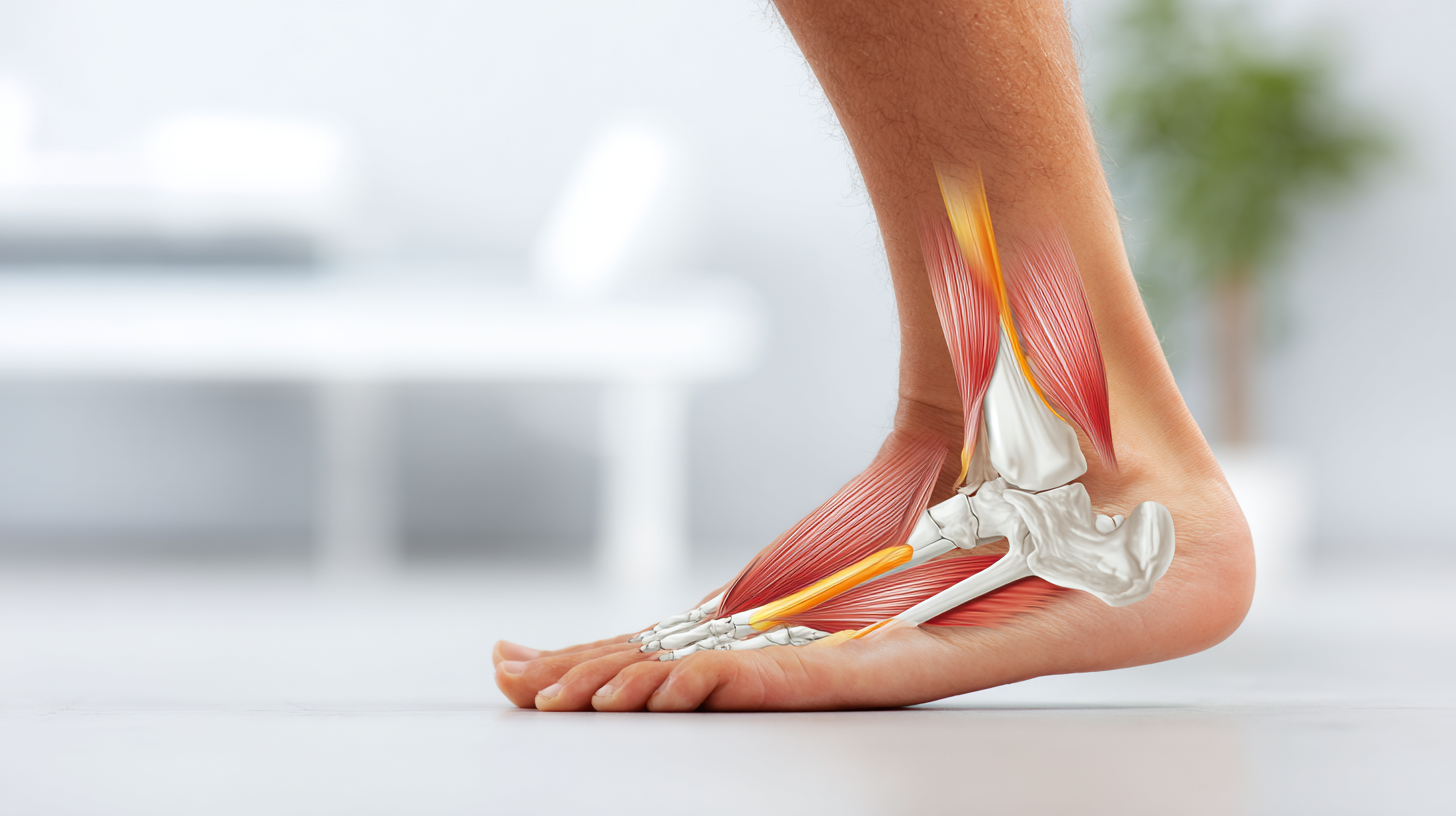
Achilles tendinopathy is a common condition that can cause pain, swelling and stiffness in the tendon that connects your calf to your heel — the same tendon that powers every step, sprint and jump you make. In our latest blog, we explain what Achilles tendinopathy really is, why it happens, typical symptoms you should watch for, and how structured physio strategies can help you manage pain and get moving again.