
Hip & Pelvis
Pain Treatment
Specialist physiotherapy to help reduce hip and pelvis pain, improve movement, rebuild strength, and get you back to everyday life, training, and sport with confidence.
What's Behind Your
Hip & Pelvis Pain?
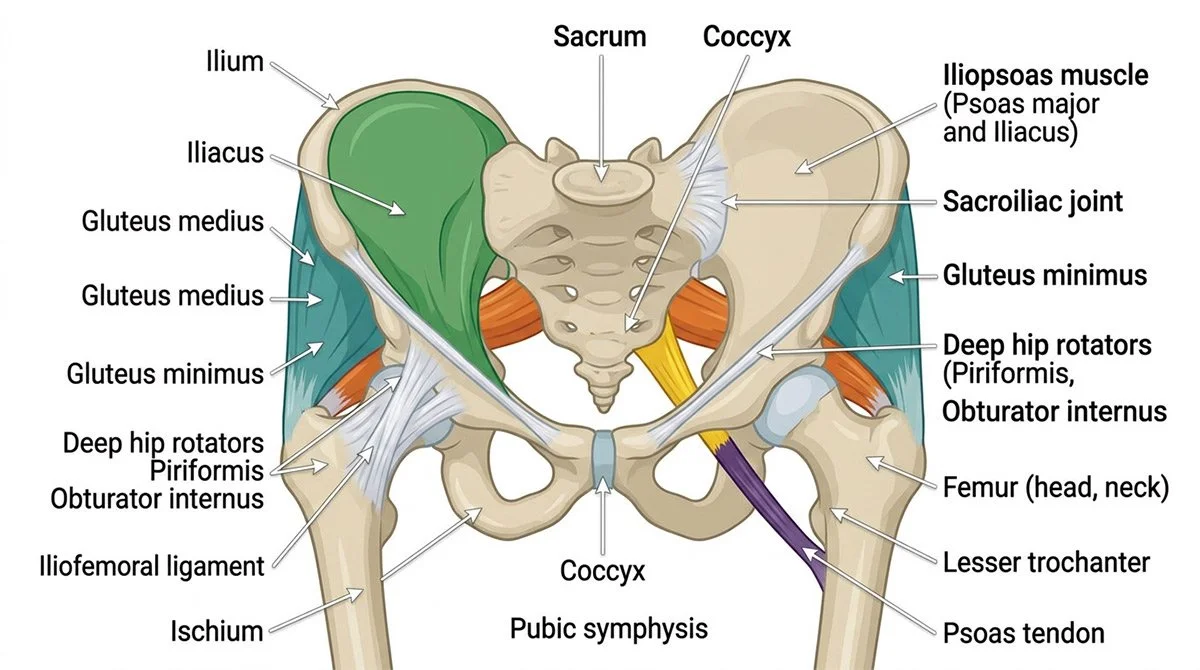
Hip and pelvis pain can come from many different areas, including the hip joint, surrounding muscles, tendons, ligaments, lower back, groin, or pelvic region.
Because the hip and pelvis work closely together during walking, running, lifting, sitting, and sport, pain is not always caused by one single structure. Symptoms can develop when the area becomes overloaded, stiff, weak, irritated, or when movement patterns have changed over time.
Some people experience pain after a specific injury, fall, surgery, or sporting incident. Others notice symptoms building gradually through training, work, pregnancy, arthritis, or long periods of sitting.
At Rebuild Physiotherapy, we take time to understand what is causing your symptoms, how it is affecting your movement, and what needs to change to help you recover properly.
Common Hip & Pelvis Problems We Treat
-
FAI, or femoroacetabular impingement, happens when the hip joint does not move as smoothly as it should. This can create a pinching or catching sensation, usually felt at the front of the hip or deep in the groin.
Symptoms are often worse with squatting, sitting for long periods, running, gym movements, twisting, or bringing the knee up towards the chest.
Physiotherapy can help by improving hip strength, movement control, mobility, and load tolerance. Treatment focuses on reducing irritation, improving how the hip and pelvis move together, and helping you return to daily activity, training, or sport with more confidence.
-
Hip arthroscopy is a keyhole surgery often used to treat problems inside the hip joint, such as labral tears or FAI.
After surgery, physiotherapy is an important part of recovery. Rehabilitation usually focuses on protecting the hip early on, restoring movement, rebuilding strength, improving walking pattern, and gradually returning to exercise or sport.
At Rebuild Physiotherapy, we guide you through each stage of your rehab with a clear plan that matches your surgery, your symptoms, and your goals.
Learn More -
Hip dysplasia is when the hip socket does not fully support the ball of the hip joint. This can place extra stress on the joint, surrounding muscles, and soft tissues.
Some people with hip dysplasia may have a procedure called a PAO, or periacetabular osteotomy, to improve the position and support of the hip socket.
Physiotherapy can help both before and after surgery by improving strength, control, walking pattern, mobility, and confidence. Rehabilitation is carefully progressed to protect the hip while helping you rebuild movement and return to the activities that matter to you.
Learn More -
Hip osteoarthritis can cause pain, stiffness, reduced mobility, and difficulty with walking, stairs, getting in and out of the car, or putting on socks and shoes.
Many people worry that arthritis automatically means surgery, but physiotherapy can often help manage symptoms, improve strength, maintain movement, and keep you active for longer.
Treatment focuses on helping the hip move better, strengthening the muscles around the hip and pelvis, managing flare-ups, and giving you practical strategies to stay active with confidence.
Learn More -
GTPS, or greater trochanteric pain syndrome, is a common cause of pain on the outside of the hip.
It is often linked to irritation of the gluteal tendons and surrounding soft tissues. Symptoms may be worse when lying on the affected side, walking, climbing stairs, running, or standing for long periods.
Physiotherapy helps by reducing irritation, improving glute strength, addressing movement patterns, and gradually rebuilding the hip’s tolerance to daily activity and exercise.
Learn More -
A hip replacement is a surgical procedure where a damaged or painful hip joint is replaced with an artificial joint.
Physiotherapy plays an important role both before and after surgery. Before surgery, treatment can help improve strength, mobility, and confidence so you are better prepared for recovery.
After surgery, rehabilitation focuses on restoring movement, rebuilding hip and glute strength, improving walking pattern, reducing stiffness, and helping you return to normal daily activities safely.
Learn More -
Hip resurfacing is a surgical option used in some cases of hip joint damage, often for younger or more active patients.
Unlike a full hip replacement, hip resurfacing preserves more of the natural bone, but it still requires structured rehabilitation to restore strength, movement, balance, and confidence.
Physiotherapy after hip resurfacing helps improve walking, rebuild strength around the hip and pelvis, restore control, and support a gradual return to work, exercise, and sport where appropriate.
-
Hamstring tendinopathy is irritation or overload of the hamstring tendon, often felt as deep pain around the sitting bone or back of the hip.
It is common in runners, athletes, gym-goers, and people who spend long periods sitting. Symptoms may be aggravated by running, bending, lunging, deadlifting, hill walking, or sitting on firm surfaces.
Treatment focuses on reducing tendon irritation, improving hamstring and glute strength, managing training load, and gradually rebuilding the tendon’s ability to cope with activity.
-
An adductor or groin strain happens when the muscles on the inside of the thigh are overstretched or overloaded.
This type of injury is common in sports that involve sprinting, kicking, twisting, changing direction, or sudden acceleration. Pain is usually felt in the groin or inner thigh and may be worse with running, side-to-side movement, kicking, or squeezing the legs together.
Physiotherapy helps restore movement, reduce pain, rebuild adductor strength, improve hip and pelvic control, and guide a safe return to training, work, and sport.
-
Hip flexor overload can cause pain, tightness, or discomfort at the front of the hip. It is often linked to running, kicking, gym training, prolonged sitting, or repeated movements that involve lifting the knee.
Snapping hip syndrome can create a clicking, catching, or snapping sensation around the front or side of the hip. This may or may not be painful, but when the area becomes irritated, it can affect walking, running, lifting, and sport.
Treatment focuses on identifying what is overloading the hip flexors, improving hip and pelvic control, restoring strength, and gradually reducing irritation so movement feels smoother and more comfortable
-
A deep ache in the buttock that flares when you sit, drive or climb stairs, sometimes travelling down the back of the thigh. Many people are told it is a tight piriformis and handed a stretch. The piriformis is only one of several structures that can irritate the sciatic nerve behind the hip, and for some people aggressive stretching makes things worse. Our guide explains what is happening in the deep gluteal space, how it is told apart from back-related sciatica, and the four-phase programme that resolves it without surgery for the great majority.
-
Pain deep at the sitting bone that eases once you are warmed up and bites hours later, particularly after sitting. Rest brings relief, then symptoms return the moment training resumes, because rest does nothing to rebuild the tendon's capacity to tolerate load. It is one of the most common running injuries and one of the most frustrating to shake off. Our guide sets out realistic recovery timelines by severity and a four-phase loading programme, from isometric holds through heavy strength work to sprinting, with sets and repetitions for every exercise.
-
Pain in the groin or inner thigh when you sprint, kick or change direction sharply. It is often blamed on a single moment, but most cases build quietly over weeks as training load outpaces what the tendon can tolerate. A previous groin injury is the strongest predictor there is of the next one. Groin pain is also genuinely complex, with several conditions producing near-identical symptoms. Our guide covers adductor anatomy, how strains are graded and diagnosed, what else it could be, and seven rehabilitation exercises with prescriptions.
Hip & Pelvis Resources & Treatments
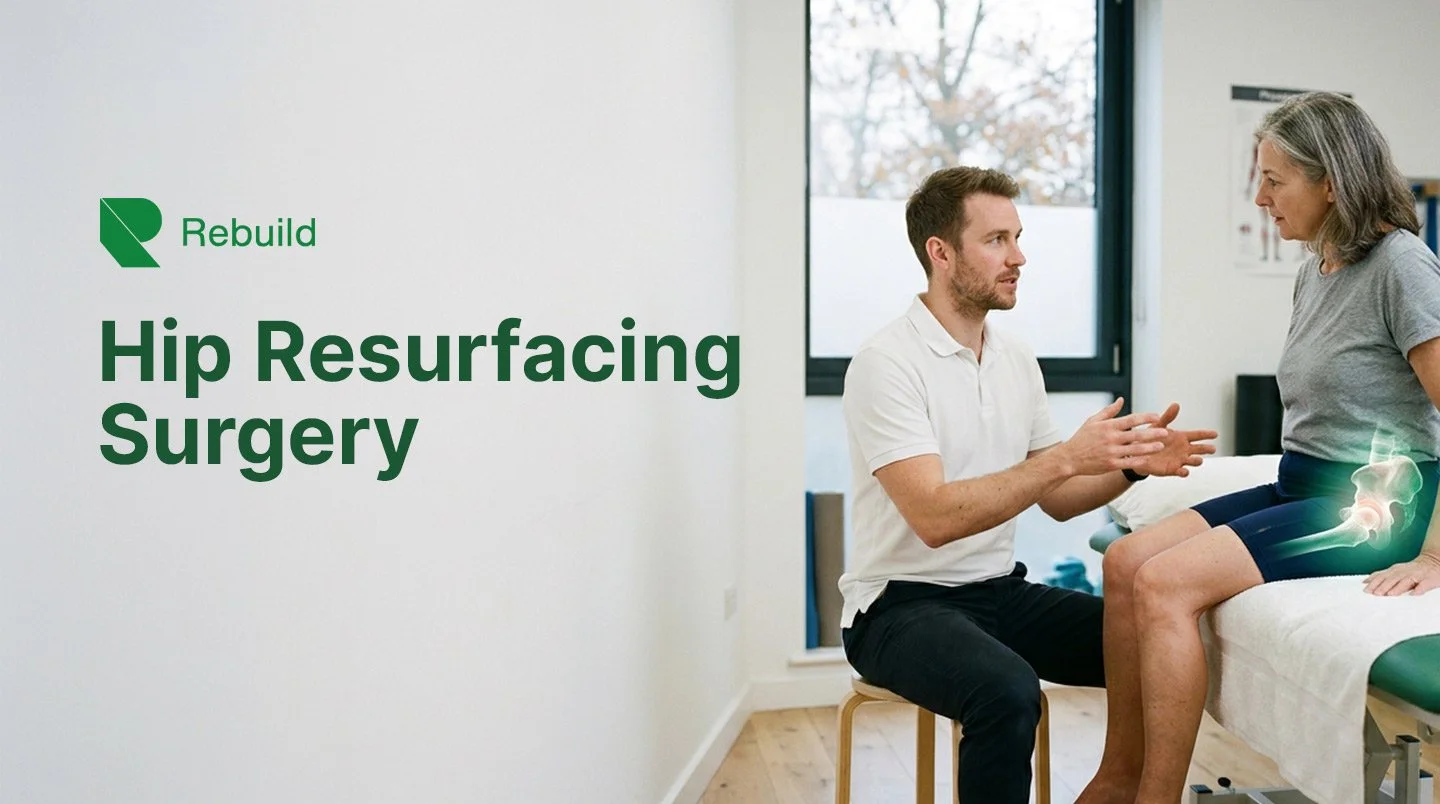
The final stage, where the work pays off. What returning to hiking, golf, cycling, gym training, swimming and recreational sport realistically looks like, and how to protect the joint for the long term.