
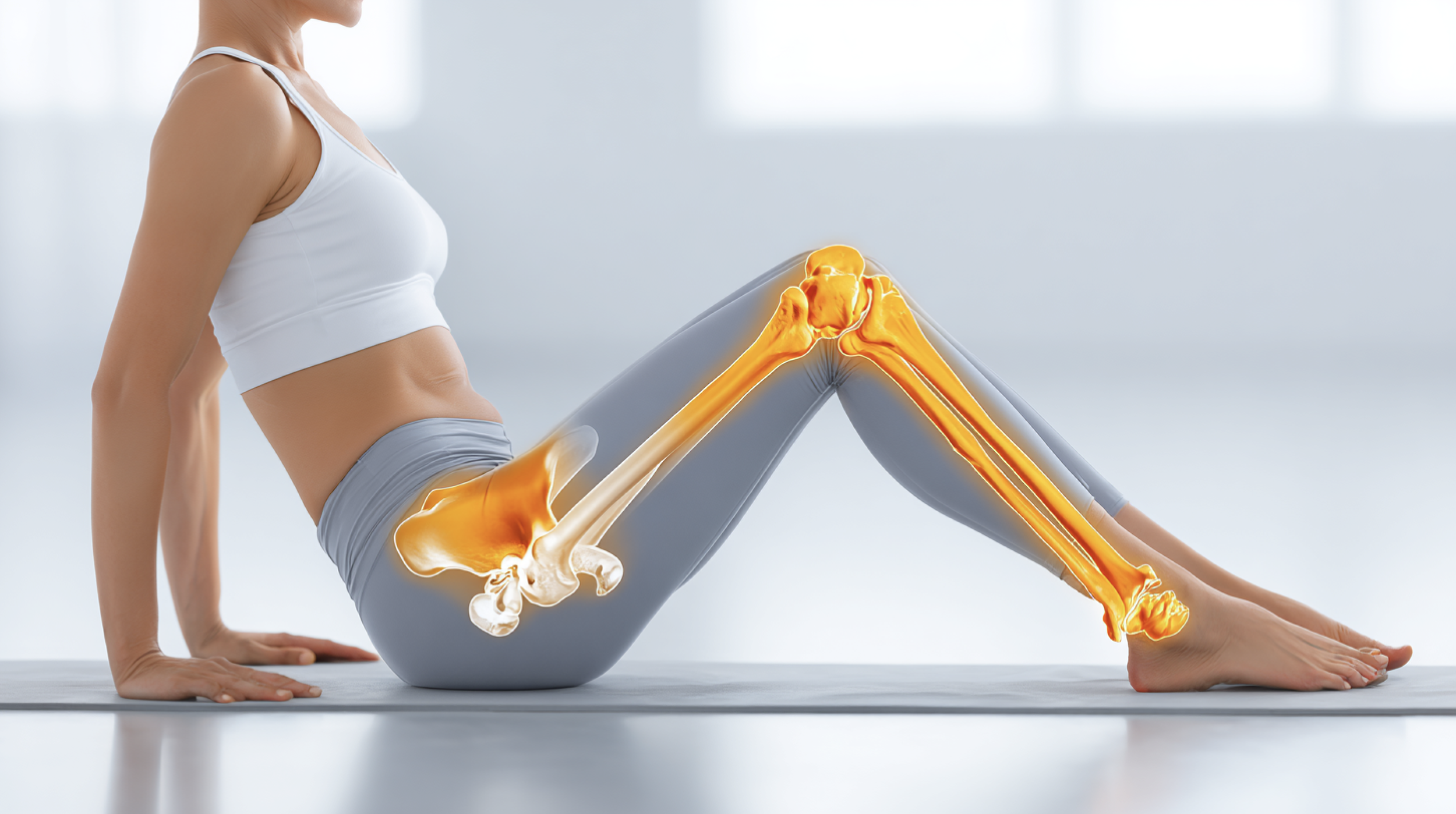
This early phase focuses on waking the muscles up and promoting recovery following surgery. Gentle muscle activation helps stimulate the nervous system, maintain muscle connection and support circulation without placing excessive load through the healing tissues. Isometric exercises are particularly useful following a periacetabular osteotomy (PAO) as they allow muscles to work without significant joint movement, helping to maintain strength, reduce muscle inhibition and minimise early muscle loss while protecting the healing hip and pelvis. The aim is to activate, not exhaust—gradually restoring confidence and control before progressing to more demanding strengthening exercises.
To optimise the outcome of your PAO, over the first 6 – 8 weeks, we have provided gentle range of motion exercises, to prevent stiffening and begin some gentle muscle activation of the hip joint. These will also encourage good blood circulation to promote healing and can reduce the risk of blood clots.
Phase 1
| Exercise | Duration | Repetitions | Sets | Frequency |
|---|---|---|---|---|
| Hip abduction supine | 5–10 seconds | 5 | 3 | 2–3 x a day |
| Hip abduction crook lying | 5–10 seconds | 5 | 3 | 2–3 x a day |
| Hip abduction bridge | 5–10 seconds | 5 | 3 | 2–3 x a day |
| Hip flexion sitting | 5–10 seconds | 5 | 3 | 2–3 x a day |
Hip abduction in supine
Hip abduction is crook lying
Hip abduction (bridge position)
Isometric hip flexion in sitting
Phase 2
| Exercise | Duration | Repetitions | Sets | Frequency |
|---|---|---|---|---|
| Clam | 5–10 seconds | 5 | 3 | 2–3 x a day |
| Hip abduction | 5–10 seconds | 5 | 3 | 2–3 x a day |
| Hip flexion – ball against wall | 5–10 seconds | 5 | 3 | 2–3 x a day |
| Staggered bridge | 5–10 seconds | 5 | 3 | 2–3 x a day |
| Fire hydrant | 5–10 seconds | 5 | 3 | 2–3 x a day |
| Wall sit | 5–10 seconds | 5 | 3 | 2–3 x a day |
Clam
Hip abduction (side lying)
Wall (ball) press
Staggered bridge
Fire hydrant
Wall sit
Further range of movement
To further improve range of motion at the hip gentle stretches can also help. Remember to not push your hip into increased discomfort. Hold each position for 30 seconds, repeating 3 time.
Hip Flexor Stretch
Hip Flexor Stretch
Standing Quads
Lying Hamstring
Standing Adductor
Piriformis
