
A curtsy lunge performed with a landmine-anchored barbell, stepping one leg back and across behind the other. Builds hip and glute strength through a rotational, single-leg loading pattern.
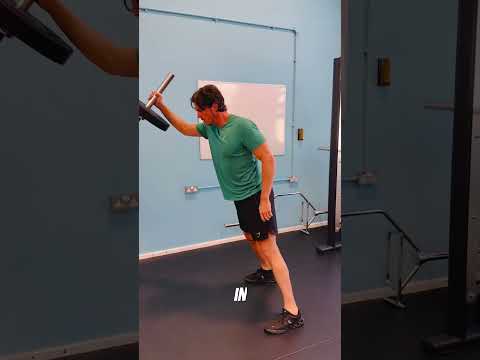
A thruster variation using a landmine-anchored barbell, combining a squat with a pressing motion. Builds power and strength through the hips and upper body together.
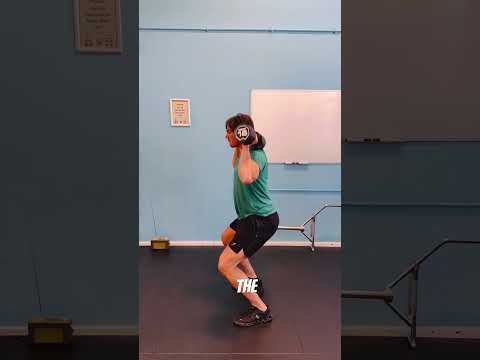
A combination squat-to-overhead-press movement performed with dumbbells. Builds full-body power and strength, integrating the hips, legs, and shoulders in one movement.

A Romanian deadlift variation performed with a landmine-anchored barbell, hinging at the hips under load. Builds hip and hamstring strength with a stable, guided bar path.

A multidirectional reaching balance drill performed on one leg, testing and training dynamic stability. Commonly used to assess and rebuild proprioception and control after ACL injury.

A full deadlift performed with a kettlebell, hinging at the hips to lift the weight from the floor. Builds hip, hamstring, and glute strength through a fundamental strength pattern.

A partial-range deadlift performed from an elevated position with a kettlebell, reducing range of motion while still loading the hip hinge. Builds hip and posterior-chain strength with less stress through the lower range.

A Romanian deadlift performed with dumbbells, hinging at the hips while keeping the knees softly bent. Builds hamstring, glute, and hip strength through a controlled hinge pattern.

A hip-hinge exercise performed with a barbell across the back, bending forward from the hips with a flat back. Builds posterior-chain and hip strength, and reinforces safe hinge mechanics for deadlifting.

A side-to-side lunge that loads one leg through a lateral range of motion while the other leg stays straight. Builds hip and groin strength along with lateral stability.

A lateral squat variation that shifts weight fully to one side, opening the hip into a deep, loaded range. Builds hip mobility and single-leg strength together.

A loaded barbell back squat performed through a full range of motion. Builds overall lower-body strength and hip loading tolerance, useful in later-stage strength and conditioning programs.

A combination drill pairing a wall ball press for glute activation with a single-leg squat for strength and motor control. Builds hip stability and lower-body strength together in one progression.
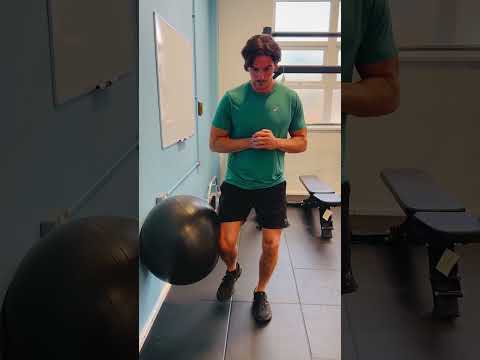
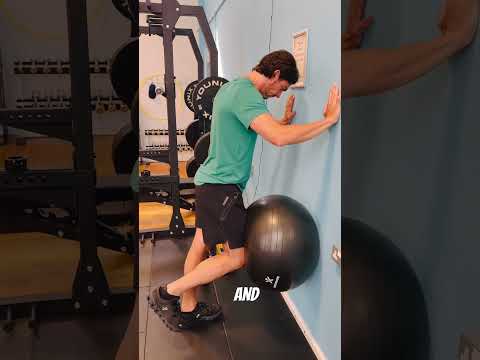
A hip drill performed by pressing a ball against a wall with the leg, activating the glutes isometrically. Builds glute strength and control, useful for hip arthritis and impingement rehab.
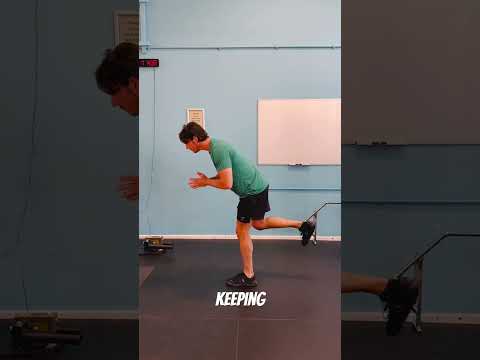
A hamstring and hip-mobility drill that moves through a hinge pattern resembling a diving motion. Builds hamstring strength and control through a dynamic range of motion.
An isometric hold in a high hip-flexion position, targeting the hip flexors and psoas without dynamic movement. Builds hip flexor strength and control, useful for sprinting- and kicking-related rehab.

A hip flexion exercise performed from an elevated, or deficit, position to increase the range-of-motion challenge. Strengthens the hip flexors and psoas through a fuller range of motion.

A single-leg balance drill where the head turns side to side to challenge the vestibular and visual systems along with balance. Builds proprioception and hip stability, useful in return-to-sport and fall-prevention programs.

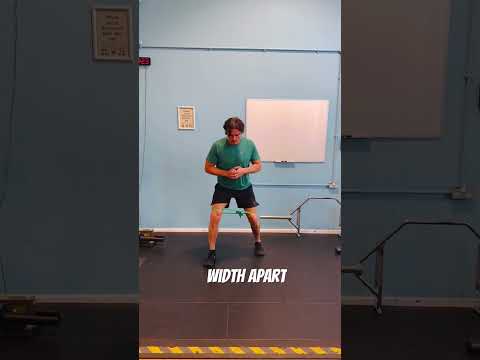
A lateral banded walk that keeps continuous tension on the hip abductors as you step side to side. Builds glute medius strength and activation, commonly used to support hip and knee alignment.
A quadruped bear crawl that challenges full-body coordination, core bracing, and hip and shoulder stability as the limbs move. Builds functional strength and control that carries over to more dynamic movement.

A jump-training drill performed with external assistance to reduce impact load while practicing explosive hip and leg power. Reintroduces plyometric loading gradually, a useful step before unassisted jumping in return-to-sport programs.

A hip abduction hold performed lying flat with the legs straight, targeting the glute medius isometrically. Builds hip stability strength from a low-irritability starting position.

An isometric hip abduction hold performed with the knees bent, targeting the glute medius without dynamic movement. Builds gentle glute activation, suitable for early-stage hip rehab.

A gentle isometric adductor squeeze performed lying flat, ideal as an early-stage groin strengthening exercise. Builds adductor activation and control with minimal joint stress.
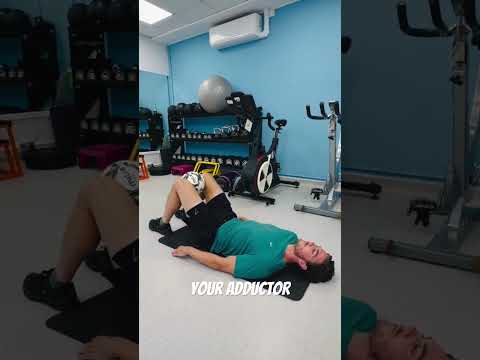
A hip adduction exercise performed lying on the back with the knees bent, squeezing a ball or pad between the knees. Isolates the adductors to build groin strength and control.

A hip adduction squeeze performed while holding a bridge, combining hamstring and adductor activation. Builds groin, adductor, and hamstring strength together for return-to-sport rehab.

A hip adduction exercise performed in a deadbug-style position, squeezing the legs together against resistance. Targets the adductors and groin while requiring the core to stay stable, useful for groin injury rehab.

A reduced-load side plank performed from the knees, making the hold more accessible in earlier rehab stages. Builds glute medius and lateral core strength while easing hip loading.

A standard side plank hold on the forearm, keeping the hips lifted and the body in a straight line. Builds lateral core strength and glute medius activation for hip stability.

A side plank variation where the top leg drives forward and back in a running-style motion. Challenges glute and hip stability dynamically while the trunk holds a stable side-plank position.

A side plank with an added top-leg lift, combining core stability with active hip abduction. Strengthens the glute medius and lateral hip stabilizers while maintaining core control.

A regressed version of the Copenhagen plank with the top knee bent, reducing the lever arm on the adductors. Builds adductor and groin strength at a more manageable intensity than the long-lever version.

The long-lever Copenhagen plank, a side-plank variation with the top leg supported on a bench to load the adductors. Builds groin and adductor strength and is widely used to prevent and rehab groin injuries.

A bridge variation performed with the knees bent to roughly 45 degrees, shifting more load onto the hamstrings. Strengthens the hamstrings through a knee-friendly range, useful in ACL and meniscus recovery.

A double-leg bridge that emphasizes hamstring and glute activation by driving through the heels. Builds posterior-chain strength that supports hip and knee rehab.

A single-leg glute and hamstring bridge that isolates one side at a time from a hook-lying position. Builds strength while exposing and correcting side-to-side imbalances, useful for hip arthritis, ACL, and meniscus rehab.

A standard double-leg hamstring curl on a stability ball, bridging the hips and curling the ball toward the body. Strengthens the hamstrings and glutes while training hip control.

A two-leg Swiss ball hamstring curl with an added cue for core bracing throughout the movement. Builds hamstring strength together with core stability, supporting ACL and meniscus rehab goals.

A single-leg hamstring curl performed on a stability ball, adding a balance and core demand to the movement. Strengthens the hamstrings unilaterally while challenging core control, useful for knee pain, ACL, and meniscus rehab.
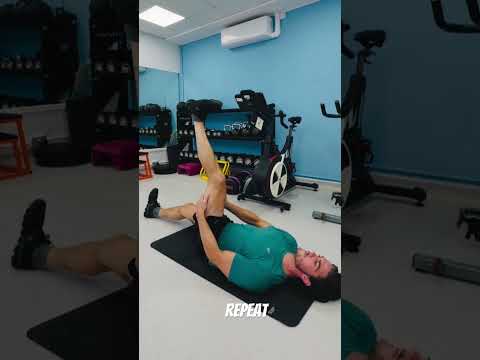
A hamstring flexibility exercise that combines a controlled stretch with active lengthening. Improves hamstring range of motion and control, supporting recovery from hamstring, ACL, or meniscus injuries.

A sliding hamstring exercise that emphasizes the eccentric, or lengthening, phase of the hamstring curl. Develops hamstring strength and control, commonly used in ACL and meniscus rehab programs.

An eccentric hamstring exercise using a slider to lower the body under control from a bridge position. Builds hamstring strength through lengthening, supporting rehab after ACL or meniscus injury.

A reduced-load version of the front plank, held from the knees rather than the toes. Builds core control and endurance for people who aren't yet ready to hold a full plank position.

A modified plank performed from the knees with an added leg extension, reducing load while still challenging core and hip flexor control. Targets the hip flexors and psoas alongside deep core activation, ideal for earlier-stage rehab.

A classic front plank held on the forearms and toes, keeping the spine neutral and hips level throughout. Builds foundational core endurance and trunk stability that underpins safe hip and lower-body loading.

A standard front plank with one leg lifted and extended, adding a hip-stability challenge to the core hold. Strengthens the deep core and glutes while training pelvic control, a useful progression in hip impingement and dysplasia rehab.


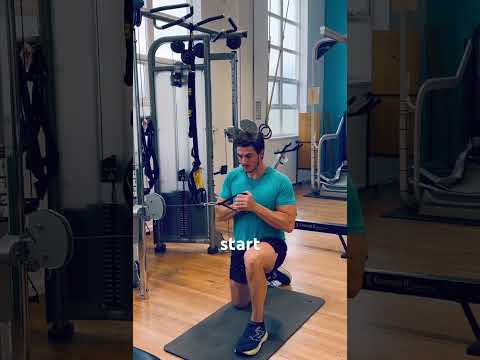
A half-kneeling Pallof press that challenges anti-rotation control.

An anti-rotation cable or band chop performed in a half-kneeling lunge.

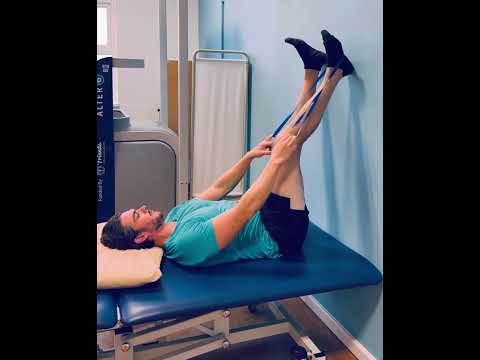
A gentle way to regain knee bend using gravity to help the movement.

A seated hold that activates the hip flexors without movement.

A lateral stepping drill, often banded, to switch on the lateral hip muscles.


A stationary split-stance squat with dumbbells to build single-leg strength.

A backward-stepping lunge with dumbbells to load each leg with good control.


A controlled on-the-spot jog to reintroduce light running-style loading.

Small, low-impact star jumps to introduce gentle hopping and ankle loading.


A maximal horizontal jump for developing lower-limb power and landing control.


An explosive split-stance jump alternating legs to build single-leg power.

A powerful press-up driving the body up off the floor to build upper-body explosiveness.
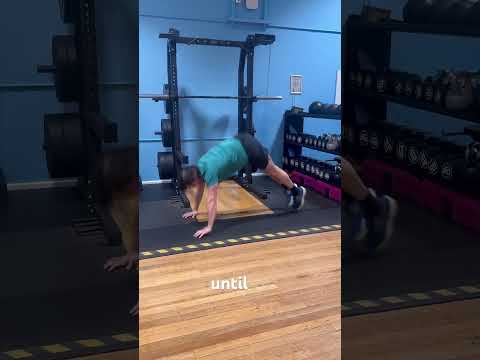
An explosive upper-body press-up where the hands leave the floor.

A fast, springy single- or double-leg hop training lower-limb stiffness and power.

A reactive plyometric linking a controlled landing to an explosive horizontal jump.


A back squat to a box that controls depth and teaches a confident sit-back.

A single-leg hip hinge with a kettlebell that also challenges balance.

A guided single-leg hinge using the Smith machine for added stability.


A squat holding a single weight at the chest, encouraging good depth and posture.

A loaded knee extension to strengthen the quadriceps through range.

A static quads contraction with the knee held in position.

A self-mobilisation to improve knee bend using gentle over-pressure.
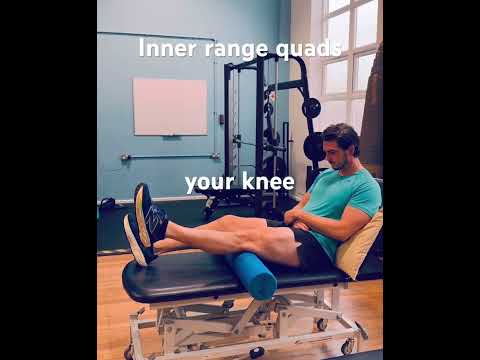
Strengthening the last few degrees of knee extension in lying.


A progressed static quads drill adding an opposite-leg lift for added challenge.

A quad-setting exercise combined with lifting the other leg.


A mountain-climber style drive to strengthen the hip flexors with the core engaged.


This lunge variation uses an unstable surface, like a foam pad or suspension trainer, to challenge the stabilizers of the hip, knee, and ankle. It forces the glute medius to work harder to maintain alignment. Focus on slow, controlled repetitions to ensure the front knee does not cave inward during the movement.

A lunge variation that targets the glute medius and adductors. By stepping one foot behind and across the other, you challenge hip stability in a rotational plane. Keep your front knee tracked over your toes and your torso upright to maximize glute loading and improve lateral hip control.


An anti-rotation drill that forces the core and hips to resist twisting. By pressing a band or cable straight out from the chest, you train the obliques and glutes to stabilize the spine. Keep your feet rooted and glutes squeezed to prevent the torso from rotating toward the anchor point.

A functional movement targeting the lateral glutes and VMO. By crossing the outside leg over to a box, you emphasize hip adduction and stability under load. Focus on driving through the heel of the elevated foot and controlling the descent to build better knee tracking and hip power.

A foundational barbell lift for building posterior-chain strength from the floor.

Performing a goblet squat on a BOSU or foam pad increases demand on the deep hip stabilizers and core. Holding the weight at chest height acts as a counterbalance, allowing for a deeper squat. Focus on spreading the floor with your feet to maintain balance and prevent the knees from collapsing.

A barbell squat with the load racked at the front to load the quads and trunk upright.

This exercise places the rear foot on a bench to isolate the front leg. It provides a deep stretch to the rear hip flexor while building significant strength in the glute and quad of the lead leg. Keep your front shin relatively vertical and your core tight to avoid excessive arching in the lower back.

The ultimate test of posterior chain strength. This movement involves lifting a barbell from the floor to a standing position by hinging at the hips. Focus on keeping the bar close to your shins, maintaining a neutral spine, and driving through the floor with your legs to engage the glutes and hamstrings.

Widely considered the best exercise for glute hypertrophy. By placing the upper back on a bench and driving the hips upward against resistance, you maximize tension on the gluteus maximus at short muscle lengths. Focus on keeping the chin tucked and ribs down to ensure the movement comes from the hips rather than the lower back.

A rotational core exercise that targets the obliques and transverse abdominis. Sitting with your knees bent and feet elevated, you rotate your torso from side to side. Focus on moving your shoulders as a unit rather than just reaching with your arms to ensure the core muscles are doing the work. Keep your spine long and avoid rounding your back.

This variation uses a fixed track to provide extra stability, allowing you to focus purely on leg drive. By placing your feet slightly forward, you can maintain a more upright torso and shift more tension onto the quadriceps while reducing lower back strain. Ensure the bar rests on your traps, and use the safety stoppers to train safely near failure without a spotter.

Adding dumbbells or a barbell to a standard lunge increases the demand on the glutes and quads. This variation builds unilateral strength and improves pelvic stability under load. Focus on maintaining a tall posture and ensuring your front knee stays aligned with your middle toe as you descend.

A fundamental strength movement where a barbell is supported on the upper back. It targets the entire lower body, including the quads, glutes, and hamstrings. Maintaining a neutral spine and driving the knees out are key to proper hip mechanics. Ensure your weight is distributed across the mid-foot to maintain balance.

A core exercise that emphasizes the lower abdominals and hip flexors. While lying on your back, you slowly lower your legs toward the floor and lift them back up. The key is to keep your lower back pressed firmly into the ground to ensure your core, not your spine, is managing the load.

With a band around your knees, select an appropriate weight. Perform a squat as far as you feel comfortable, by sitting back, keeping your knees over your second toes, with your back straight and body weight evenly spread over both feet.

A stabilising exercise where the body is supported by one hand and the side of the foot. It targets the obliques, transverse abdominis, and shoulder stabilisers. Keep your hips lifted in a straight line from head to heels. Ensure your supporting hand is directly under your shoulder and your core is tight to prevent rotation or sagging.

This exercise targets the gastrocnemius and soleus muscles by allowing a greater range of motion than floor raises. By hanging your heels off the edge of a step, you can lower them below neutral to stretch the calf and Achilles tendon before driving upward. Focus on a controlled descent to improve ankle mobility and build explosive power for walking and running.

This variation uses an isometric cue to maximize shoulder and upper back engagement. While in a standard plank, imagine trying to tear the floor in half by pushing your hands or elbows outward without actually moving them. This tension activates the posterior deltoids and scapular stabilizers, creating a more robust "pillar" of stability throughout your entire torso.

A core stability movement that teaches you to move your limbs while keeping your spine neutral. By extending the opposite arm and leg while lying on your back, you challenge the abs to prevent the lower back from arching. Focus on slow, rhythmic breathing and keeping your ribcage tucked down toward your pelvis.

Standing tall, take a large step forwards with your injured leg and bend that knee until the opposite knee is approximately 5cm above the ground, then extend through the hip and knee to return to the starting position. Remember to keep your back straight throughout the movement

Stand facing a step of appropriate height. Put your injured leg on the step and step up by extending through your hip and knee, bringing the other leg through at a right angle. Keep the movement controlled as possible with your knee tracking over your second toe

With the band around your knees/thigh assume a quarter squat position. Take medium size strides to the side and back again keeping tension on the band throughout for 10 steps and then change to opposite direction.

Lying on your back with your knees bent (operated side back further than the other), squeeze your bottom muscles and tighten your stomach muscles. Lift your bottom off the bed until there is a straight line between your shoulders and knees. To add a further challenge, imagine there is a nut between your buttocks which you are trying to crush.

On your hands and knees (4 point kneeling) with a band around your knees. In a controlled manner bring our leg back with your heel towards the sky and turn your knee outwards. Slowly return to starting position and repeat.
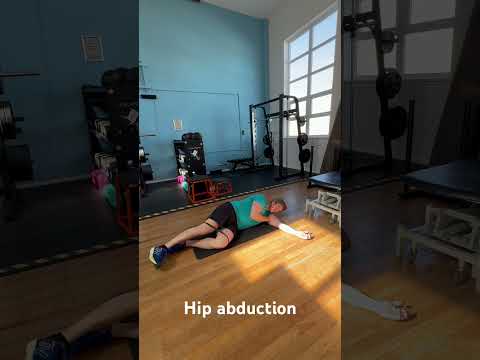
In side lying, have your bottom knee bent to 90° and the top leg straight, with the band around both knees. Lift your top leg up and back without rotating your pelvis or spine.

Lying on your back with your knees bent, with a band around your knees, squeeze your bottom muscles and tighten your stomach muscles. Keep your feet flat, dig your heels into the floor, this will increase the activity in your hamstrings. Lift your bottom off the bed until there is a straight line between your shoulders and knees, to add a further challenge, imagine there is a nut between your buttocks which you are trying to crush.
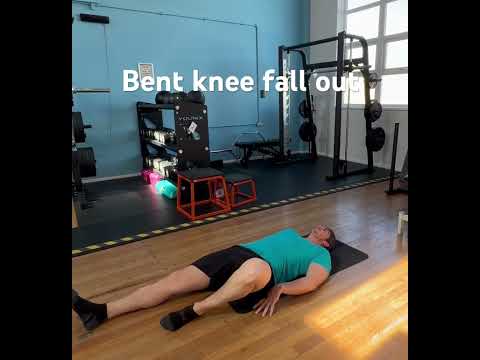
In lying with your knee slightly bent, ensure your tummy is tight, slowly allow your knee to fall out to the side in a controlled fashion and return to the starting position.

In side lying with your knees bent to 90°, in line with hips and a band around both knees. Raise the top knee away from the bottom knee without rotating at your pelvis or spine.

With a band around your knees, knees shoulder width apart and feet out from the wall. Slide down as far as you feel comfortable. Focus on keeping your knees over your second toe. As this becomes easier you can hold a weight in both hands to make it more difficult.
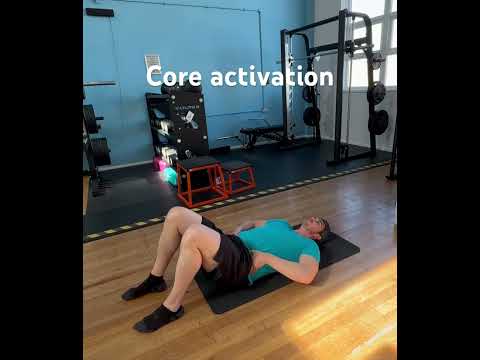
In lying with your knees bent, gently squeeze your stomach muscles whilst almost trying to pull your pelvic muscles upwards.
Hold for 10 seconds, repeat 10 times.

In lying with a rolled up towel (or something firm), push your knee down and extend your leg activating the quad muscles (the big muscle at the front of your thigh).
Hold for 10 seconds, repeat 10 times.

In standing, holding onto a stable surface for support, slowly lift your knee behind you and return to starting position.

In lying gently squeeze your bottom muscles together.
Hold for 10 seconds, repeat 10 times.

Stand facing a step of appropriate height. Put your injured leg on the step and step up, bringing the other leg through at a right angle. Keep the movement as controlled as possible with your knee tracking over your second toe.
Repeat 10 times, completing 3 sets, build to 15 times and 3 sets
With a band around your knees, select an appropriate weight and hold up to your chin in front of you. Perform a squat as far as you feel comfortable, by sitting back, keeping your knees over your second toes, with your back straight and body weight evenly spread over both feet.
You can make this easier by doing this movement from a chair but on elevation, imagine there is a nut between your buttocks which you are trying to crush.
Repeat 10 times, completing 3 sets, build to 15 times and 3 sets

In standing, holding onto a stable surface for support, slowly lift your leg out to the side and return to starting position.

Lying on your back slowly slide your heel outwards, in a slow controlled manner and slowly return to starting position. Do this on a slippy surface for ease of movement. e.g. a sock on a wooden floor.

A lunge performed with a foot on a Bosu or other unstable surface to add a balance challenge. Controlling the wobble while lunging builds single-leg strength alongside ankle and knee stability. A mid-stage exercise combining strength with balance training.

The hex bar allows for a more upright torso, reducing shear stress on the lower back compared to a straight bar. It distributes the load more evenly between the quads and the posterior chain. Focus on sitting the hips back and driving through the mid-foot to stand, keeping your chest up throughout the lift.

A dynamic core and cardiovascular exercise performed from a plank position. By driving your knees toward your chest in a running motion, you engage the abdominals and hip flexors while building shoulder stability. Focus on keeping your hips level and your shoulders stacked over your wrists to maintain tension throughout the movement.

In standing, holding onto a stable surface for support, slowly lift your knee up to a right angle and return to starting position.

Lying on your back slowly slide your heel towards your bottom, flexing at your hip and return to starting position in a controlled manner. Do this on a slippy surface for ease of movement. e.g. a sock on a wooden floor.

In sitting push up onto your tip toes activating the calf muscles hold for 10 seconds, repeat 10 times.

An RDL performed with a kettlebell to load the posterior chain.
A deadlift using a hex (trap) bar, which is often easier on the lower back.


This movement allows for unilateral strengthening of the quadriceps, glutes, and hamstrings while the back is supported. By using one leg at a time, you can effectively identify and correct strength imbalances between your left and right sides. Focus on keeping your knee tracked directly over your mid-foot (avoiding internal collapse) and maintain a flat lower back against the pad throughout the entire range of motion to ensure the force is driven through the hip and leg.

A quad set on one leg while raising the other (straight-leg raise).
A compound movement that builds strength in the quads, glutes, and hamstrings. By using a machine, you can move heavier loads with a stable spine. Ensure your feet are shoulder-width apart and avoid locking your knees at the top. Keep your tailbone pressed firmly against the seat to protect your lower back.


Lying on your back with your knees bent and band around your knees. Squeeze your bottom muscles and tighten your stomach muscles. Lift your bottom off the bed until there is a straight line between your shoulders and knees.
Keep your knees apart against the resistance of the band. By keeping your feet flat, digging your heels into the floor you will increase the activity in your hamstrings. Then on elevation, imagine there is a nut between your buttocks which you are trying to crush.
Hold for 5 – 10 seconds, repeat 5 times, 3 sets

A reactive rotator-cuff exercise dropping and catching a light (around 1kg) weight with the arm raised to 90 degrees in the scapular plane. The catch challenges the cuff to control sudden load in a functional, slightly forward overhead position. Builds reactive stability for everyday and sporting tasks.

A reactive rotator-cuff drill dropping and catching a light (around 1kg) weight with the shoulder in anterior external rotation. Controlling the brief catch builds the cuff's ability to stabilise the shoulder against quick forces. It pairs with the internal-rotation version to train both directions.

A standing falling press-up performed against a wall, catching the body with the hands and pushing back. The upright angle keeps the load light while introducing a gentle reactive element to shoulder and chest loading. An accessible early version of the falling press-up drills.

A reactive rotator-cuff drill briefly dropping and catching a light (around 1kg) weight with the shoulder held in anterior internal rotation. The quick catch trains the cuff to react to and control sudden load in this position. A targeted exercise for reactive shoulder stability.

A reactive press-up where you fall onto a waist-height surface and catch yourself, absorbing through the arms. The drop-and-catch trains the shoulders and chest to handle quick loads in a controlled, manageable way. A mid-level step toward more demanding plyometric push-ups.

An explosive push-up where the hands leave the floor for a clap before landing. This high-level plyometric develops upper-body power and the ability to absorb and produce force quickly. Suited to the final stages of rehab or to athletic conditioning.

A reactive shoulder drill controlling a gentle fall toward a doorway and catching yourself with the hands. The quick load-and-absorb action trains the shoulder to react to and control sudden forces. A higher-level exercise for building reactive shoulder strength and confidence.

An early shoulder-control drill rolling a ball under one hand against a wall. The upright, supported position keeps the load low while teaching the shoulder blade to stay set as the hand moves. A gentle starting point for the ball-roll progression.
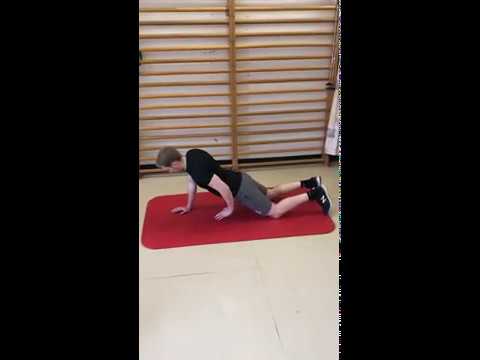
A kneeling single-arm control drill moving one hand across a ball while keeping the shoulder blade set and trunk steady. The kneeling position lowers the demand, making it a good progression toward the push-up-position versions. Builds scapular and shoulder control.

A kneeling version of the single-hand ball roll that regresses the push-up-position drills to reduce load. Rolling the ball with one hand while keeping the shoulder set trains controlled, stable shoulder-blade movement. A useful stepping-stone before progressing to full push-up positions.

A single-arm control exercise moving one hand across a ball while holding a push-up position. Loading one shoulder at a time, with the other hand grounded, builds asymmetrical strength and anti-rotation control through the trunk. A demanding mid-to-late stage shoulder and core drill.

A challenging control drill rolling a ball under both hands while holding a push-up position. The unstable contact forces the shoulders and core to work hard to keep the body braced and level. A high-level progression for shoulder stability and trunk control.

An advanced control exercise rolling a ball under each hand from a push-up position. Keeping the trunk braced and shoulders stable while both hands move builds high-level shoulder, core and wrist control. One of the most demanding drills in this progression, suited to later-stage rehab or performance work.

A combined drill pairing wrist movement toward the little-finger side with thumb opposition across toward the fingers. Working both together restores the smooth, coordinated motion needed for everyday grip and pinch. A gentle mobility exercise for the wrist and thumb.

A combined wrist-and-thumb mobility drill that moves the flat hand fully toward the little-finger side, then draws the thumb in toward the palm. Linking full ulnar deviation with thumb adduction rebuilds coordinated movement across the wrist and thumb. An early-stage drill within a hand rehab programme.

A combined thumb movement that takes the thumb from opposition, across toward the fingers, out into extension. Working smoothly between these positions helps restore the thumb's full, coordinated range. A gentle mobility drill for the thumb and CMC joint.

An early controlled wrist movement toward the little-finger side, performed with the thumb held out in abduction. Combining the wrist movement with a set thumb position gently restores coordinated motion after injury or immobilisation. A gentle early-stage mobility drill for the wrist and thumb.

A static hold with the thumb extended back against gentle resistance, with no movement. This early, well-tolerated isometric loads the thumb extensors without stressing the joint through range. A foundation drill for rebuilding thumb strength.

A static hold with the thumb moved out away from the palm against gentle resistance, without movement. This pain-friendly isometric loads the muscles that abduct the thumb, useful in early thumb and CMC-joint rehab. A good starting point before active strengthening.

A static hold pushing the wrist toward the thumb side against a fixed resistance, with no movement. Isometric loading is a gentle, pain-friendly way to begin strengthening the radial deviators early in rehab. Often used when movement is still uncomfortable.

The unloaded dart-thrower's motion, a smooth diagonal wrist pattern that mirrors many real-world and sporting movements. Practising it without resistance restores coordinated, natural wrist motion and confidence through range. A useful functional drill before adding load.

A banded wrist exercise training both directions of movement toward the thumb side, actively lifting against the band and then controlling it back. Working the concentric and eccentric phases together builds well-rounded strength in the radial deviators. A versatile progression within a wrist-strengthening programme.

An eccentric wrist exercise using a Theraband for resistance, controlling the lowering away from the thumb side against the band's pull. Band resistance offers an accessible, easily adjusted way to load the radial deviators eccentrically. An early-to-mid stage option for building wrist control.

An eccentric-focused wrist exercise that emphasises the slow lowering away from the thumb side with a dumbbell. Eccentric loading is often well tolerated and effective for building tendon and muscle capacity around the wrist. Used to progress radial-side wrist strength under control.

A weighted wrist exercise training movement toward the thumb side in both the lifting (concentric) and lowering (eccentric) directions. Working both phases with a dumbbell builds balanced strength and control in the wrist's radial deviators. A progression for later-stage wrist and forearm rehab.

A loaded version of the dart-thrower's motion, the natural diagonal wrist movement used in many everyday and sporting tasks. Adding a light weight builds strength and control through this functional pattern, from thumb-up extension toward little-finger-side flexion. A later-stage wrist exercise once basic range and strength have returned.
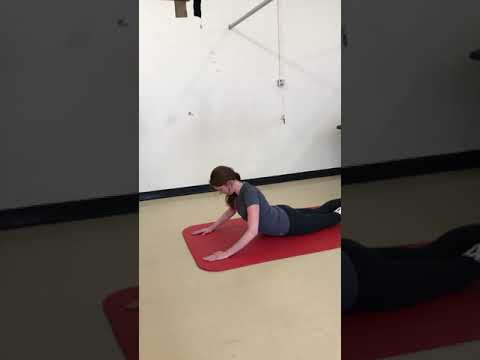
A gentle extension movement that restores backward bend in the lower back. Easing up onto the forearms, or pressing up a little, encourages lumbar extension, which can relieve stiffness and is often helpful for certain types of back pain. Kept small and pain-free, it is a common starting point for back mobility.

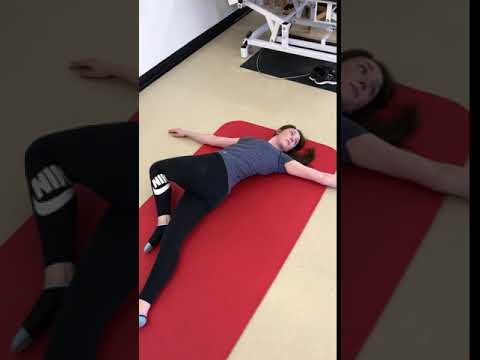
A relaxed rotational drill that mobilises the lower back and eases stiffness. Letting the knees roll slowly from side to side gently rotates the lumbar spine while the shoulders stay grounded. A comfortable early movement for loosening a tight or sore lower back.
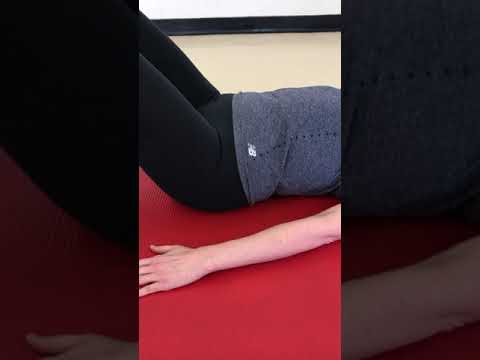
A small, controlled rocking of the pelvis that mobilises the lower back and gently switches on the deep core. Moving between a flattened and a slightly arched lower back builds awareness and control of the lumbar spine and pelvis. A gentle foundation movement for almost any lower-back rehab programme.

A gentle knee-to-chest mobility movement that eases and decompresses the lower back while stretching the buttock. Drawing one or both knees toward the chest opens up the lumbar spine and helps relieve stiffness and tension. A soothing early-stage drill often used at the start or end of a lower-back programme.


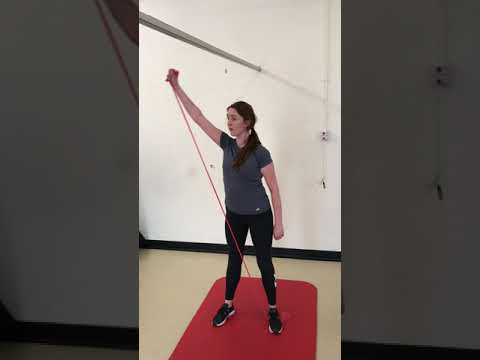

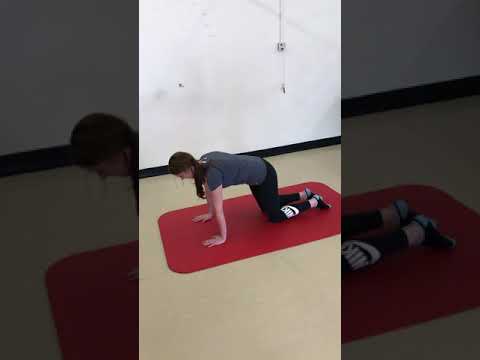
A cat-camel into child's pose mobility flow for the spine.



Advanced exercise combining upper-limb weight-bearing and wrist loading. Progresses from wall support into press-up position to prepare for functional and sporting activities.

Demonstrates wrist flexion against elastic resistance, progressing wrist strength and control in later-stage rehabilitation.

Shows radial deviation performed against a resistance band to enhance wrist stability and lateral strength.
