
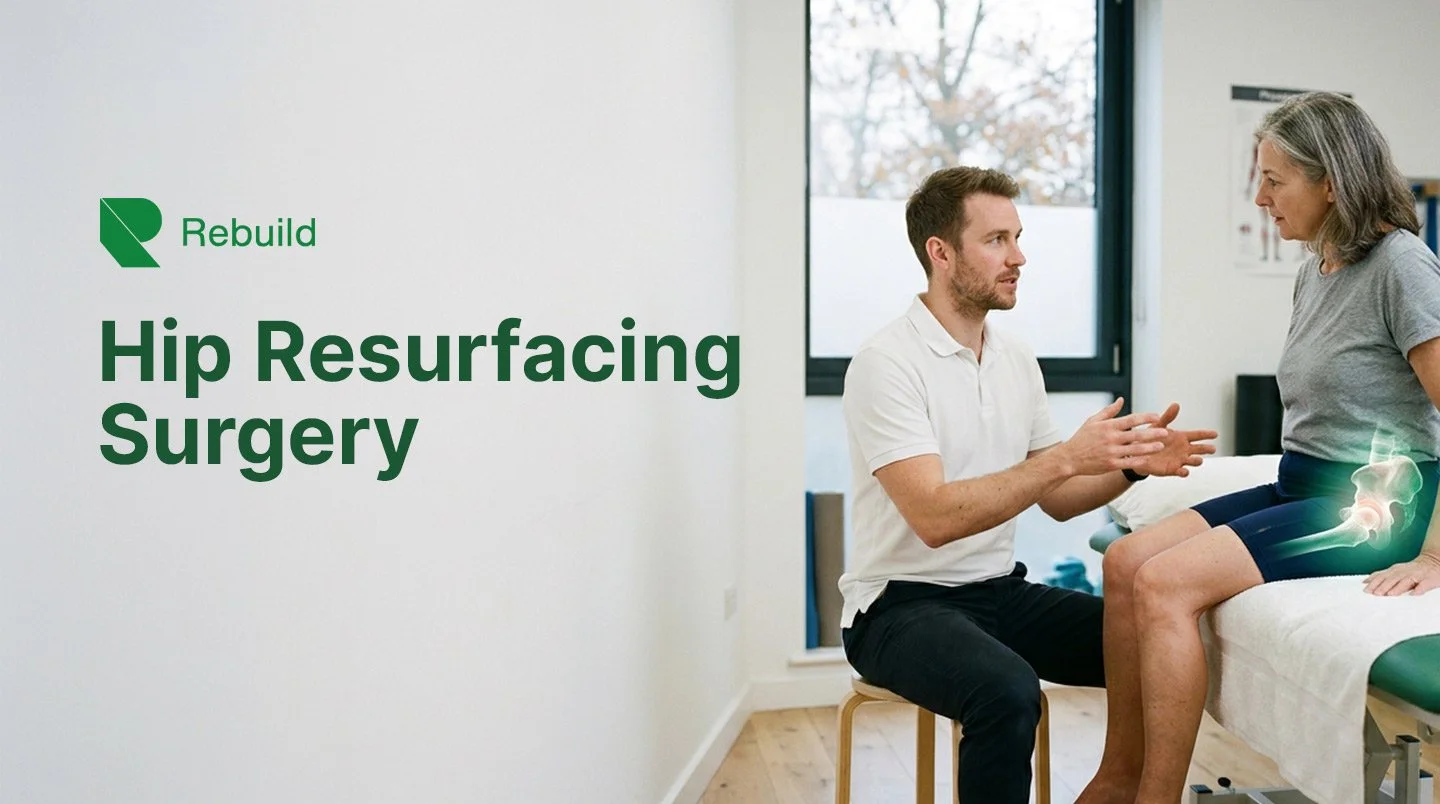
Hip Resurfacing Surgery: Phase 6
The final stage, where the work pays off. What returning to hiking, golf, cycling, gym training, swimming and recreational sport realistically looks like, and how to protect the joint for the long term.
Hip Resurfacing Surgery: Phase 5
Strength alone doesn't prepare a hip for sport. Plyometrics and ballistics retrain how fast you can produce and absorb force, improving power, tendon stiffness and confidence — with the prerequisites and recovery guidance that keep them safe.
Hip Resurfacing Surgery: Phase 4
Heavier strength training, adapted around the resurfaced hip rather than avoided. Leg press, deadlift and split squat variations with modified depth and controlled progression — plus why moving a lighter weight quickly matters as much as lifting a heavy one slowly.
Hip Resurfacing Surgery: Phase 3
Squats, hinges, lunges and single-leg work at 10–15 repetitions for 3 sets, three to five times a week. The aim is foundations — balance, endurance and confidence with everyday movement — before heavier loading begins.
Hip Resurfacing Surgery: Phase 2
From six weeks the focus shifts to waking the muscles up and getting you off your walking aids. Glute and abductor work, sit-to-stands, step-ups and balance training, with sets, repetitions and frequency for each.
Hip Resurfacing Surgery: Phase 1
The first six weeks are about protecting the healing hip, controlling pain and swelling, and getting movement back early. Gentle range-of-movement and activation exercises with full dosage, plus guidance on how much discomfort is acceptable while you work.
Hip Resurfacing Surgery
Hip resurfacing preserves far more of your own bone than a total hip replacement, which makes it attractive for younger, more active patients. Covers hip anatomy and osteoarthritis, how resurfacing differs from a full replacement, why ceramic-on-ceramic implants were developed, and the prehabilitation and weight loss that set up a good recovery.
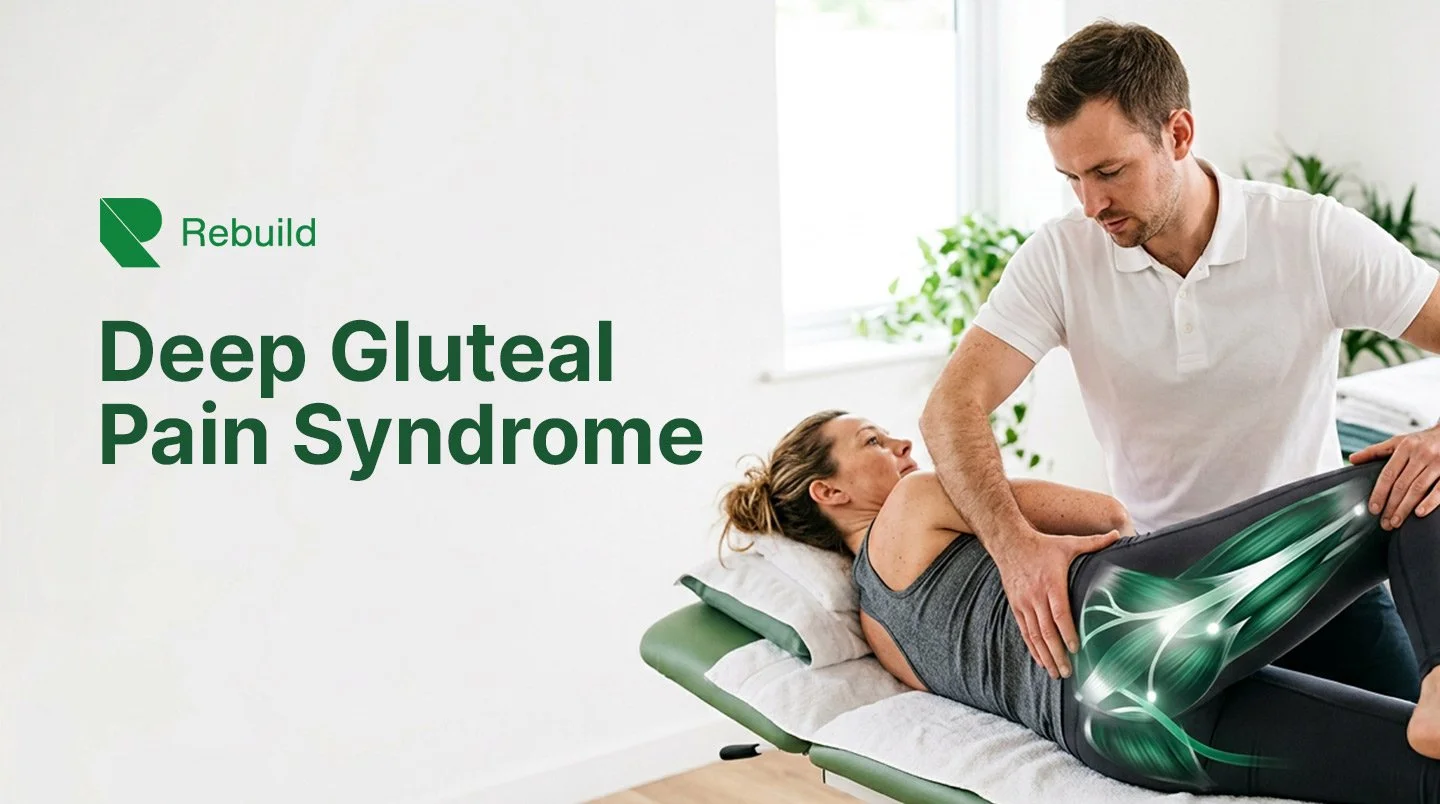
Deep Gluteal Pain Syndrome: Phase 4
Heavier strength training adapted around the resurfaced hip, then the power work most rehabilitation skips. Why moving lighter weights faster matters as much as lifting heavy, how plyometrics and ballistics prepare you for real-world demands, and a realistic route back to hiking, golf, cycling and sport.