Knee Treatments
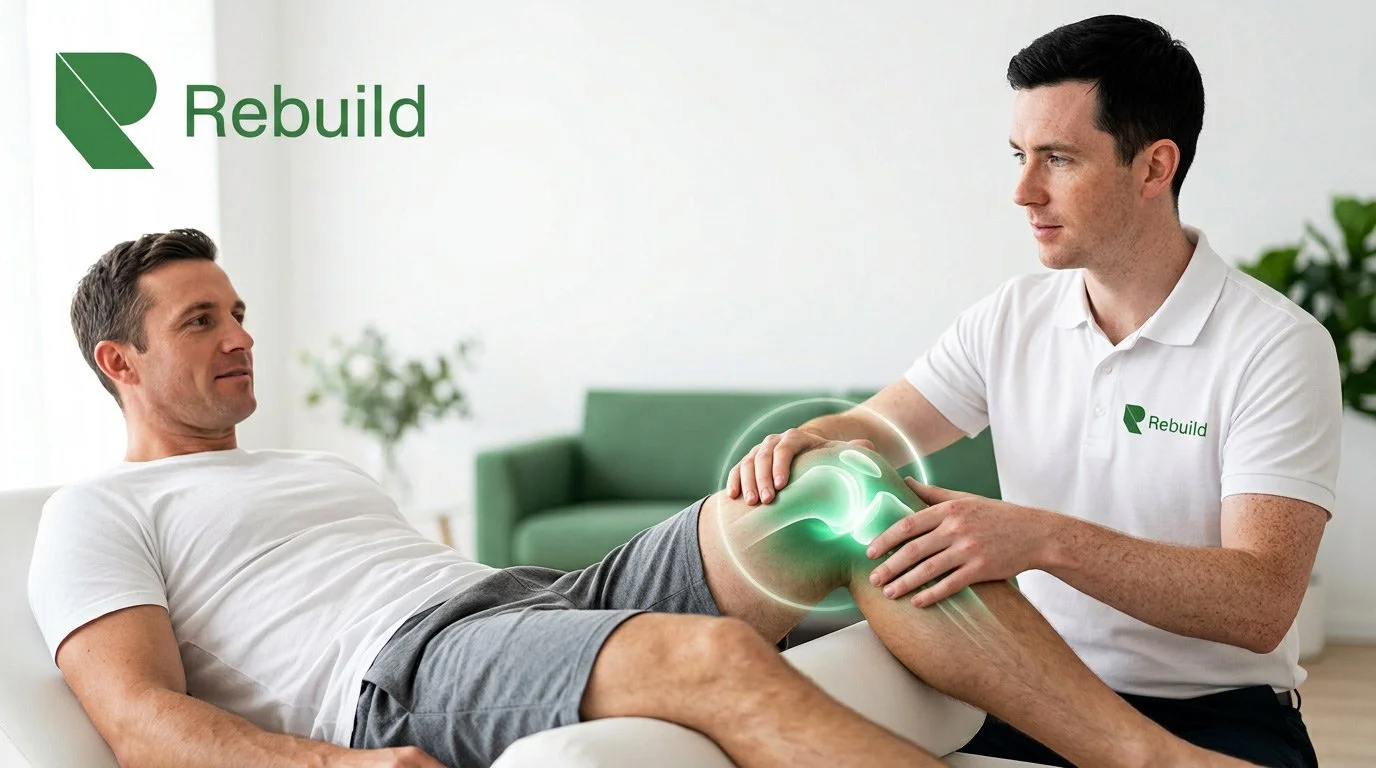
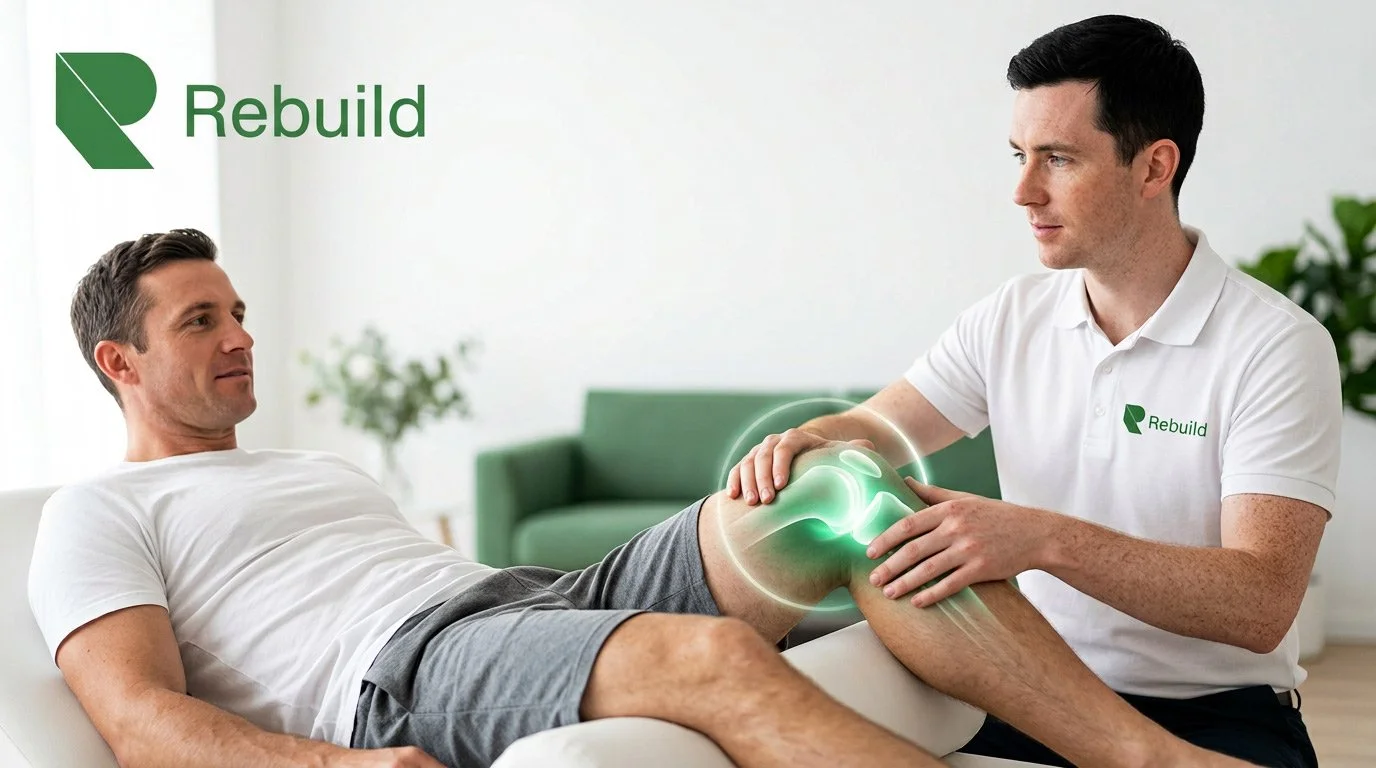
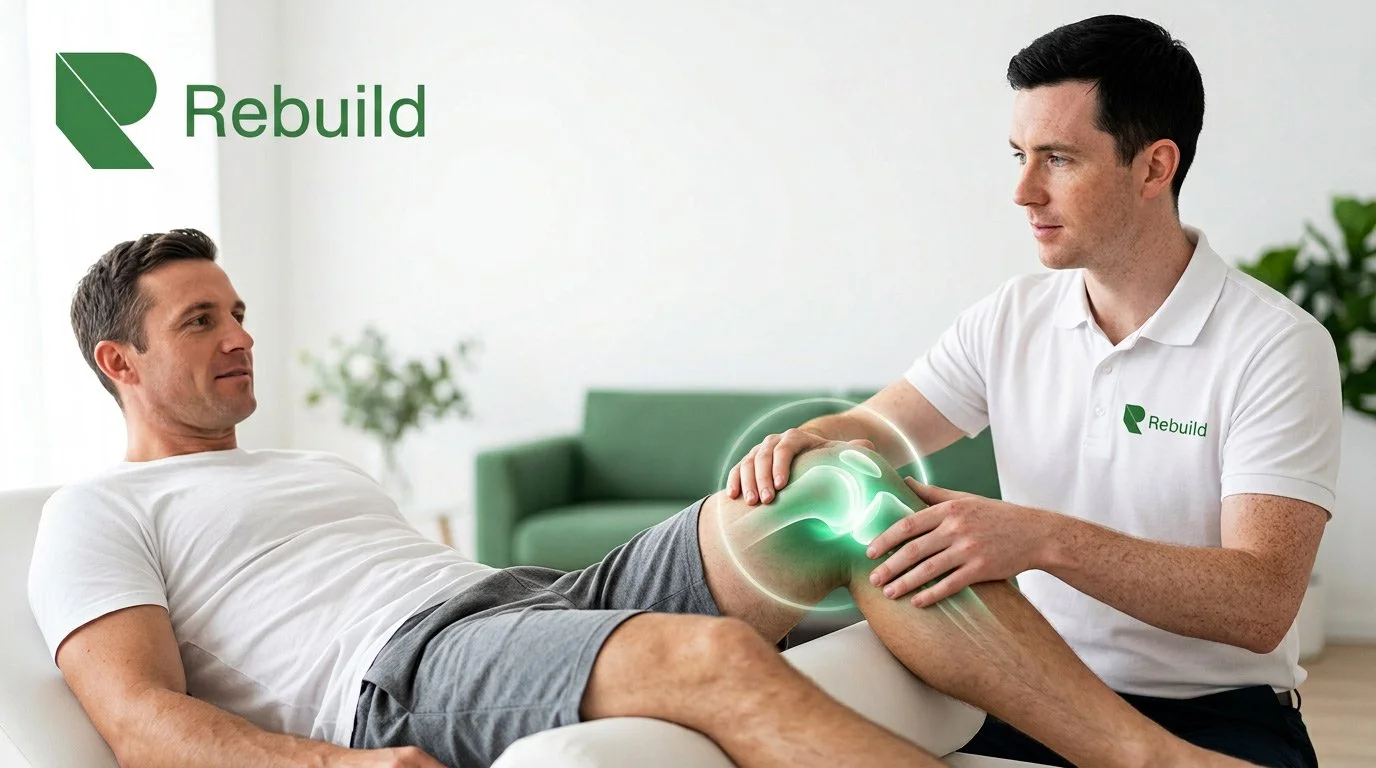
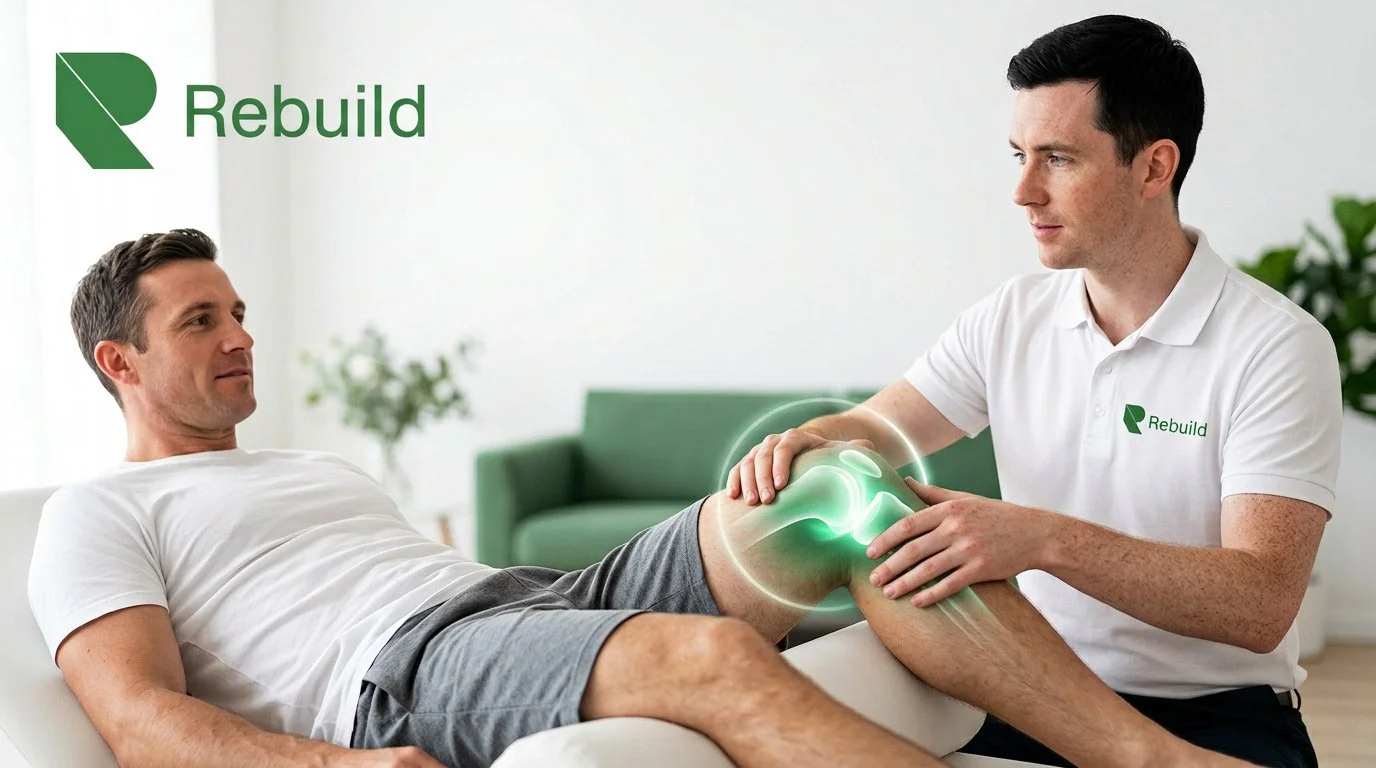
Whether your pain came on after an injury or has crept up over time, we'll help you understand what's causing it and build a clear path back to full function.
What's Behind Your Knee Pain?
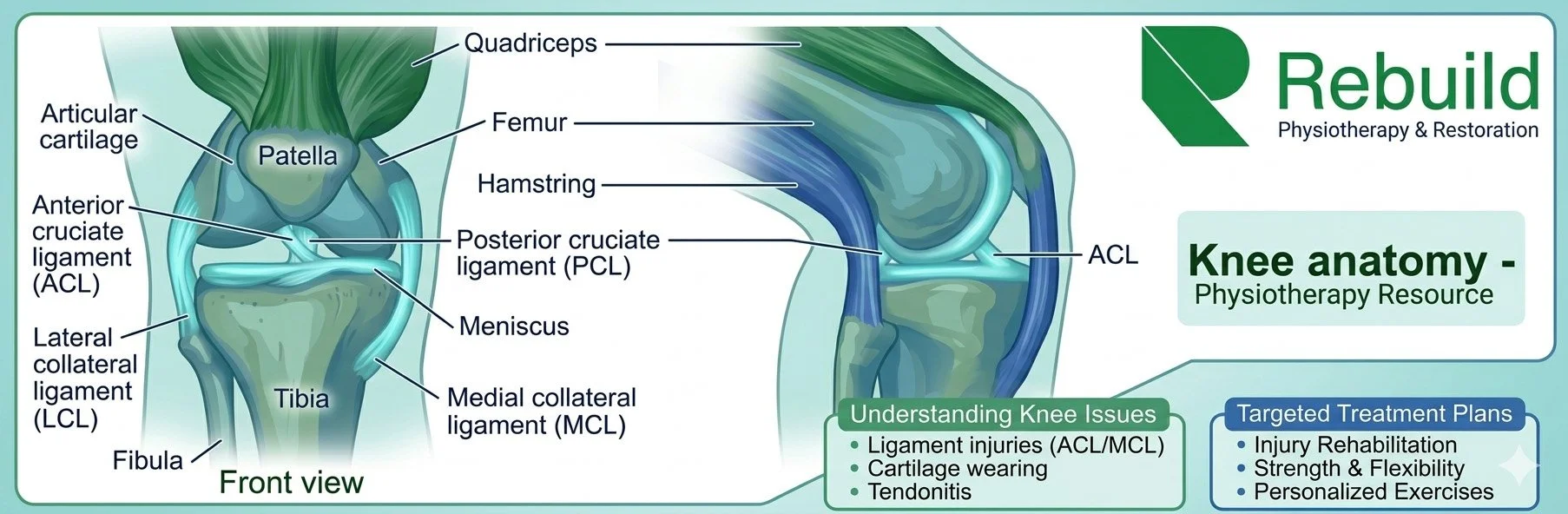
The knee is one of the hardest working joints in the body. It bears the full load of your body weight with every step, absorbs the impact of running and jumping, and guides you safely through stairs, slopes, and uneven ground. When pain develops — whether suddenly after an injury or gradually over time — it can quickly affect your mobility, your fitness, and your independence. Below are some of the most common knee conditions our physiotherapists treat. Click on any condition to learn more about the signs, what to expect from treatment, and the exercises that will support your recovery.
Common Knee Problems We Treat
-
Anterior cruciate ligament injuries, often known as ACL injuries, are common in sports that involve twisting, pivoting, landing, sprinting, or sudden changes of direction.
An ACL injury can happen during contact or non-contact movements, and may cause pain, swelling, instability, reduced confidence, and difficulty returning to sport. Some people describe a popping sensation at the time of injury, followed by swelling and a feeling that the knee may give way.
Physiotherapy plays a key role in both non-surgical ACL rehabilitation and recovery after ACL reconstruction. Treatment focuses on reducing swelling, restoring movement, rebuilding strength, improving balance and control, and gradually preparing the knee for running, jumping, landing, and sport-specific movements.
-
PFJP, or patellofemoral joint pain, is pain around the front of the knee or behind the kneecap.
It is often aggravated by stairs, squatting, running, jumping, sitting for long periods, or gym exercises such as lunges and step-ups. It can be linked to how the kneecap is tolerating load, as well as strength, movement control, training volume, and hip, knee, or foot mechanics.
Physiotherapy helps by identifying what is irritating the front of the knee, improving strength around the hip and thigh, adjusting aggravating activities, and gradually rebuilding confidence with movement, training, and sport.
-
Knee osteoarthritis can cause pain, stiffness, swelling, reduced mobility, and difficulty with walking, stairs, kneeling, squatting, or getting up from a chair.
Many people worry that knee arthritis means they need to stop being active, but physiotherapy can often help manage symptoms, improve strength, reduce flare-ups, and keep you moving with more confidence.
Treatment focuses on improving knee strength and mobility, supporting the surrounding muscles, managing activity levels, and helping you stay active in a way that feels achievable and sustainable.
-
The meniscus is a shock-absorbing structure inside the knee that helps with cushioning, stability, and smooth movement.
Meniscal tears can happen suddenly during twisting, pivoting, squatting, or sporting movements. They can also develop gradually over time as the knee changes with age or repeated load. Symptoms may include pain, swelling, stiffness, clicking, catching, locking, or difficulty fully bending or straightening the knee.
Physiotherapy can help reduce pain and swelling, restore movement, rebuild strength, and improve knee control. In many cases, structured rehabilitation can help people return to activity without surgery, while others may need support before and after a surgical procedure.
-
The posterior cruciate ligament, or PCL, helps stabilise the knee and prevents the shin bone from moving too far backwards.
PCL injuries can occur during sports collisions, falls onto a bent knee, tackles, or direct impact to the front of the shin. Symptoms may include pain, swelling, stiffness, weakness, or a feeling that the knee does not fully trust itself under load.
Physiotherapy focuses on protecting the healing ligament, restoring movement, improving strength, especially through the quadriceps, and gradually rebuilding control for walking, running, gym work, and sport.
-
The medial collateral ligament, or MCL, supports the inside of the knee and helps control side-to-side movement.
MCL injuries are common in sports where the knee is forced inwards, such as football, rugby, skiing, netball, and other contact or change-of-direction sports. Symptoms often include pain on the inside of the knee, swelling, tenderness, stiffness, and discomfort with twisting or side-stepping.
Physiotherapy helps guide healing, restore knee movement, rebuild strength, improve balance and control, and gradually return you to running, cutting, contact, or sport-specific movements.
-
The lateral collateral ligament, or LCL, supports the outside of the knee and helps stabilise the joint against side-to-side forces.
LCL injuries can happen during contact sports, awkward landings, twisting injuries, or direct impact to the inside of the knee. Pain is usually felt on the outside of the knee and may be accompanied by swelling, stiffness, instability, or difficulty trusting the knee during movement.
Treatment focuses on reducing irritation, restoring mobility, rebuilding strength, and improving knee stability. Rehabilitation is progressed carefully to help you return to daily activity, gym training, running, and sport with confidence.
-
The menisci spread load across the knee and protect the cartilage beneath them. They tear in two quite different ways: suddenly, through twisting on a planted foot, and gradually, as the tissue weakens with age until an ordinary squat or turn is enough. The distinction matters because it changes the treatment, and an MRI showing a tear does not automatically mean surgery. Our guide covers the six tear patterns, when surgery genuinely is indicated, and a five-phase rehabilitation programme with dosage and video demonstrations, plus recovery timelines for every procedure.
Knee Resources & Treatments