
A reduced-load version of the front plank, held from the knees rather than the toes. Builds core control and endurance for people who aren't yet ready to hold a full plank position.

A classic front plank held on the forearms and toes, keeping the spine neutral and hips level throughout. Builds foundational core endurance and trunk stability that underpins safe hip and lower-body loading.

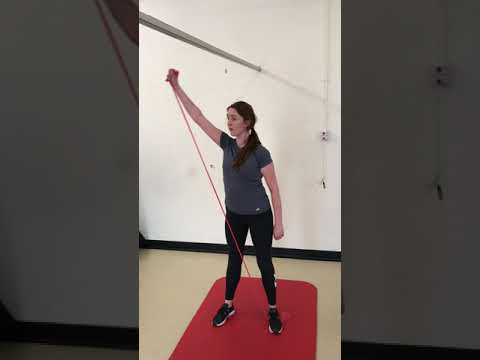
A stretch for the upper trapezius, the muscle running along the side of the neck into the shoulder. Easing the ear toward the shoulder lengthens this commonly tight muscle and can relieve neck and shoulder tension. A simple stretch useful for tension and posture-related tightness.

The classic press-up, a full upper-body strengthener for the chest, shoulders, arms and core. Lowering and pressing the body in a straight line builds pushing strength and trunk stability together. A benchmark exercise in later-stage shoulder and upper-limb rehab.

A bent-over row using free weights to build strength in the upper back and shoulder-blade muscles. Rowing toward the lower ribs while keeping a flat back works the scapular retractors and posterior shoulder. A staple pulling exercise for shoulder and posture rehab.

A bent-over rowing exercise using a resistance band to strengthen the upper back and shoulder blades. Drawing the hands toward the lower ribs trains the muscles that retract and stabilise the scapula, supporting posture and shoulder health. The band offers an adjustable, joint-friendly load.

A single-arm control exercise moving one hand across a ball while holding a push-up position. Loading one shoulder at a time, with the other hand grounded, builds asymmetrical strength and anti-rotation control through the trunk. A demanding mid-to-late stage shoulder and core drill.

A challenging control drill rolling a ball under both hands while holding a push-up position. The unstable contact forces the shoulders and core to work hard to keep the body braced and level. A high-level progression for shoulder stability and trunk control.

An advanced control exercise rolling a ball under each hand from a push-up position. Keeping the trunk braced and shoulders stable while both hands move builds high-level shoulder, core and wrist control. One of the most demanding drills in this progression, suited to later-stage rehab or performance work.
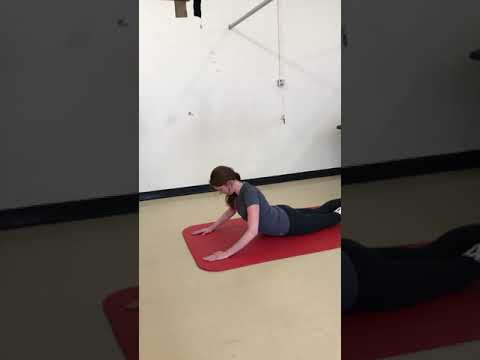
A gentle extension movement that restores backward bend in the lower back. Easing up onto the forearms, or pressing up a little, encourages lumbar extension, which can relieve stiffness and is often helpful for certain types of back pain. Kept small and pain-free, it is a common starting point for back mobility.

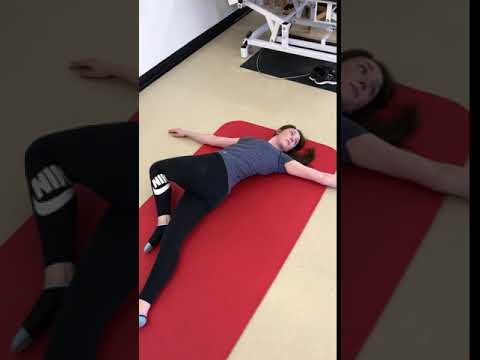
A relaxed rotational drill that mobilises the lower back and eases stiffness. Letting the knees roll slowly from side to side gently rotates the lumbar spine while the shoulders stay grounded. A comfortable early movement for loosening a tight or sore lower back.
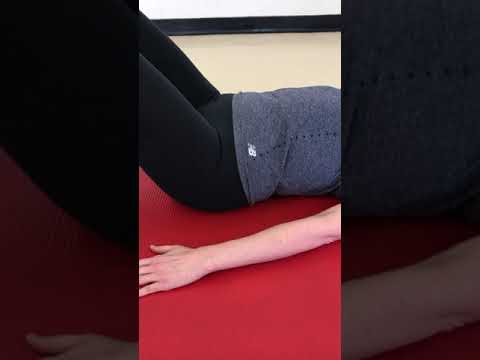
A small, controlled rocking of the pelvis that mobilises the lower back and gently switches on the deep core. Moving between a flattened and a slightly arched lower back builds awareness and control of the lumbar spine and pelvis. A gentle foundation movement for almost any lower-back rehab programme.

A gentle knee-to-chest mobility movement that eases and decompresses the lower back while stretching the buttock. Drawing one or both knees toward the chest opens up the lumbar spine and helps relieve stiffness and tension. A soothing early-stage drill often used at the start or end of a lower-back programme.



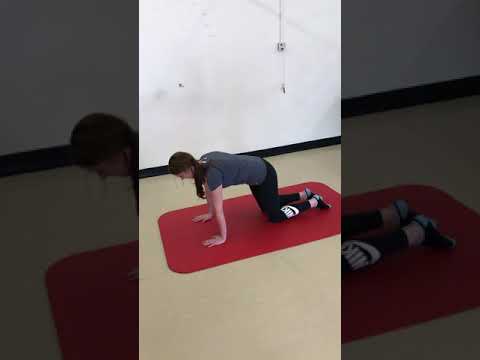
A cat-camel into child's pose mobility flow for the spine.


A quad set on one leg while raising the other (straight-leg raise).


A mountain-climber style drive to strengthen the hip flexors with the core engaged.

A progressed static quads drill adding an opposite-leg lift for added challenge.

A guided single-leg hinge using the Smith machine for added stability.

A single-leg hip hinge with a kettlebell that also challenges balance.


An anti-rotation cable or band chop performed in a half-kneeling lunge.

A powerful press-up driving the body up off the floor to build upper-body explosiveness.


A barbell squat with the load racked at the front to load the quads and trunk upright.

A foundational barbell lift for building posterior-chain strength from the floor.
