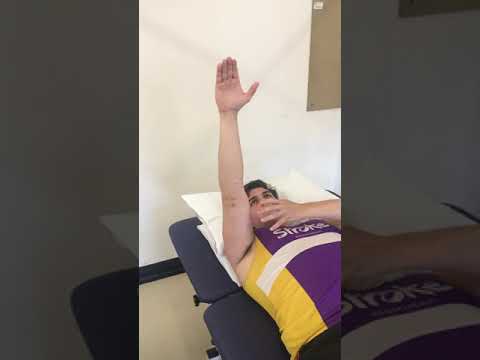
The first stage and starting point of a staged exercise programme for an age-related rotator cuff tear. It introduces gentle early movements and activation to begin restoring shoulder function safely. Confirm the specific exercises from the clip, keep everything pain-free and follow clinical guidance.

The second stage of a staged rotator cuff tear programme, progressing gently from the introductory movements of stage one and building on early activation and range. Confirm the specific exercises shown and work within comfort under clinical advice.

The third stage of a staged programme for an age-related rotator cuff tear, progressing from the gentle early movements toward greater strength and control. Confirm the exact exercises from the clip and work within comfort under guidance.

The fourth stage of a staged rotator cuff tear programme, increasing the demand on the shoulder as it moves beyond the early phases. Confirm the specific exercises shown and progress within comfort under clinical advice.

The fifth stage of a staged programme for an age-related rotator cuff tear, building further strength and control as the shoulder moves through the mid-stages. Confirm the exact exercises from the clip and work within comfort under guidance.

The sixth stage of a staged rotator cuff tear programme, further advancing shoulder loading and control. It bridges the mid and later stages of the series as strength and confidence grow. Confirm the specific exercises shown and progress within comfort under clinical advice.
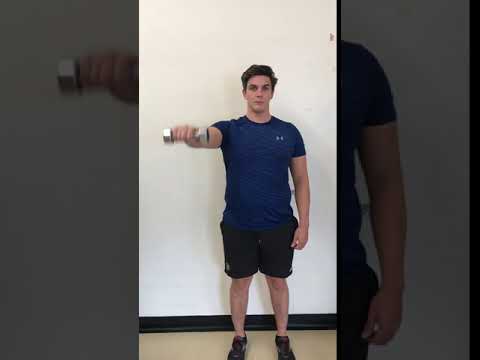
The seventh stage of a staged programme for an age-related rotator cuff tear, continuing to advance the shoulder's strength, control and load tolerance. It builds on the earlier stages toward higher-level function. Confirm the exact exercises from the clip and progress within comfort under guidance.

The eighth and most advanced stage of a staged exercise programme for an age-related rotator cuff tear. By this point the shoulder is working at the highest load and demand in the series, building toward full strength and function. The specific exercises should be confirmed from the clip, and all work kept within comfort under clinical guidance.

A capsular stretch easing the arm forward and overhead into flexion, often assisted by a surface or the other arm. Holding at a comfortable stretch helps restore overhead reach in a stiff shoulder. A foundation stretch for regaining forward range.

A capsular stretch easing the arm out to the side into abduction and holding at a comfortable stretch. Gentle, sustained loading helps restore the range needed to lift the arm sideways. Useful for a stiff or restricted shoulder.

A capsular stretch easing the shoulder into external rotation to a comfortable end of range. Sustained, gentle stretching helps restore external-rotation range in a stiff shoulder. A common mobility exercise after stiffness or a period of immobilisation.

A capsular stretch easing the shoulder into internal rotation, for example by bringing the hand up the back. Holding at a comfortable stretch helps lengthen the posterior shoulder capsule and restore rotation. Useful where internal-rotation range is limited or stiff.

A mobility movement raising the arm forward and up overhead through a comfortable range. Working flexion helps restore the everyday ability to reach forward and overhead. A foundation shoulder-mobility exercise.

A mobility movement raising the arm out to the side through a comfortable range. Practising abduction helps restore the ability to lift the arm away from the body smoothly. A foundation drill for shoulder range and control.

A focused movement rotating the forearm outward away from the body, with the elbow kept at the side. Working external rotation restores range and gently engages the cuff's external rotators. A common early-to-mid stage shoulder mobility drill.

An active mobility drill rotating the forearm in and out with the elbow tucked at the side. Moving the shoulder through its rotation range helps restore smooth, controlled movement. A gentle exercise for maintaining and regaining rotational mobility.

A stretch for the upper trapezius, the muscle running along the side of the neck into the shoulder. Easing the ear toward the shoulder lengthens this commonly tight muscle and can relieve neck and shoulder tension. A simple stretch useful for tension and posture-related tightness.

A supported mobility drill sliding the hand forward and up on a table to ease the shoulder into flexion. With the surface taking the weight, the arm can move overhead more comfortably in early rehab. A gentle starting point for regaining forward shoulder range.

A supported mobility drill sliding the hand out to the side on a table to ease the shoulder into abduction. The table supports the arm so the movement stays comfortable and low-effort. A gentle early-stage way to restore shoulder range out to the side.

A supported shoulder-mobility drill sliding the hand through a rotation movement on a table. Letting the surface take the arm's weight allows gentle, assisted movement when lifting the arm is still difficult. An early way to maintain and regain shoulder range.

A static abduction hold pressing the arm gently outward against a fixed resistance, with no movement. This early isometric activates the cuff and shoulder muscles in a tolerable way before movement-based strengthening. Useful in the early, more painful stages of shoulder rehab.

A static external-rotation hold that gently loads the rotator cuff without movement. With the elbow tucked, pushing into a fixed resistance activates the cuff in a pain-friendly way. A common early exercise when shoulder movement is still sensitive.

A press-up performed standing against a wall, the gentlest version of the movement. The upright angle greatly reduces the load, making it ideal for early-stage chest and shoulder strengthening. A confidence-building first step toward harder press-up variations.

A foundational shoulder-blade drill drawing the scapulae gently down and together without resistance. Learning to 'set' the shoulder blades builds the control that underpins all other shoulder exercises. A simple but important starting point in shoulder rehab.

A wall-slide drill that combines smooth shoulder-blade movement with gentle rotator-cuff activation. Sliding the forearms up the wall trains coordinated overhead movement while keeping the cuff and scapula working together. A foundation exercise for restoring controlled elevation.

A prone (face-down) external-rotation exercise targeting the rotator cuff. Rotating the forearm upward with the upper arm supported isolates and strengthens the cuff's external rotators. A focused exercise for posterior cuff strength and shoulder stability.
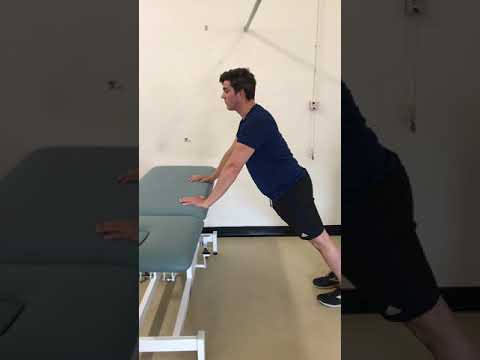
An inclined press-up with the hands on a table, reducing the load compared with a floor press-up. The raised angle makes it an accessible way to build pushing strength and shoulder control in the early-to-mid stages. A natural progression between wall and floor press-ups.

A shoulder-blade activation drill drawing the scapulae down and together against a band. Adding resistance to the 'setting' action strengthens the muscles that stabilise the shoulder blade, which underpins healthy shoulder movement. A key activation exercise in shoulder rehab.

An exercise that re-teaches raising the arm by first setting the rotator cuff, then lifting through range with control. Coordinating cuff activation with elevation helps restore smooth, pain-free shoulder movement. The progressions increase range or load as the shoulder recovers.

A lawnmower-style row that combines a pulling action with a little trunk rotation, with built-in progressions. Pulling a band or weight up toward the hip strengthens the shoulder blade and posterior shoulder in a functional pattern. The progressions let load and range increase as the shoulder improves.

The classic press-up, a full upper-body strengthener for the chest, shoulders, arms and core. Lowering and pressing the body in a straight line builds pushing strength and trunk stability together. A benchmark exercise in later-stage shoulder and upper-limb rehab.

A bent-over row using free weights to build strength in the upper back and shoulder-blade muscles. Rowing toward the lower ribs while keeping a flat back works the scapular retractors and posterior shoulder. A staple pulling exercise for shoulder and posture rehab.

A bent-over rowing exercise using a resistance band to strengthen the upper back and shoulder blades. Drawing the hands toward the lower ribs trains the muscles that retract and stabilise the scapula, supporting posture and shoulder health. The band offers an adjustable, joint-friendly load.

A reactive rotator-cuff exercise dropping and catching a light (around 1kg) weight with the arm raised to 90 degrees in the scapular plane. The catch challenges the cuff to control sudden load in a functional, slightly forward overhead position. Builds reactive stability for everyday and sporting tasks.

A reactive rotator-cuff drill dropping and catching a light (around 1kg) weight with the shoulder in anterior external rotation. Controlling the brief catch builds the cuff's ability to stabilise the shoulder against quick forces. It pairs with the internal-rotation version to train both directions.

A reactive rotator-cuff drill briefly dropping and catching a light (around 1kg) weight with the shoulder held in anterior internal rotation. The quick catch trains the cuff to react to and control sudden load in this position. A targeted exercise for reactive shoulder stability.

A standing falling press-up performed against a wall, catching the body with the hands and pushing back. The upright angle keeps the load light while introducing a gentle reactive element to shoulder and chest loading. An accessible early version of the falling press-up drills.

A reactive press-up where you fall onto a waist-height surface and catch yourself, absorbing through the arms. The drop-and-catch trains the shoulders and chest to handle quick loads in a controlled, manageable way. A mid-level step toward more demanding plyometric push-ups.

An explosive push-up where the hands leave the floor for a clap before landing. This high-level plyometric develops upper-body power and the ability to absorb and produce force quickly. Suited to the final stages of rehab or to athletic conditioning.

A reactive shoulder drill controlling a gentle fall toward a doorway and catching yourself with the hands. The quick load-and-absorb action trains the shoulder to react to and control sudden forces. A higher-level exercise for building reactive shoulder strength and confidence.

An early shoulder-control drill rolling a ball under one hand against a wall. The upright, supported position keeps the load low while teaching the shoulder blade to stay set as the hand moves. A gentle starting point for the ball-roll progression.
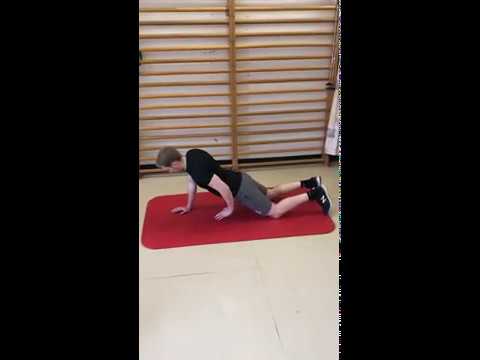
A kneeling single-arm control drill moving one hand across a ball while keeping the shoulder blade set and trunk steady. The kneeling position lowers the demand, making it a good progression toward the push-up-position versions. Builds scapular and shoulder control.

A kneeling version of the single-hand ball roll that regresses the push-up-position drills to reduce load. Rolling the ball with one hand while keeping the shoulder set trains controlled, stable shoulder-blade movement. A useful stepping-stone before progressing to full push-up positions.

A single-arm control exercise moving one hand across a ball while holding a push-up position. Loading one shoulder at a time, with the other hand grounded, builds asymmetrical strength and anti-rotation control through the trunk. A demanding mid-to-late stage shoulder and core drill.

A challenging control drill rolling a ball under both hands while holding a push-up position. The unstable contact forces the shoulders and core to work hard to keep the body braced and level. A high-level progression for shoulder stability and trunk control.

An advanced control exercise rolling a ball under each hand from a push-up position. Keeping the trunk braced and shoulders stable while both hands move builds high-level shoulder, core and wrist control. One of the most demanding drills in this progression, suited to later-stage rehab or performance work.

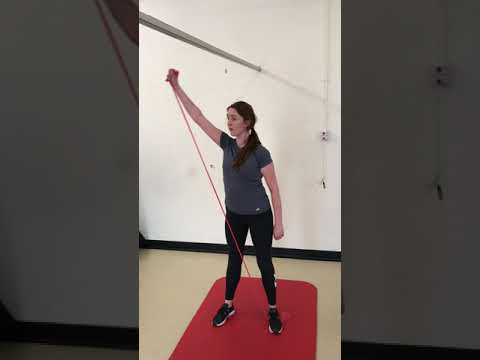

A powerful press-up driving the body up off the floor to build upper-body explosiveness.
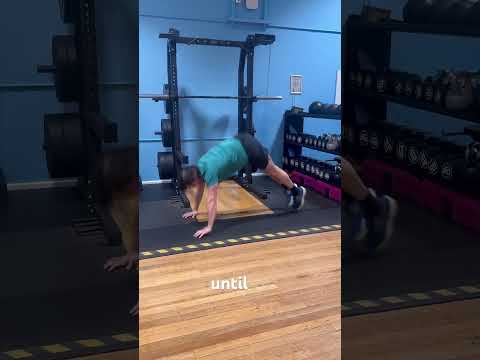
An explosive upper-body press-up where the hands leave the floor.
