

Deep Gluteal Pain Syndrome: Phase 3
Squats, hinges, lunges and single-leg work at 10–15 repetitions for 3 sets, three to five times a week. The aim is foundations — balance, endurance and confidence with everyday movement — before heavier loading begins.
Deep Gluteal Pain Syndrome: Phase 2
From six weeks the focus shifts to waking the muscles up and getting you off your walking aids. Glute and abductor work, sit-to-stands, step-ups and balance training, with sets, repetitions and frequency for each.
Deep Gluteal Pain Syndrome: Phase 1
The first six weeks are about protecting the healing hip, controlling pain and swelling, and getting movement back early. Gentle range-of-movement and activation exercises with full dosage, plus guidance on how much discomfort is acceptable while you work.
Deep Gluteal Pain Syndrome (DGPS)
Hip resurfacing preserves far more of your own bone than a total hip replacement, which makes it attractive for younger, more active patients. Covers hip anatomy and osteoarthritis, how resurfacing differs from a full replacement, why ceramic-on-ceramic implants were developed, and the prehabilitation and weight loss that set up a good recovery.
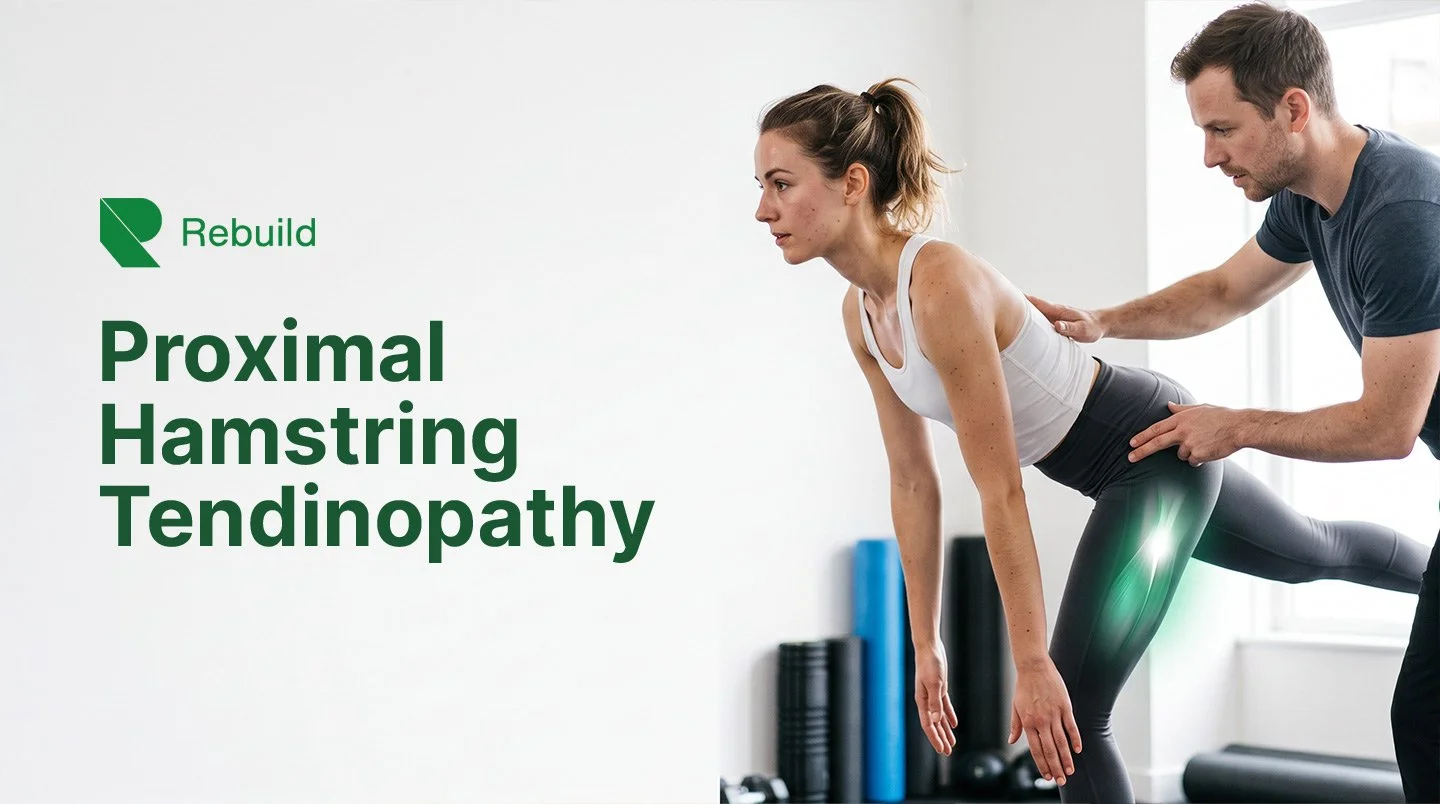
Proximal Hamstring Tendinopathy
Deep pain at the bottom of the buttock that eases as you warm up and bites afterwards is often proximal hamstring tendinopathy — and rest alone rarely fixes it. Covers hamstring anatomy, why the tendon becomes sensitive, realistic recovery timelines, and a four-phase rehabilitation pathway from isometric holds through to sprinting, with full prescriptions.
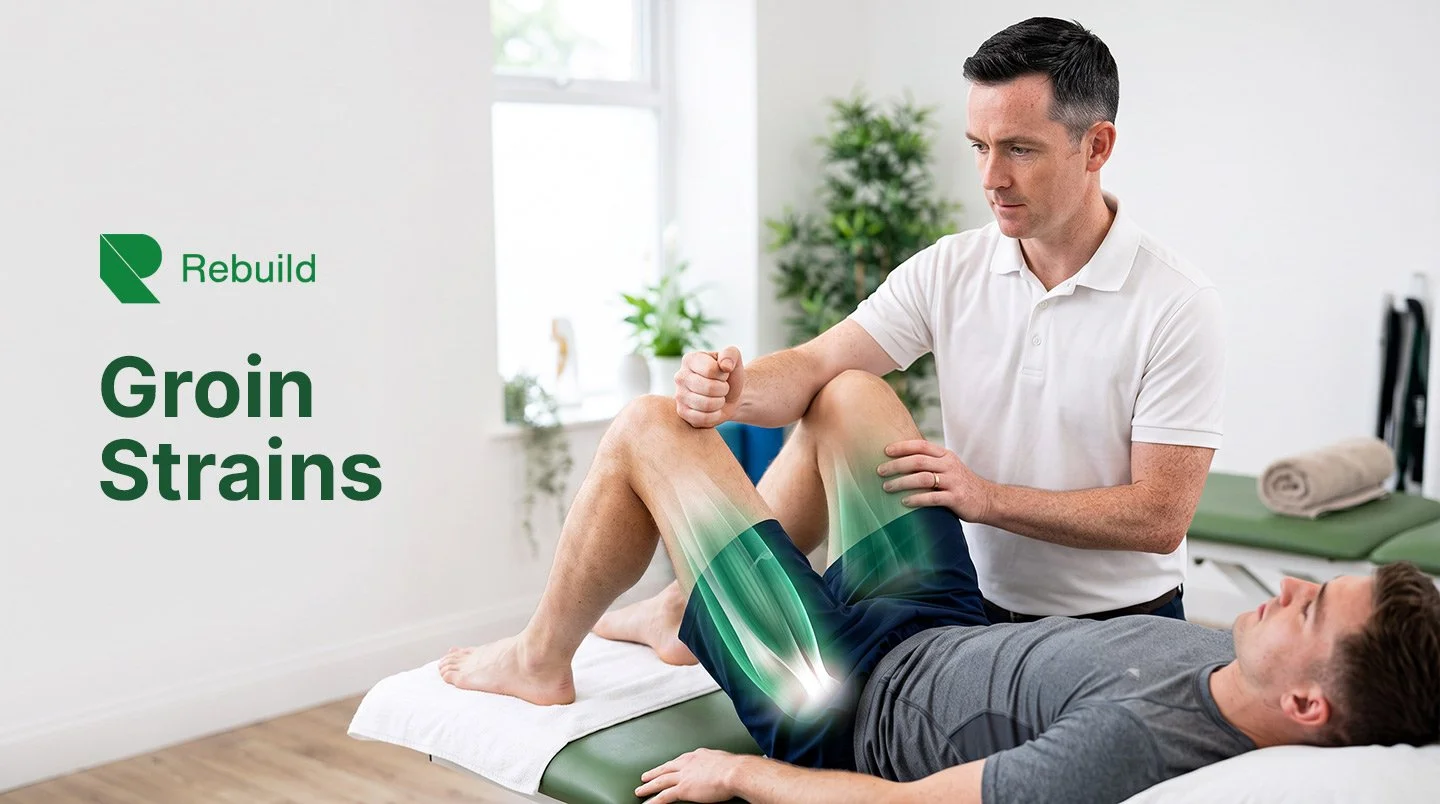
Groin Strains & Adductor-Related Groin Pain
Groin pain is one of the most common problems in sports involving sprinting, kicking and cutting, and it usually builds gradually from overuse rather than one bad movement. Covers adductor anatomy, strain grades, why previous injury and reduced strength raise the risk, the other conditions it gets confused with, and seven rehabilitation exercises with dosage.
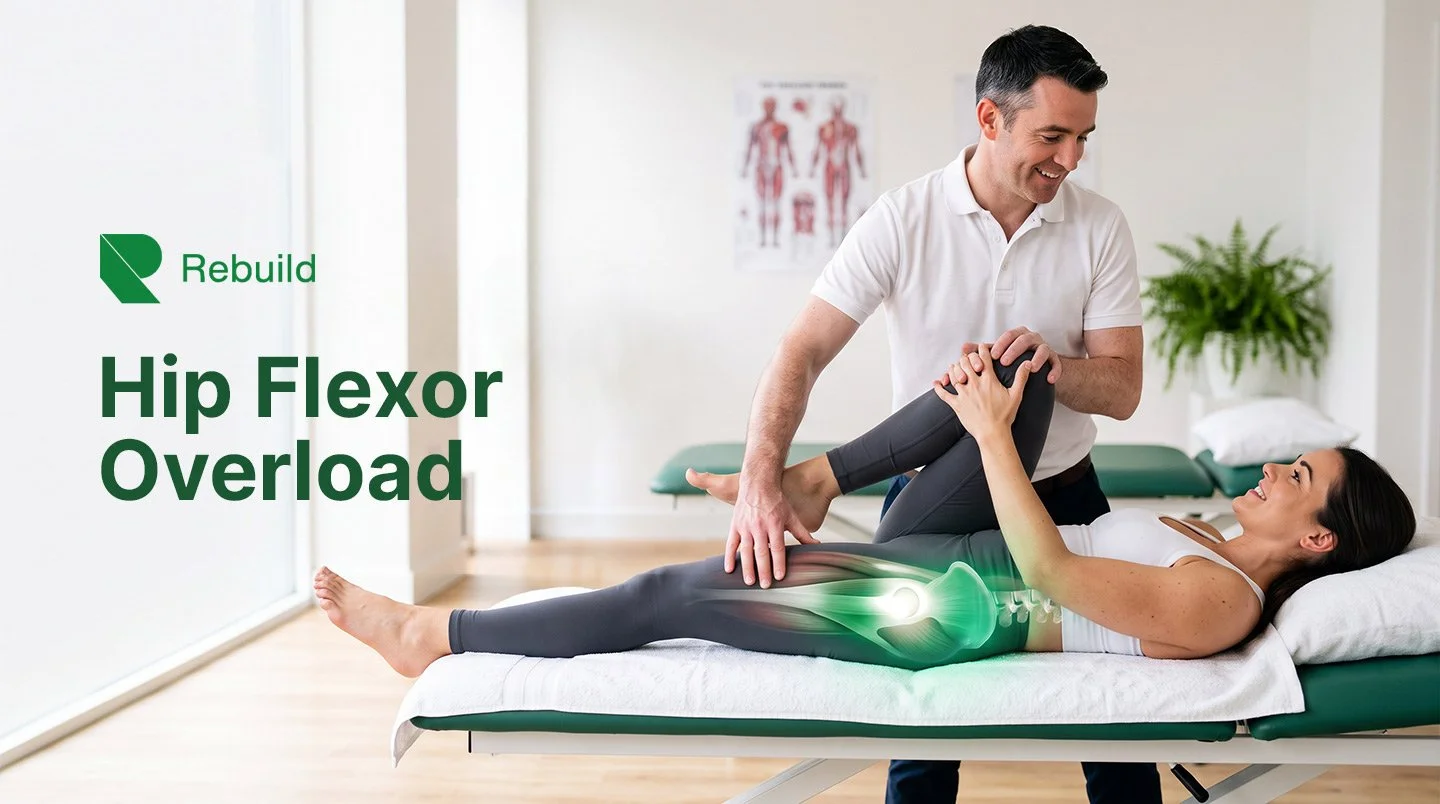
Exercises for Hip Flexor Overload & Internal Snapping Hip
Exercise is the cornerstone of recovery, and the order it's introduced in matters. Five progressive levels, from isometric holds that calm an irritated tendon, through resisted and eccentric hip flexion, to running and change-of-direction work — with sets, repetitions and weekly frequency for each, plus video demonstrations.
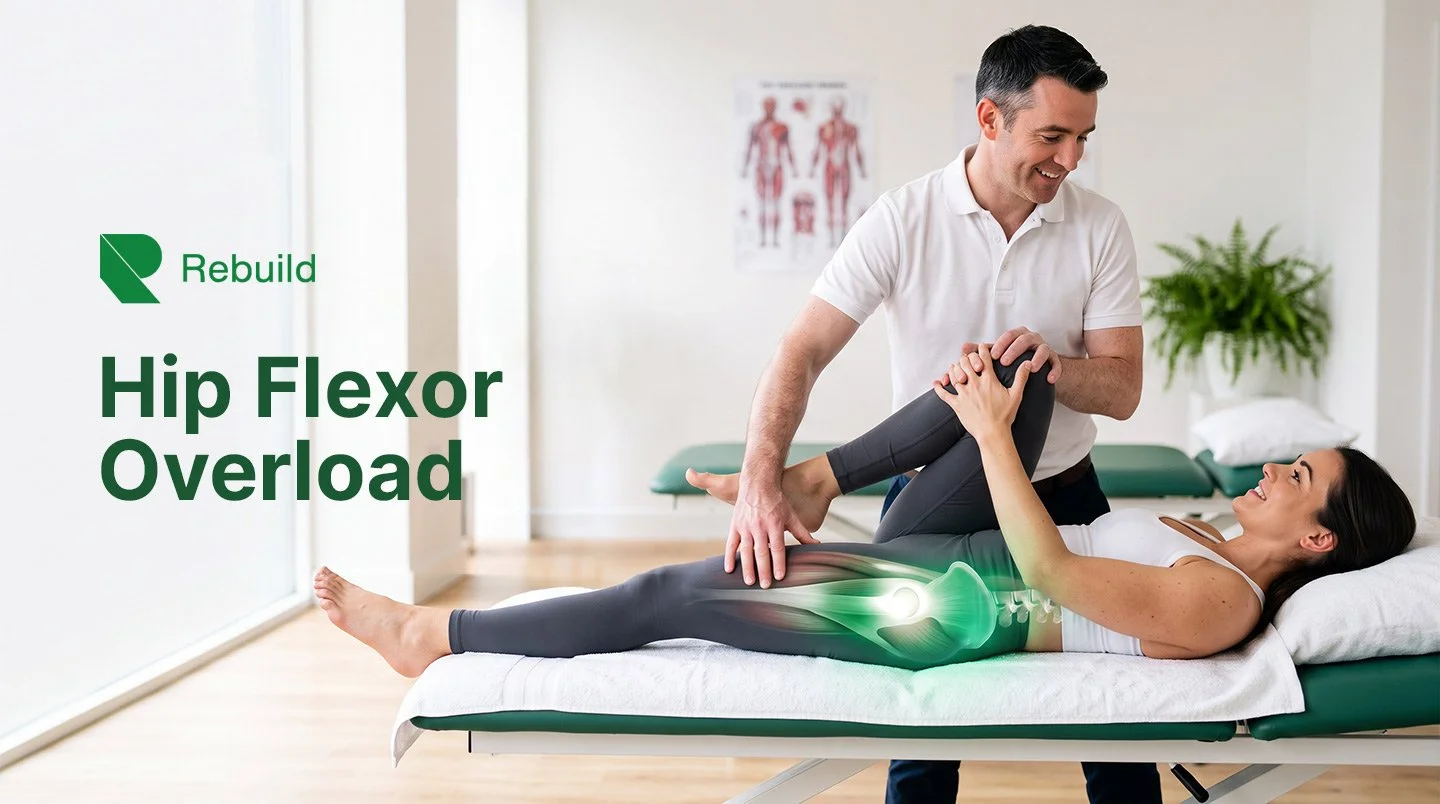
Hip Flexor Overload & Internal Snapping Hip Syndrome
Clicking or snapping at the front of the hip is often harmless in itself, but the hip flexor overload behind it can cause real pain and lost performance. Covers the anatomy of the iliopsoas and rectus femoris, why weak glutes and hip dysplasia make the problem worse, how it's diagnosed, and what conservative treatment involves.