
Hip Flexor Overload & Internal Snapping Hip Syndrome
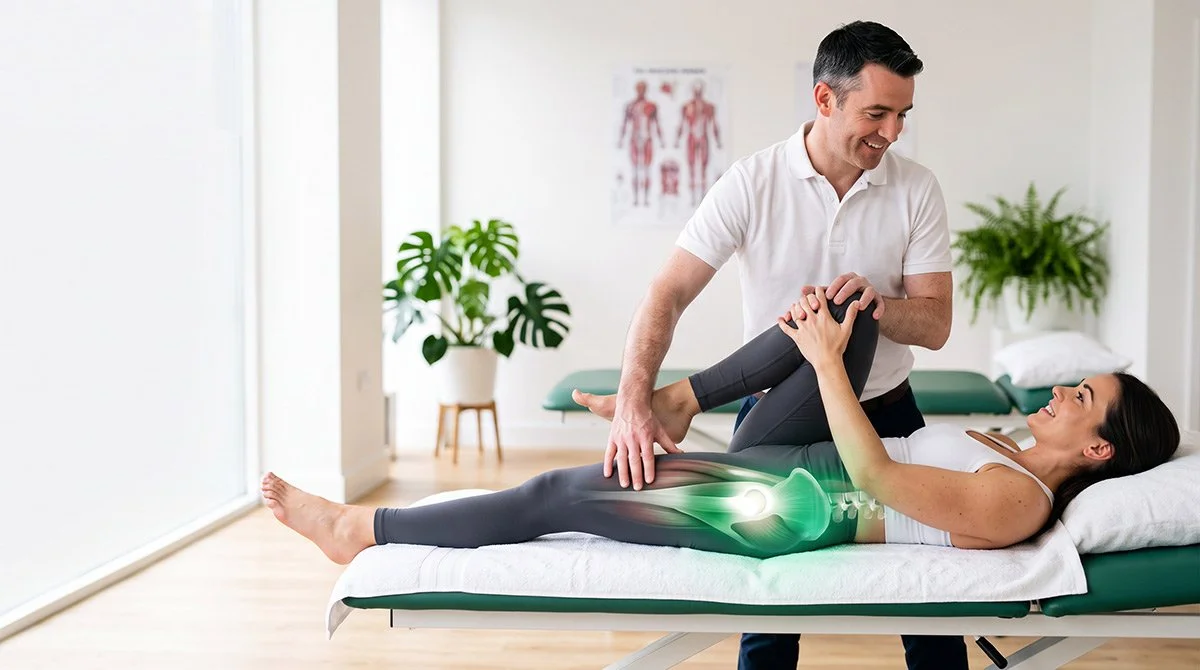
Understanding Hip Flexor Overload and Internal Snapping Hip
Hip pain at the front of the hip or groin can be frustrating, especially when accompanied by a noticeable clicking or snapping sensation during movement. One common cause of these symptoms is hip flexor overload, which can contribute to a condition known as internal snapping hip syndrome.
While the snapping itself is often harmless, ongoing irritation and overload of the hip flexor muscles and tendons can lead to pain, reduced performance, and difficulty with everyday activities and sport.
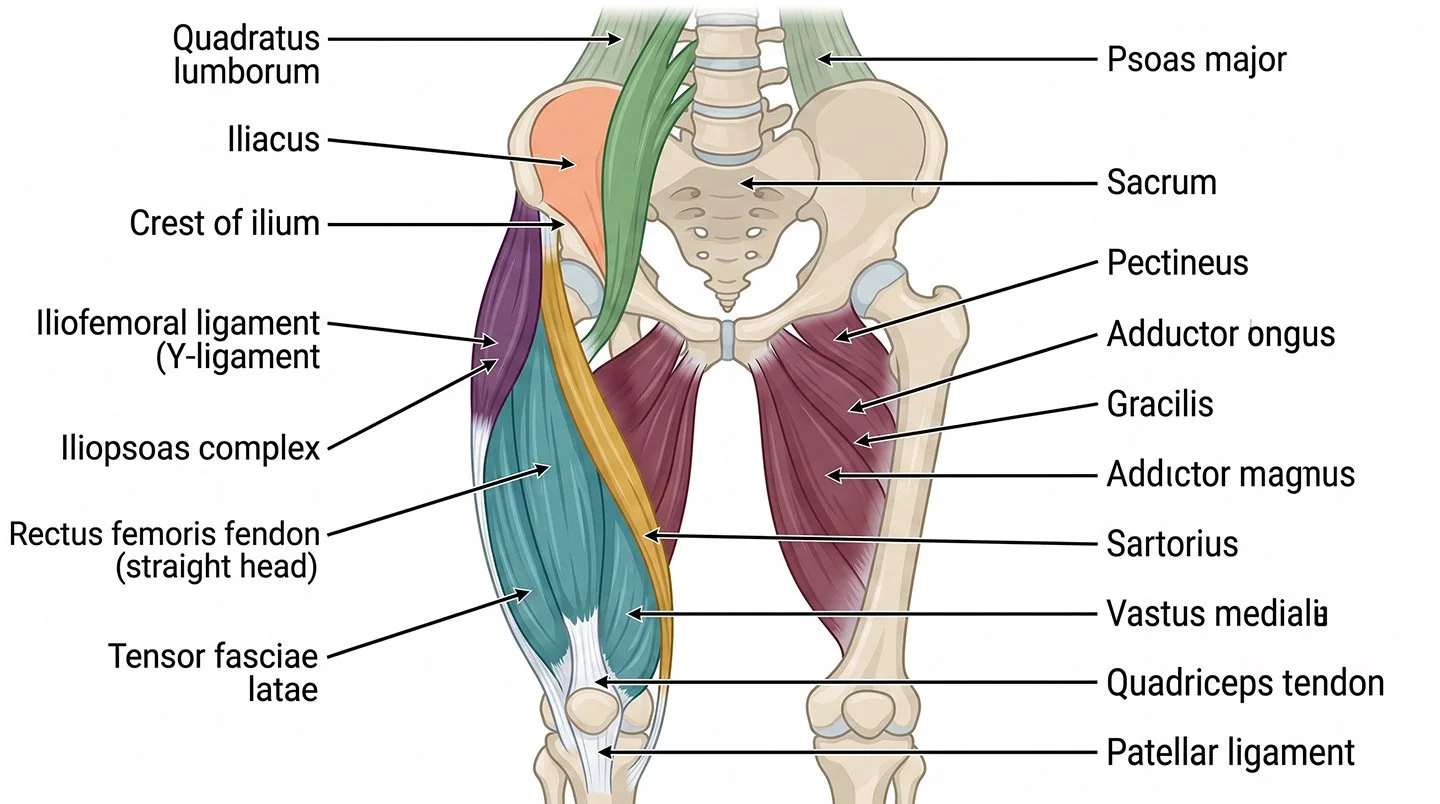
Anatomy: What Are the Hip Flexors?
The primary hip flexor is the iliopsoas muscle, which is made up of two muscles:
Psoas Major – originates from the lumbar spine.
Iliacus – originates from the inside of the pelvis.
These muscles combine into the iliopsoas tendon, which passes across the front of the hip joint and attaches to the femur (thigh bone).
The hip flexors are responsible for:
Lifting the knee towards the chest.
Assisting with walking, running, and climbing stairs.
Helping control pelvic and spinal movement.
Generating power during sprinting, kicking, and jumping activities.
In internal snapping hip syndrome, the iliopsoas tendon can move over bony structures at the front of the hip, producing a snapping or clicking sensation.
The Role of the Rectus Femoris and Iliopsoas
Although the iliopsoas is often considered the primary hip flexor, hip flexion is actually shared between several muscles, most notably the iliopsoas and rectus femoris.
The rectus femoris is one of the four quadriceps muscles. Unlike the other quadriceps muscles, it crosses both the hip and knee joints, meaning it contributes to:
Hip flexion.
Knee extension.
Sprinting, kicking, jumping, and acceleration activities.
Research suggests that during the early phase of hip flexion (approximately 0–60 degrees), the rectus femoris plays a particularly important role in generating hip flexion force. As the hip moves beyond 60 degrees of flexion, the mechanical advantage of the rectus femoris decreases and the iliopsoas becomes the dominant hip flexor, producing the majority of force through the remaining range.
This relationship is important clinically because overload of the hip flexors is rarely isolated to the iliopsoas alone. Athletes with hip flexor pain often demonstrate excessive loading through both the iliopsoas and rectus femoris, particularly during:
Sprinting.
Kicking.
Hill running.
Repeated acceleration and deceleration.
High-volume gym training involving leg raises and explosive movements.
Effective rehabilitation therefore needs to address the entire hip flexor complex rather than focusing solely on the iliopsoas tendon.
What Is Internal Snapping Hip Syndrome?
Internal snapping hip syndrome occurs when the iliopsoas tendon repeatedly flicks or snaps over structures at the front of the hip during movement.
People often describe:
A clicking, snapping, or popping sensation in the groin.
Symptoms when standing from sitting.
Snapping during running, cycling, dancing, or kicking.
Tightness or discomfort at the front of the hip.
Pain during or after activity if the tendon becomes irritated.
In many cases, the snapping can be felt as well as heard.
Who Does This Condition Affect?
Hip flexor overload and internal snapping hip syndrome commonly affect:
Runners.
Footballers and rugby players.
Dancers and gymnasts.
Cyclists.
Martial artists.
Individuals who spend prolonged periods sitting.
People returning to sport after injury or a period of inactivity.
The condition is particularly common in activities involving repetitive hip flexion, such as running, kicking, sprinting, cycling, and dance movements.
Why Does It Happen? (Aetiology)
Hip flexor overload typically develops when the demand placed on the iliopsoas tendon and surrounding tissues exceeds their ability to tolerate load.
Common contributing factors include:
Training Load Increases
A sudden increase in:
Running mileage.
Sprinting volume.
Cycling intensity.
Kicking drills.
Gym training.
can overload the tendon and surrounding tissues.
Reduced Hip Strength
Weakness of the:
Gluteal muscles.
Deep hip stabilisers.
Core musculature.
can increase reliance on the hip flexors during movement.
Reduced Hip Mobility
Stiffness around the hip or pelvis can alter movement patterns and increase stress through the iliopsoas tendon.
Prolonged Sitting
Long periods sitting place the hip flexors in a shortened position and may contribute to increased tightness and sensitivity.
Biomechanical Factors
Certain movement patterns can increase tendon compression and irritation, particularly during repetitive sporting activities.
Hip Dysplasia and Hip Flexor Overload
An often-overlooked contributor to hip flexor overload is hip dysplasia.
Hip dysplasia occurs when the socket of the hip (acetabulum) provides less coverage of the femoral head than normal. This creates a hip joint that is inherently less stable and places greater reliance on the surrounding muscles for dynamic control.
In individuals with hip dysplasia, the iliopsoas often functions like a “seat belt” for the hip joint. As the body attempts to compensate for the reduced bony stability, the hip flexor works harder to help maintain the position of the femoral head within the socket during movement.
Over time, this increased demand can contribute to:
Hip flexor overload.
Iliopsoas tendinopathy.
Internal snapping hip syndrome.
Anterior hip and groin pain.
This compensatory mechanism becomes even more pronounced when other important stabilising muscles are weak or underperforming.
The Importance of the Gluteus Medius
One of the most important muscles for hip stability is the gluteus medius.
Located on the side of the hip, the gluteus medius is responsible for:
Pelvic stability during walking and running.
Controlling hip movement in single-leg activities.
Maintaining optimal lower limb alignment.
When the gluteus medius is weak, the pelvis and femur can become less stable during movement. The body often compensates by increasing activation of the hip flexors, particularly the iliopsoas, in an attempt to create additional stability around the joint.
As a result, the hip flexor may be forced to perform two jobs simultaneously:
Producing hip flexion.
Acting as a stabiliser for an already unstable hip.
This can significantly increase tendon loading and may explain why some individuals continue to experience recurrent hip flexor symptoms despite stretching or temporary rest.
For patients with hip dysplasia or recurrent hip flexor overload, rehabilitation should therefore focus not only on the painful tendon itself, but also on improving the strength and function of the surrounding stabilising muscles, particularly:
Gluteus medius.
Gluteus maximus.
Deep hip rotators.
Core musculature.
By improving overall hip stability, the excessive workload placed on the hip flexors can be reduced, allowing symptoms to settle and helping to prevent future recurrence.
Physiotherapy Considerations for Hip Dysplasia and Hip Flexor Overload
At Rebuild Physiotherapy, assessment of persistent hip flexor pain extends beyond the tendon itself. We evaluate:
Hip joint stability.
Pelvic control.
Gluteal strength.
Movement patterns during walking, running, and sport.
Potential underlying factors such as hip dysplasia or hypermobility.
Addressing these contributing factors is often the key to achieving long-term symptom resolution rather than simply managing flare-ups. A progressive strengthening programme that restores hip stability can substantially reduce the load placed on the iliopsoas and rectus femoris, allowing patients to return to activity with greater confidence and less pain.
Diagnosis
Diagnosis is primarily based on a detailed clinical assessment.
A physiotherapist will assess:
Location of symptoms.
Aggravating activities.
Hip range of movement.
Strength and control around the hip and pelvis.
Reproduction of the snapping sensation.
Walking, running, and sport-specific movements.
In some cases, imaging such as ultrasound or MRI may be requested if symptoms are severe, persistent, or if other conditions need to be ruled out.
Other conditions that can cause similar symptoms include:
Hip labral injuries.
Hip joint impingement.
Adductor-related groin pain.
Hip osteoarthritis.
Stress injuries.
A thorough assessment helps identify the true source of symptoms and guide the most effective treatment plan.
What Can Be Done About It?
The good news is that most cases respond very well to conservative treatment.
Management may include:
Activity Modification
Reducing or temporarily modifying aggravating activities can help calm symptoms while maintaining overall fitness.
This does not usually mean complete rest. Instead, activity levels are adjusted to allow recovery without significant loss of conditioning.
Load Management
One of the most important factors in recovery is ensuring that the tendon is exposed to the right amount of load at the right time.
Too much load may continue to aggravate symptoms, while too little can reduce the tissue's capacity to cope with future demands.
Improving Mobility
Where appropriate, restoring movement around the:
Hip joint.
Pelvis.
Lower back.
can reduce excessive strain on the hip flexors.
Strength Development
Progressive strengthening helps improve the capacity of the tendon and surrounding muscles to tolerate activity.
The Role of Physiotherapy
Physiotherapy is often the most effective treatment for hip flexor overload and internal snapping hip syndrome.
At Rebuild Physiotherapy, treatment focuses on identifying and addressing the underlying factors driving symptoms rather than simply treating the painful area.
Your physiotherapist will:
Identify movement and strength deficits.
Assess training loads and recovery.
Develop an individualised rehabilitation programme.
Progress exercises safely back to full activity.
Help prevent recurrence.
Treatment may include:
Education and load management advice.
Manual therapy where appropriate.
Mobility exercises.
Progressive strengthening.
Running and sports-specific rehabilitation.
Return-to-sport planning.