
Groin Strains & Adductor-Related Groin Pain
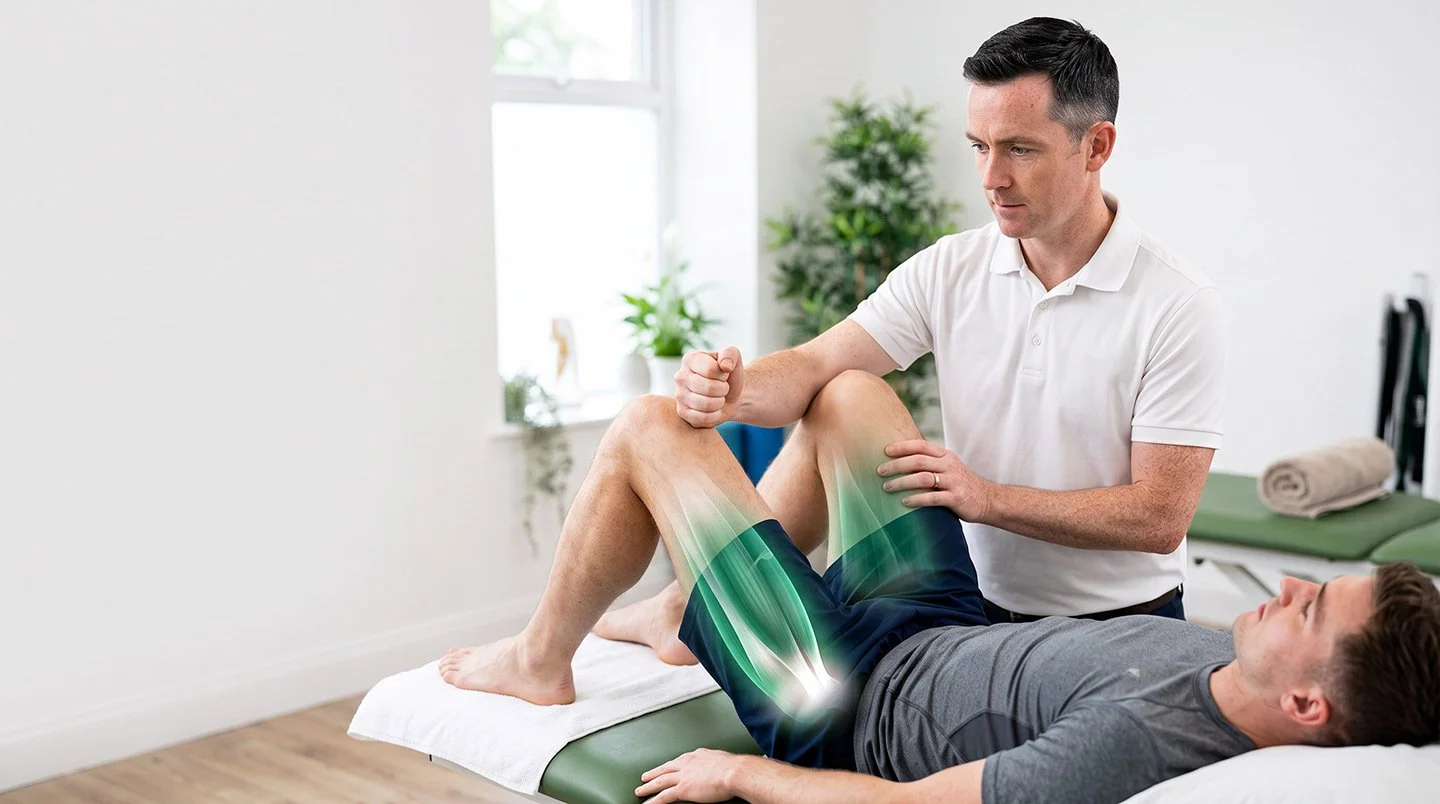
Groin pain is a common complaint among athletes and active individuals, particularly those involved in sports requiring sprinting, kicking, twisting, and rapid changes of direction. One of the most frequent causes of groin pain is injury to the adductor muscles, often referred to as a groin strain or adductor-related groin pain.
While some injuries occur suddenly during a specific movement, many cases develop gradually over time as a result of repetitive loading and inadequate recovery. Left untreated, adductor problems can become persistent and significantly affect sporting performance and everyday function.
Anatomy: Understanding the Adductor Muscles
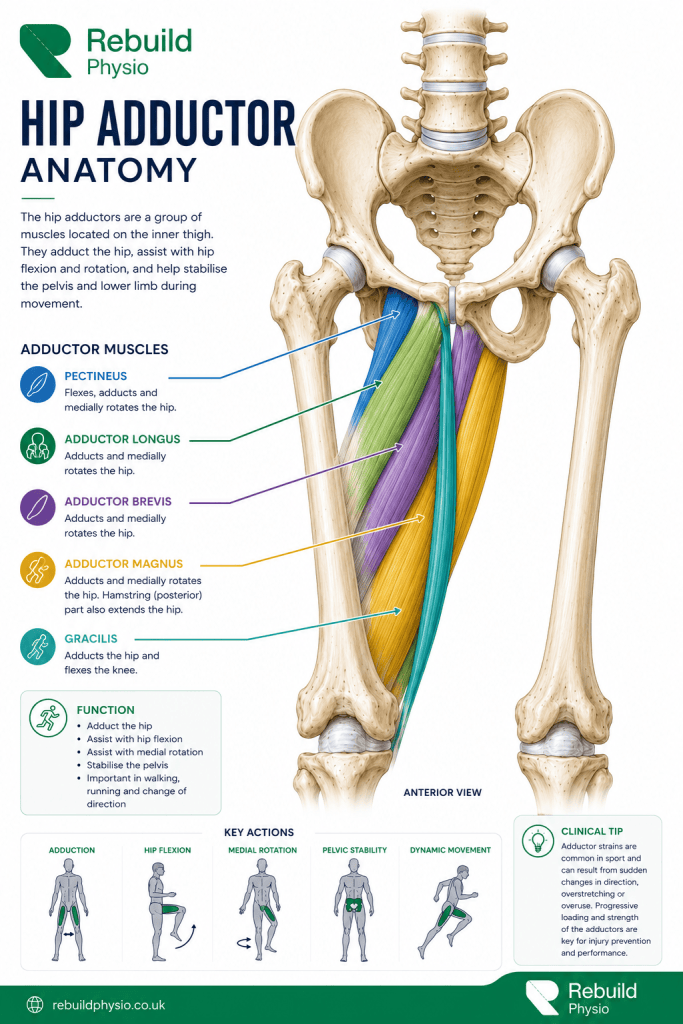
The adductor muscle group is located on the inner thigh and consists of several muscles that attach from the pelvis to the femur.
These include:
Adductor longus
Adductor brevis
Adductor magnus
Gracilis
Pectineus
The adductor longus is the most commonly injured muscle and tendon in groin-related injuries.
The primary functions of the adductors are:
Bringing the leg towards the body's midline (adduction)
Assisting with hip flexion and extension
Stabilising the pelvis during walking, running, and single-leg activities
Generating force during sprinting, kicking, and change-of-direction movements
Importantly, the adductors do far more than simply pull the leg inward. They play a critical role in controlling forces between the trunk, pelvis, and lower limb during high-speed athletic activities.
What Is an Adductor Strain?
An adductor strain occurs when the muscle or tendon is loaded beyond its capacity, resulting in injury to the muscle fibres, tendon, or both.
Strains can range from:
Grade 1
Minor injury involving a small number of muscle fibres with mild pain and minimal loss of function.
Grade 2
Partial tearing with moderate pain, reduced strength, and difficulty with sporting activities.
Grade 3
A complete rupture of the muscle or tendon, resulting in significant pain and loss of function. These injuries are relatively uncommon.
Not all adductor-related groin pain involves a muscle tear. Many individuals develop adductor tendinopathy or chronic overload of the tendon attachment at the pelvis without a specific traumatic event.
Groin Pain in Sport: Why tendinopathy/Overuse Is the Most Common Cause
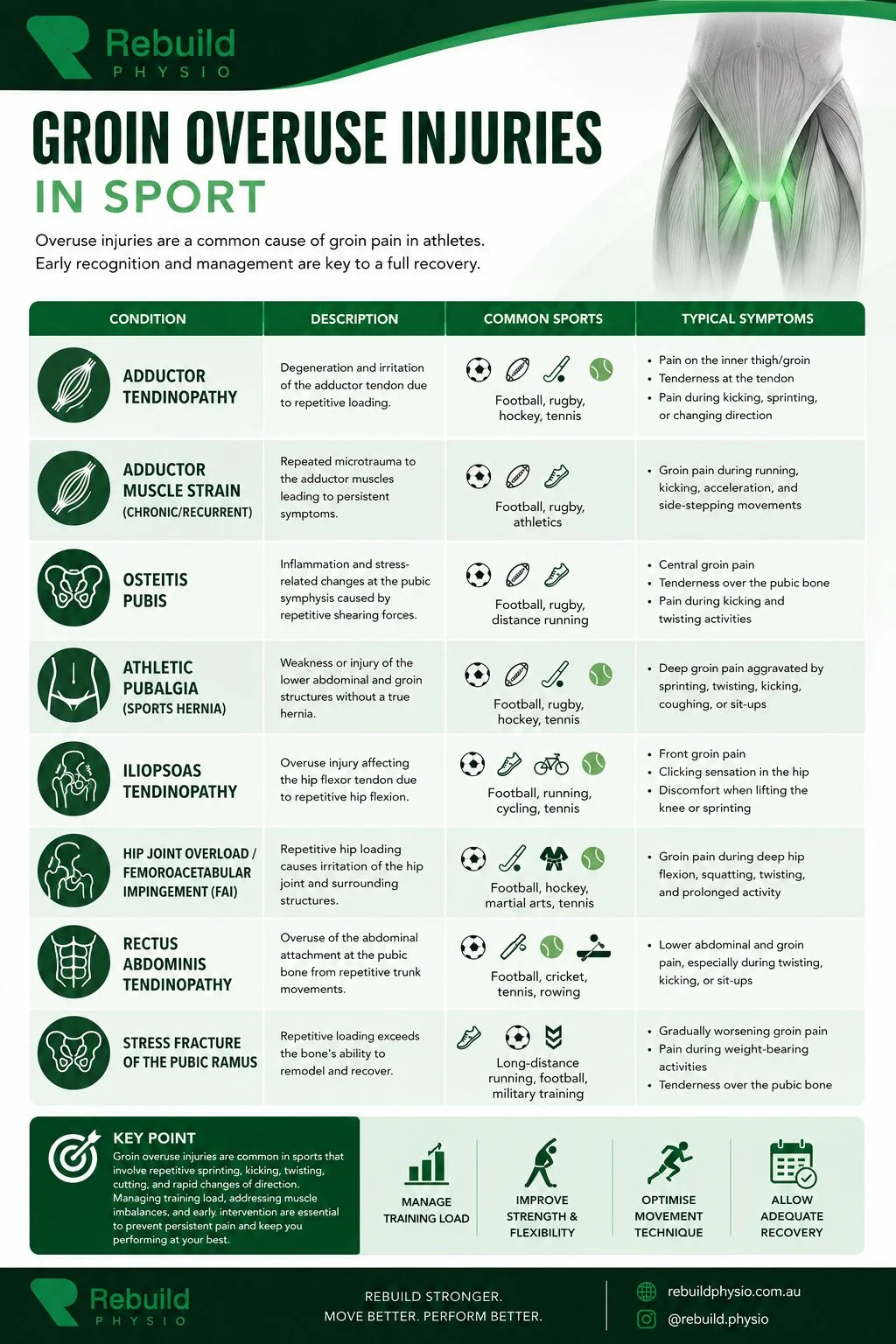
Groin pain is one of the most common injuries seen in athletes, particularly in sports that involve repeated sprinting, kicking, cutting, twisting, and rapid changes of direction. Sports such as football, rugby, tennis, hockey, and athletics place significant stress on the muscles, tendons, and joints around the groin and pelvis.
In most cases, groin pain develops gradually due to overuse rather than from a single traumatic event. Repeated training sessions, matches, and high-intensity movements can overload the adductor muscles (inner thigh muscles), hip flexors, and surrounding structures. When the body's tissues are exposed to more stress than they can recover from, irritation and pain can develop.
Factors that increase the risk of overuse-related groin pain include sudden increases in training load, inadequate recovery, reduced hip strength, poor movement mechanics, and previous groin injuries. Athletes often notice symptoms starting as mild discomfort during activity before progressing to pain that affects performance and everyday movement.
Who Does This Condition Affect?
Groin strains and adductor pathology commonly affect:
Footballers
Rugby players
Hockey players
Sprinters
Tennis players
Martial artists
Dancers
Field sport athletes
They are particularly common in sports involving:
Sprinting
Kicking
Cutting and pivoting
Rapid acceleration and deceleration
Repetitive directional changes
Although athletes are most commonly affected, recreational runners and active individuals can also develop adductor-related pain.
Why Does It Happen? (Aetiology)
Adductor injuries rarely occur without an underlying reason. In most cases, symptoms develop because the demands placed upon the muscle-tendon unit exceed its capacity.
Common contributing factors include:
Sudden Changes in Training Load
A rapid increase in:
Running volume
Sprint exposure
Match intensity
Kicking volume
Gym training
can overload the adductor muscles and tendons.
Previous Groin Injury
Previous groin injuries are one of the strongest predictors of future injury.
Residual weakness or incomplete rehabilitation can leave the area vulnerable to recurrence.
Reduced Adductor Strength
Research consistently shows that athletes with reduced adductor strength are at increased risk of developing groin injuries.
Poor strength capacity means the tissues are less able to tolerate high-force sporting activities.
Reduced Hip and Pelvic Control
Weakness around the pelvis and hip can increase stress on the adductors.
Particularly important muscles include:
Gluteus medius
Gluteus maximus
Deep hip stabilisers
Core musculature
Inadequate Recovery
Accumulated fatigue can reduce tissue capacity and increase injury risk, particularly during congested training or competition schedules.
How and Why Has It Happened?
The adductor muscles experience extremely high forces during sport.
For example, when sprinting or changing direction, the adductors act to:
Stabilise the pelvis
Decelerate the leg
Generate force for propulsion
Transfer force between the trunk and lower limb
When these forces repeatedly exceed the tissue's ability to recover and adapt, microscopic tissue damage can accumulate.
Initially this may present as:
Tightness
Stiffness
Mild discomfort after activity
Without appropriate management, symptoms may progress to:
Pain during sprinting
Pain with kicking
Groin tenderness
Reduced athletic performance
Persistent groin pain during daily activities
Common Symptoms
People with adductor pathology often report:
Pain in the groin or inner thigh
Pain during sprinting
Pain when kicking a ball
Discomfort during side-stepping or cutting movements
Pain squeezing the knees together
Morning stiffness
Reduced speed and power
Tenderness near the pubic bone
Symptoms may develop gradually or occur suddenly during a sporting activity.
Diagnosis
Diagnosis is primarily based on a thorough clinical assessment.
Your physiotherapist will assess:
Symptom history
Mechanism of injury
Groin tenderness
Adductor strength
Hip range of movement
Pelvic control
Functional activities such as running, squatting, and hopping
One commonly used assessment is the adductor squeeze test, which helps evaluate both pain and strength.
Imaging such as ultrasound or MRI may occasionally be required, particularly if:
A significant tear is suspected
Symptoms are severe
Progress is slower than expected
Other causes of groin pain need to be excluded
Other Causes of Groin Pain
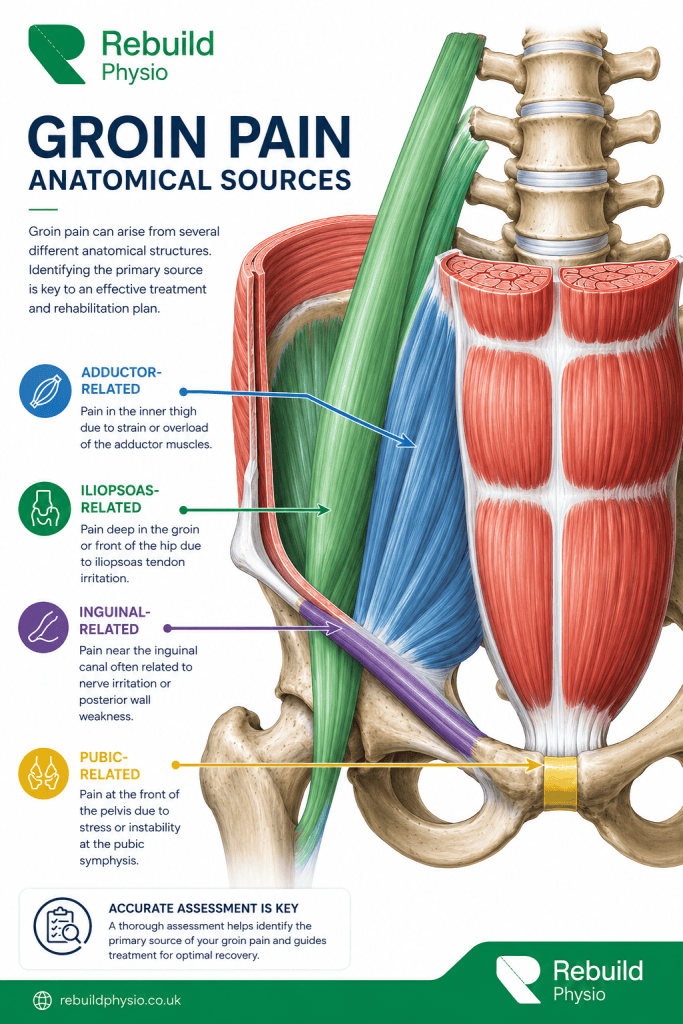
Groin pain is often complex and can involve multiple structures.
Conditions that may mimic or coexist with adductor pathology include:
Hip impingement (FAI)
Hip labral injuries
Hip dysplasia
Sports hernia (inguinal-related groin pain)
Osteitis pubis
Hip flexor tendinopathy
Lumbar spine referral
A comprehensive assessment is therefore essential to identify the true source of symptoms.
What Can Be Done About It?
Most groin strains and adductor tendon injuries respond very well to conservative treatment.
Management typically includes:
Load Modification
Reducing aggravating activities allows symptoms to settle while maintaining overall fitness where possible.
Complete rest is rarely required and often delays recovery.
Progressive Strengthening
The most effective long-term treatment is improving the load capacity of the adductor muscles and tendons.
The goal is not simply pain reduction but building resilience for future demands.
Improving Hip and Pelvic Function
Addressing weaknesses elsewhere in the kinetic chain often reduces excessive stress on the groin.
Return-to-Sport Rehabilitation
Athletes must be progressively exposed to:
Sprinting
Acceleration
Deceleration
Cutting
Kicking
before returning to unrestricted competition.
The Role of Physiotherapy
Physiotherapy plays a crucial role in both recovery and preventing recurrence.
At Rebuild Physiotherapy, treatment focuses on identifying why the injury occurred rather than simply treating the painful area.
Your physiotherapist will assess:
Adductor strength deficits
Hip mobility restrictions
Running mechanics
Pelvic control
Training load
Sport-specific demands
Treatment may include:
Education and load management
Manual therapy where appropriate
Progressive strengthening
Running rehabilitation
Change-of-direction retraining
Return-to-sport testing
The ultimate goal is to restore confidence, performance, and resilience.
Exercises for Adductor Pathology
Exercise is the cornerstone of successful rehabilitation.
| Exercise | Reps | Sets | Times a week |
|---|---|---|---|
| 1. Isometric adductor squeeze | 30–45 sec hold | 4–5 | 5–7 |
| 2. Copenhagen adduction (modified) | 6–10 per side | 2–3 | 2–3 |
| 3. Side-lying adduction | 12–15 per side | 2–3 | 3–4 |
| 4. Split squats | 8–12 per leg | 3 | 2–3 |
| 5. Single-leg Romanian deadlift | 8–10 per leg | 3 | 2–3 |
| 6. Lateral lunges | 8–12 per leg | 3 | 2–3 |
| 7. Running and sprint progressions | Progressive | Progressive | 2–3 |
Isometric Adductor Squeeze
Copenhagen Adduction (Modified)
One of the most effective exercises for improving adductor strength.
How to perform:
Support your upper leg on a bench.
Lift your body off the floor.
Lower slowly under control.
Prescription:
2–3 sets of 6–10 repetitions
Progressions can be introduced as strength improves.
Side-Lying Adduction
Barbell Split squat
Single-Leg Romanian Deadlifts
Lateral lunge
Running and Sprint Progressions
For athletes, rehabilitation must eventually include:
Jogging
Tempo running
Acceleration drills
Sprinting
Cutting movements
Sport-specific tasks
The adductors need to be prepared for the exact demands of competition.
Recovery and Prognosis
Most groin strains recover successfully with appropriate rehabilitation.
Recovery times vary depending on:
Severity of injury
Duration of symptoms
Tendon involvement
Sporting demands
Adherence to rehabilitation
Mild strains may settle within a few weeks, whereas longstanding tendon-related groin pain can require several months of progressive loading to achieve full recovery.
The most important factor is not simply reducing pain but restoring strength, function, and confidence.
How Rebuild Physiotherapy Can Help
At Rebuild Physiotherapy, we provide comprehensive assessment and evidence-based rehabilitation for groin strains and adductor-related groin pain.
Whether your goal is returning to football, rugby, running, the gym, or simply moving comfortably without pain, our team will develop a tailored rehabilitation programme designed to address the underlying cause of your symptoms and reduce the risk of recurrence.
If you're struggling with groin pain, recurring adductor injuries, or limitations in sport and exercise, contact Rebuild Physiotherapy to arrange an assessment and begin your recovery journey.