
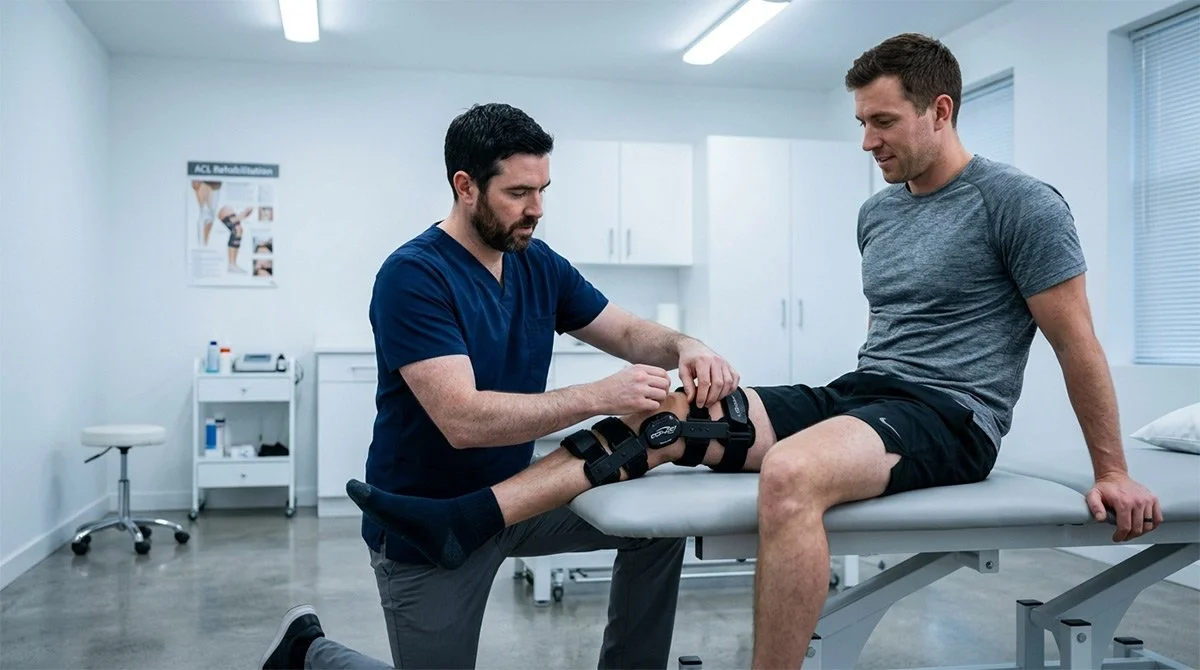
Anterior Cruciate Ligament: Page 4 – Level 3+4 Motor control
Phase three focuses on improving motor control and exercise progression, helping the brain and body coordinate the right muscles at the right time. The aim is to build better movement quality, knee stability and confidence as activity levels increase. Exercises should feel challenging but controlled, and can be modified to work similar muscles in positions that avoid significant increases in pain.
Anterior Cruciate Ligament: Page 3 – level 2 muscle activation
As healing progresses, rehabilitation focuses on gently activating the muscles around the knee in a controlled and protective way. Exercises should be challenging enough to support recovery and adaptation, but not so demanding that they increase pain or irritate healing tissues.
Anterior Cruciate Ligament: Page 2 – Post operative physiotherapy
Early rehabilitation after ACL reconstruction focuses on protecting the graft while restoring knee movement, reducing swelling and reactivating the quadriceps muscles. Regaining full knee extension is especially important, as it supports normal walking, muscle control and long-term recovery. Gentle, progressive exercises help rebuild confidence and create a strong foundation for later strengthening, running and return-to-sport rehabilitation.
Anterior Cruciate Ligament: Reconstruction (ACL – R)
ACL reconstruction is just the start—the real work happens in rehab. Understanding the recovery process, timelines, and what your body needs at each stage is key to getting back to full strength and avoiding setbacks.
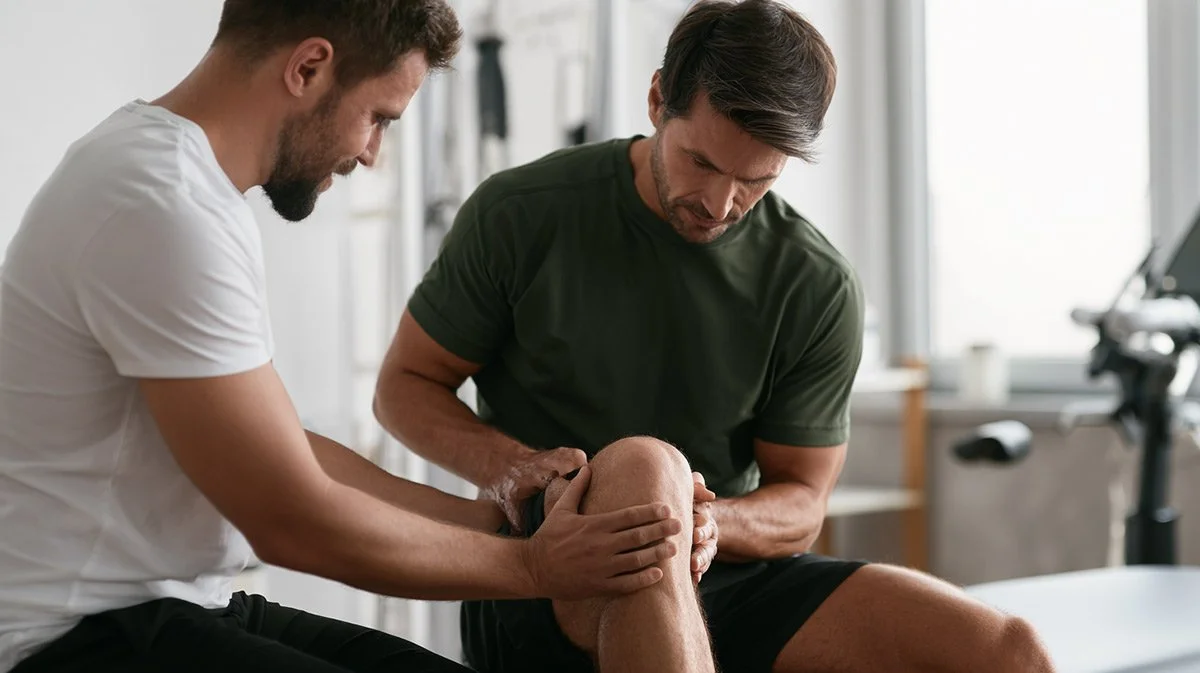
Patello-Femoral Joint Pain
The patellofemoral joint—where your kneecap meets your thigh bone—plays a key role in everyday movements like walking, running, and climbing stairs. When it’s not moving as it should, it can lead to pain around or behind the kneecap, especially during activities like squatting, sitting for long periods, or going up and down stairs. This common type of knee pain isn’t usually caused by a single issue, but a combination of factors like muscle strength, movement patterns, and training load—making it important to understand what’s really going on before trying to fix it.

Knee Osteoarthritis Exercises
While osteoarthritis is a normal part of the aging process, it doesn’t have to sideline you. Although stiffness and discomfort are common, targeted exercise is one of the most effective ways to support your joints and regain mobility. This guide provides practical, easy-to-follow exercises designed to strengthen the muscles supporting your knee and help you manage your symptoms with confidence.

Knee Osteoarthritis
Osteoarthritis is a normal age related condition that causes joints to become painful and stiff. The knee is one of the joints most affected by osteoarthritis. The aim of this webpage is to provide you with information about the problems faced with age related changes in your knee and suggest a few helpful hints on how to help manage your symptoms.