
Physiotherapy After Total Hip Replacement: Phase 3 - Motor Control, Early Strengthening and Functional Rehabilitation (Weeks 12 - 18)
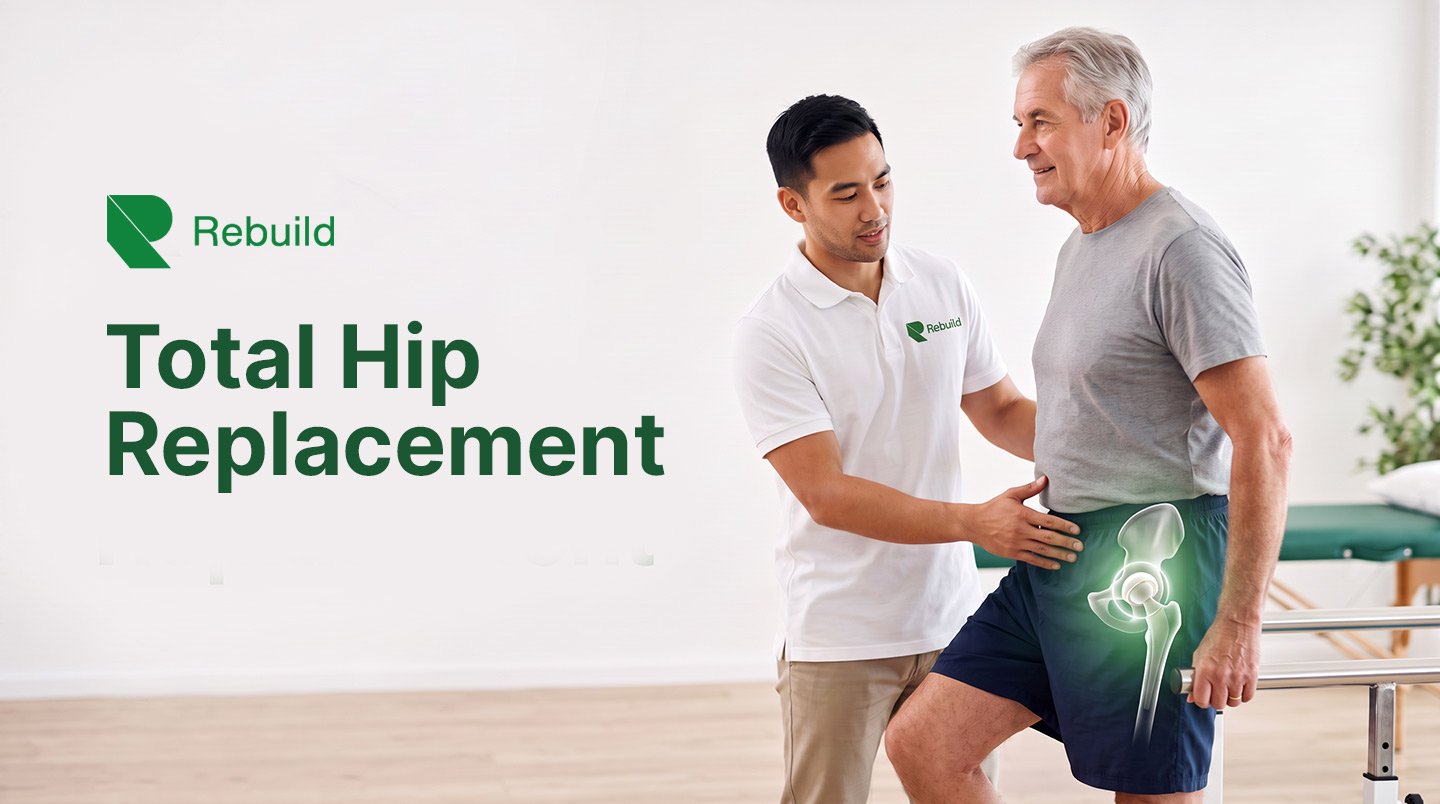
Goals
Restore strength and endurance
Improve balance
Return to functional activities
Build confidence with movement
Physiotherapy Focus
Exercises progress to include:
Modified Squats
Lunges (modified if needed)
Resistance band exercises
Single-leg balance work
Functional strengthening
Stationary cycling
Pool-based exercise if appropriate
Doseage: Aim 10 -15 repetitions, 3 sets, 3 - 5 times a week.
| Exercise | Reps | Sets | Times a week |
|---|---|---|---|
| Single leg bridge | 10–15 per leg | 3 | 3–5 |
| Box squats | 10–15 | 3 | 3–5 |
| Supported lunges | 10–15 per leg | 3 | 3–5 |
| Side plank clam | 10–15 per side | 3 | 3–5 |
| Crab walk | 10–15 steps each way | 3 | 3–5 |
Single leg bridge
Lying on your back with one foot planted and the other leg lifted, drive through the heel to raise the hips. Keep the pelvis level throughout and lower under control rather than dropping.
Box squats
Sit back to a box or bench, touch lightly and stand up. The box sets a consistent depth, which lets you load the hip confidently while controlling how far it bends.
Supported Lunges
Hold a rail or frame for balance and lower the back knee towards the floor. The support removes the balance demand so you can focus on control through the hip.
Side plank clam
In a side plank on the knees, lift the top knee while keeping the hips stacked and still. Targets the lateral hip muscles that control the pelvis during single leg loading.
Crab walk
With a band around the legs and a half squat position held, step sideways without letting the knees collapse inwards. Keeps constant tension on the lateral hip muscles.
Cardiovascular conditioning is also important during this phase.
