Total Hip Replacement (THR)
Total Hip Replacement for Hip Osteoarthritis: What to Expect Before and After Surgery
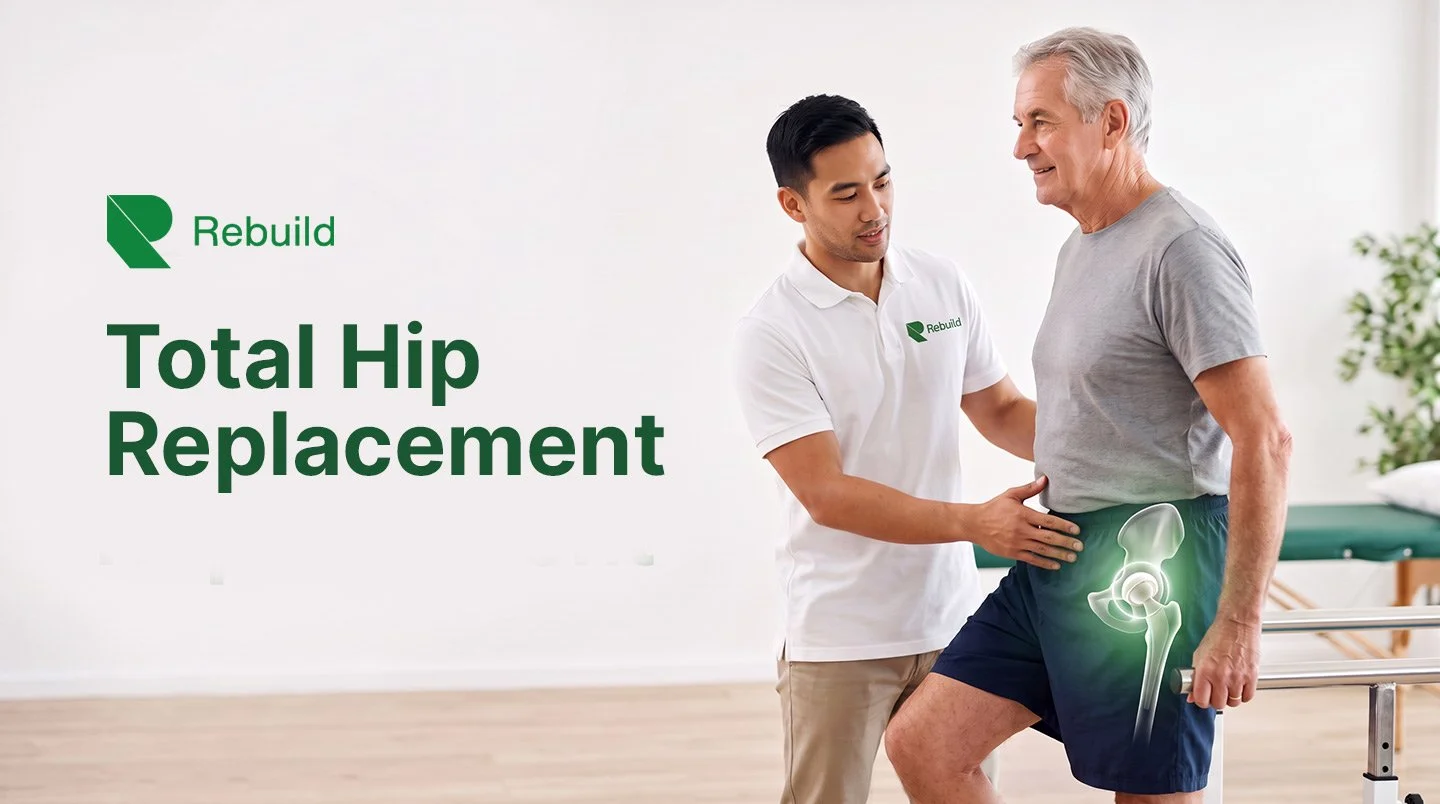
Hip osteoarthritis is one of the most common causes of persistent hip pain and reduced mobility in adults. When symptoms become severe and conservative treatment is no longer effective, a total hip replacement can significantly improve quality of life, reduce pain, and restore movement.At Rebuild Physiotherapy, we work closely with patients before and after hip replacement surgery to optimise recovery, improve strength, and help individuals return to the activities they enjoy.
Understanding the Anatomy of the Hip
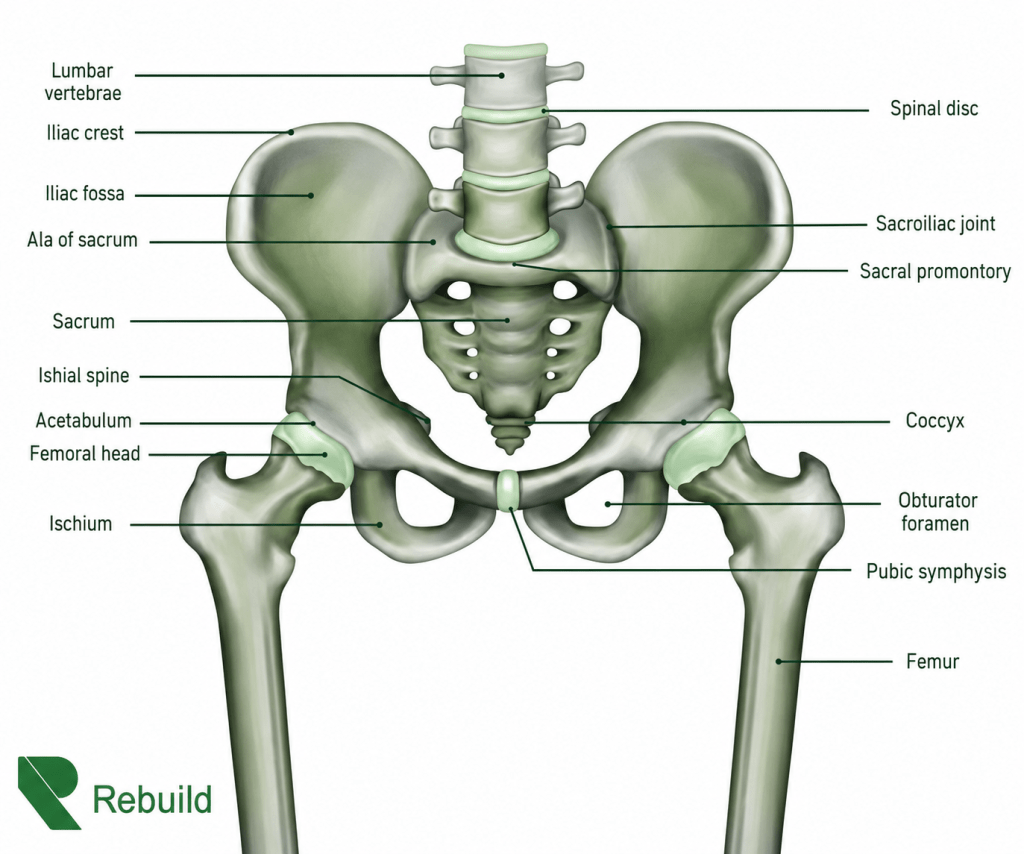
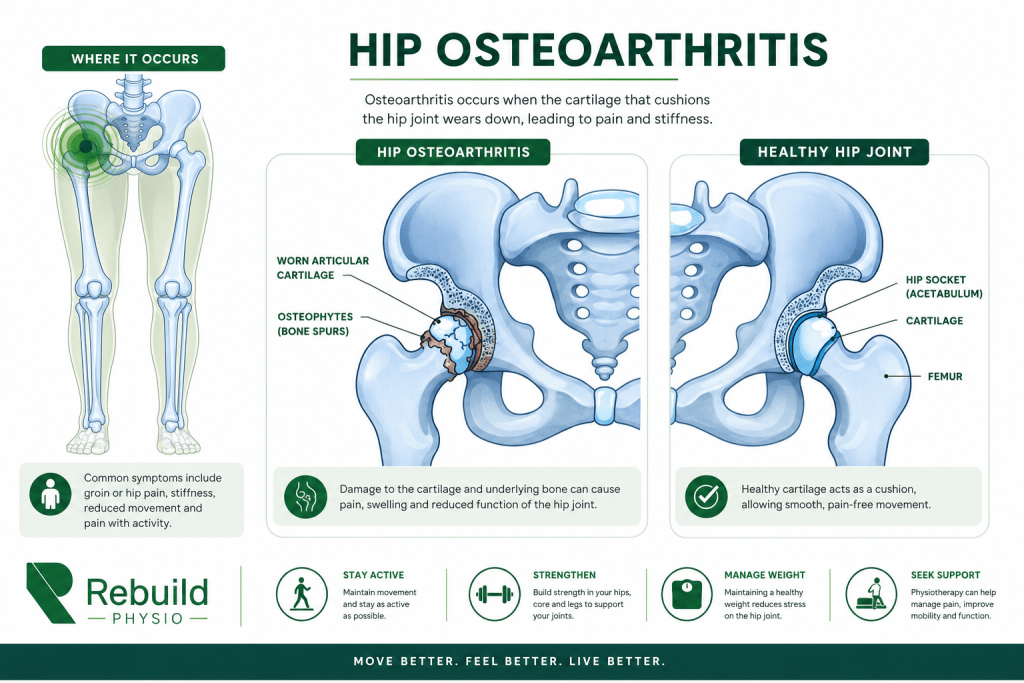
The hip is a ball-and-socket joint designed to provide both stability and mobility. The “ball” is the head of the femur (thigh bone), while the “socket” is part of the pelvis called the acetabulum.
Healthy hip joints are lined with smooth cartilage that allows the bones to glide easily during movement. Surrounding muscles, tendons, and ligaments provide support, stability, and control.
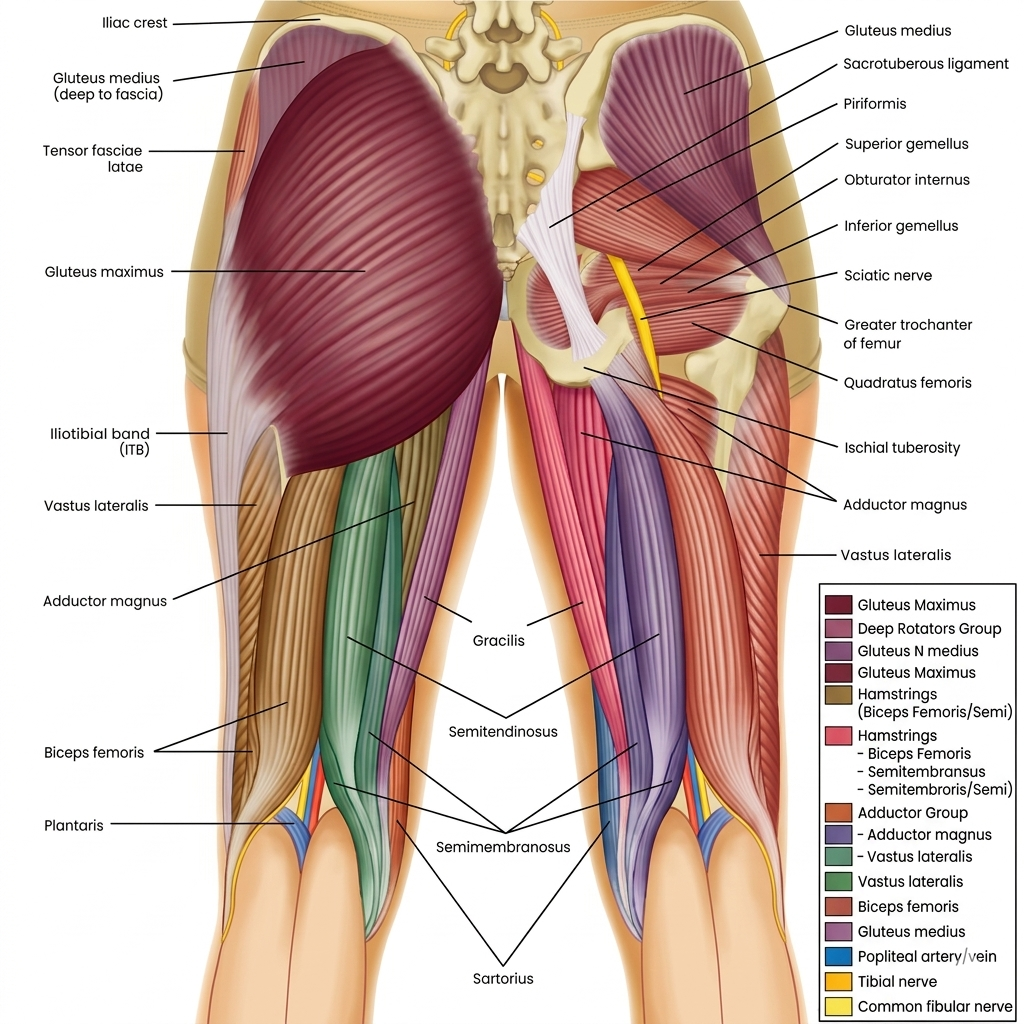
Key muscles around the hip include:
Gluteal muscles (gluteus maximus, medius, and minimus)
Hip flexors
Adductors
Hamstrings
Quadriceps
Deep hip rotators
When osteoarthritis develops, the cartilage gradually wears down, causing joint stiffness, inflammation, pain, and reduced movement.
What is Hip Osteoarthritis?
Hip osteoarthritis is a degenerative joint condition where the protective cartilage within the hip progressively deteriorates over time.
Common symptoms include:
Groin pain or deep hip pain
Stiffness, especially in the morning
Difficulty walking or climbing stairs
Reduced hip movement
Pain getting in and out of cars
Reduced balance and confidence with walking
Pain that worsens with activity
As arthritis progresses, the joint space narrows and bony changes can develop, making movement increasingly painful.
How is Hip Osteoarthritis Diagnosed?
Diagnosis typically involves a combination of:
Clinical Assessment
A physiotherapist or doctor will assess:
Hip range of motion
Strength
Walking pattern
Functional limitations
Pain location and severity
Imaging
X-rays are commonly used to confirm osteoarthritis and may show:
Reduced joint space
Bone spurs (osteophytes)
Changes in bone shape
Joint degeneration
In some cases, MRI imaging may also be used to assess surrounding soft tissue structures.
When is Total Hip Replacement Surgery Recommended?
Not everyone with hip osteoarthritis requires surgery. Many people manage symptoms successfully with physiotherapy, exercise, weight management, and activity modification.However, surgery may be recommended when:
Pain significantly affects quality of life
Walking becomes severely limited
Sleep is disturbed by pain
Conservative treatment no longer provides relief
Daily activities become difficult
Hip stiffness and weakness progress
A total hip replacement involves replacing the damaged joint surfaces with artificial components designed to restore smooth and pain-free movement.
Modern hip replacements are highly successful procedures with excellent long-term outcomes when combined with appropriate rehabilitation.
Why Weight Loss Matters Before Hip Replacement
Excess body weight increases the load placed through the hip joint during walking and daily activities.
Weight loss before surgery can:
Reduce joint pain
Improve mobility
Improve surgical outcomes
Reduce stress on the new hip joint
Lower complication risk
Improve cardiovascular fitness for surgery and recovery
Even modest weight loss can have meaningful benefits for both symptoms and recovery outcomes.
At Rebuild Physiotherapy, we help patients combine safe exercise with practical strategies to support long-term health and movement.
Weight loss and hip joint load
A fuller explanation of why body weight matters so much to an arthritic hip, and what a realistic approach to losing it looks like alongside rehabilitation.
The Importance of Prehabilitation Before Surgery
Prehabilitation refers to physiotherapy and exercise performed before surgery to prepare the body for recovery.
Research consistently shows that patients who are stronger and fitter before surgery often recover more effectively afterward.
Prehabilitation may include:
Hip and leg strengthening
Improving walking tolerance
Core stability exercises
Balance training
Mobility work
Cardiovascular conditioning
Education about post-operative recovery
Benefits of prehabilitation include:
Reduced post-operative pain
Faster functional recovery
Improved confidence
Better walking ability after surgery
Reduced complications
Improved strength and mobility
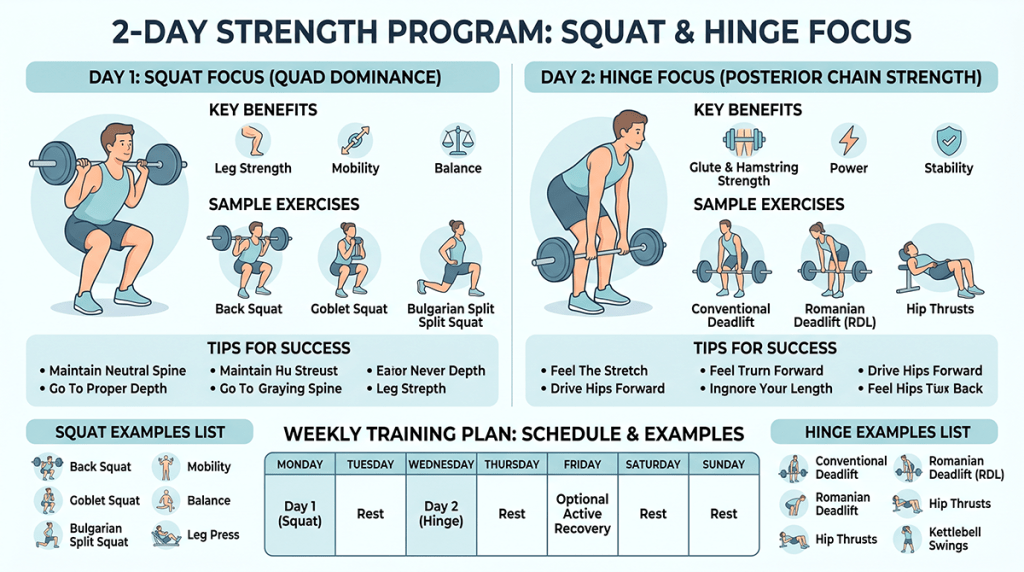
Improving your strength before a hip replacement can help optimise your recovery and improve your confidence returning to daily activities after surgery. At Rebuild Physiotherapy, we focus on targeted exercises to develop strength around the hip, glutes, thighs, and core while keeping pain levels manageable. Exercises are carefully modified to keep pain low but effort high, allowing you to continue building strength safely. Our programmes are built around fundamental movement patterns such as squats, hinges, and lunges, which closely reflect everyday activities like sitting, standing, walking, and climbing stairs. As your strength and tolerance improve, exercises are progressively loaded to ensure continued adaptation and prepare your body for the demands of surgery and rehabilitation.
| Exercise | Reps | Sets | Times a week |
|---|---|---|---|
| Bridge | Under 8 | 4–5 | 2–3 |
| Hip abduction | Under 8 per side | 4–5 | 2–3 |
| Box squat | Under 8 | 4–5 | 2–3 |
| Step up | Under 8 per leg | 4–5 | 2–3 |
| RDL with a kettlebell | Under 8 | 4–5 | 2–3 |
| Side plank clam | Under 8 per side | 4–5 | 2–3 |
Bridge
Lying on your back with both feet planted, drive through the heels to lift the hips until the body forms a straight line from shoulder to knee. Squeeze the glutes at the top and lower under control.
Hip abduction
Lift the leg out to the side keeping the body still and the toes pointing forwards. Targets gluteus medius and minimus, the muscles that stop the pelvis dropping when you stand on one leg.
Box squat (modify by altering the height of the seat +/- resistance weight)
Sit back to a box or chair, touch lightly and stand up again. Raising the seat reduces how far the hip has to bend, so you can load the leg hard while staying in a comfortable range
Step up (use support if needed +/- resistance weight)
Drive through the leading leg to step onto the box, then lower slowly back down. Hold a rail if balance is an issue, and add weight once the movement is controlled.
RDL with a Kettle Bell
Push the hips backwards with a soft knee, lowering the kettlebell close to the legs, then drive the hips forward to stand. Loads the glutes and hamstrings without needing much hip bend.
SIde plank clam
In a side plank on the knees, lift the top knee while keeping the hips stacked and still. Builds lateral hip strength and trunk control at the same time.