
Physiotherapy After Total Hip Replacement: Phase 2: Muscle activation and Mobility Restoration (Weeks 6 - 12)
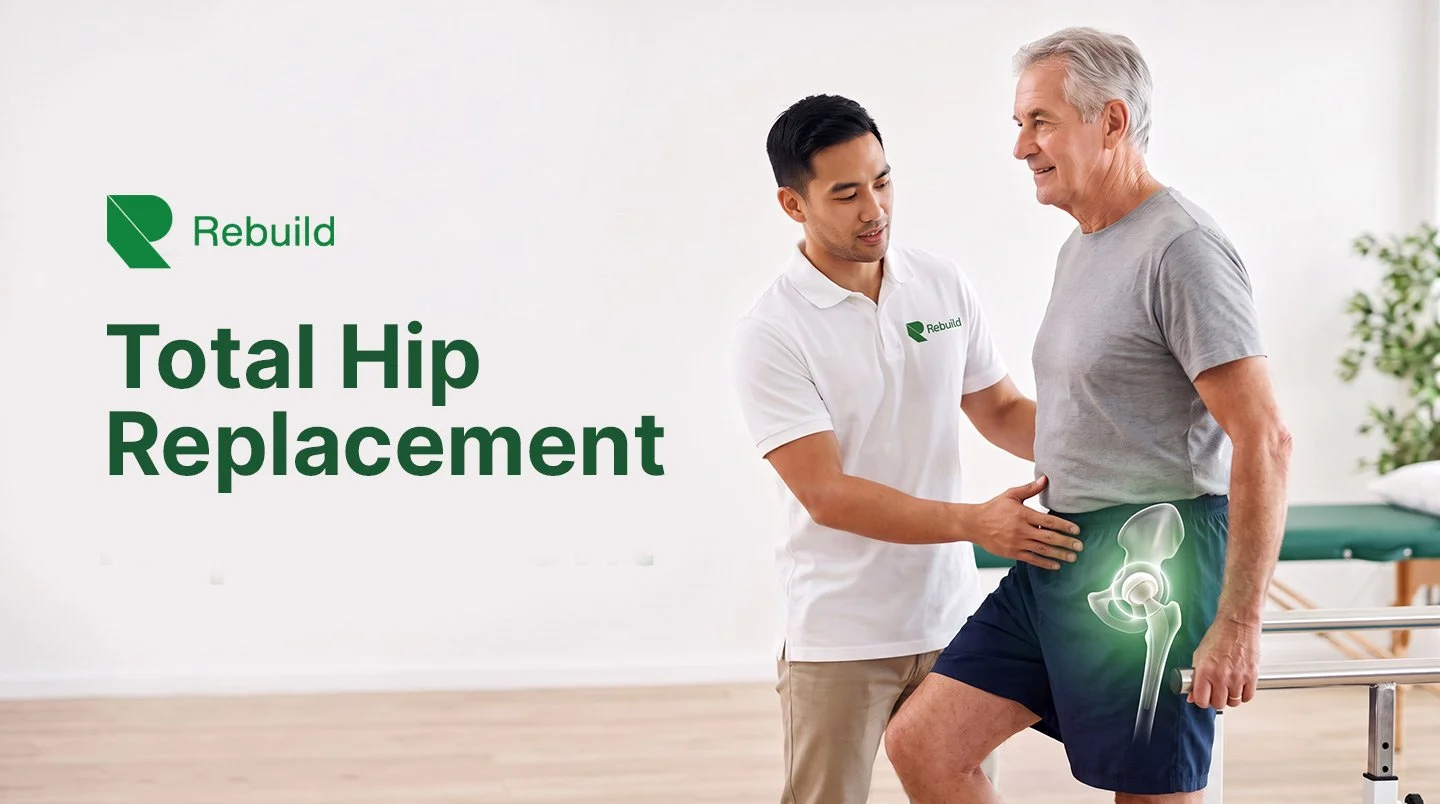
Goals
Improve walking quality
Restore hip movement
Increase independence
Reduce reliance on walking aids
Progress muscle activation
Early motor control
Physiotherapy Focus
Range of Motion
Gentle mobility exercises are introduced progressively while respecting surgical precautions.
Strengthening Exercises
Targeted strengthening commonly includes:
Glute activation/strengthening
Hip abductor exercises
Sit-to-stand training
Step-ups
Core stability work
| Exercise | Reps | Sets | Times a week |
|---|---|---|---|
| Glute activation | 10–15 | 3 | 4–5 |
| Bridge | 10–15 | 3 | 4–5 |
| Sit-to-stand training | 8–12 | 3 | 4–5 |
| Core stability work | 10–15 | 3 | 4–5 |
| Hip abduction | 10–15 per side | 3 | 4–5 |
| Step up | 8–12 per leg | 3 | 4–5 |
Hip abduction (supine)
Bridge
Drive through both heels to lift the hips until the body is in a straight line, then lower under control. One of the earliest ways to load the glutes without standing on the operated leg.
Sit-to-stand training
Stand up from a chair and sit back down under control, without pushing through the arms if you can manage it. A higher chair makes it easier; lower it as strength improves.
Clam
Hip abduction
Lift the leg out to the side with the toes pointing forwards and the body still. Directly targets the muscles that control the pelvis during walking.
Step up
Start with a low step and drive up through the leading leg, controlling the way back down. Keep the pelvis level rather than letting it drop to one side.
Gait Retraining
Many patients develop compensatory walking patterns before surgery. Physiotherapy helps restore:
Symmetrical walking
Hip stability
Proper weight transfer
Balance and coordination
