
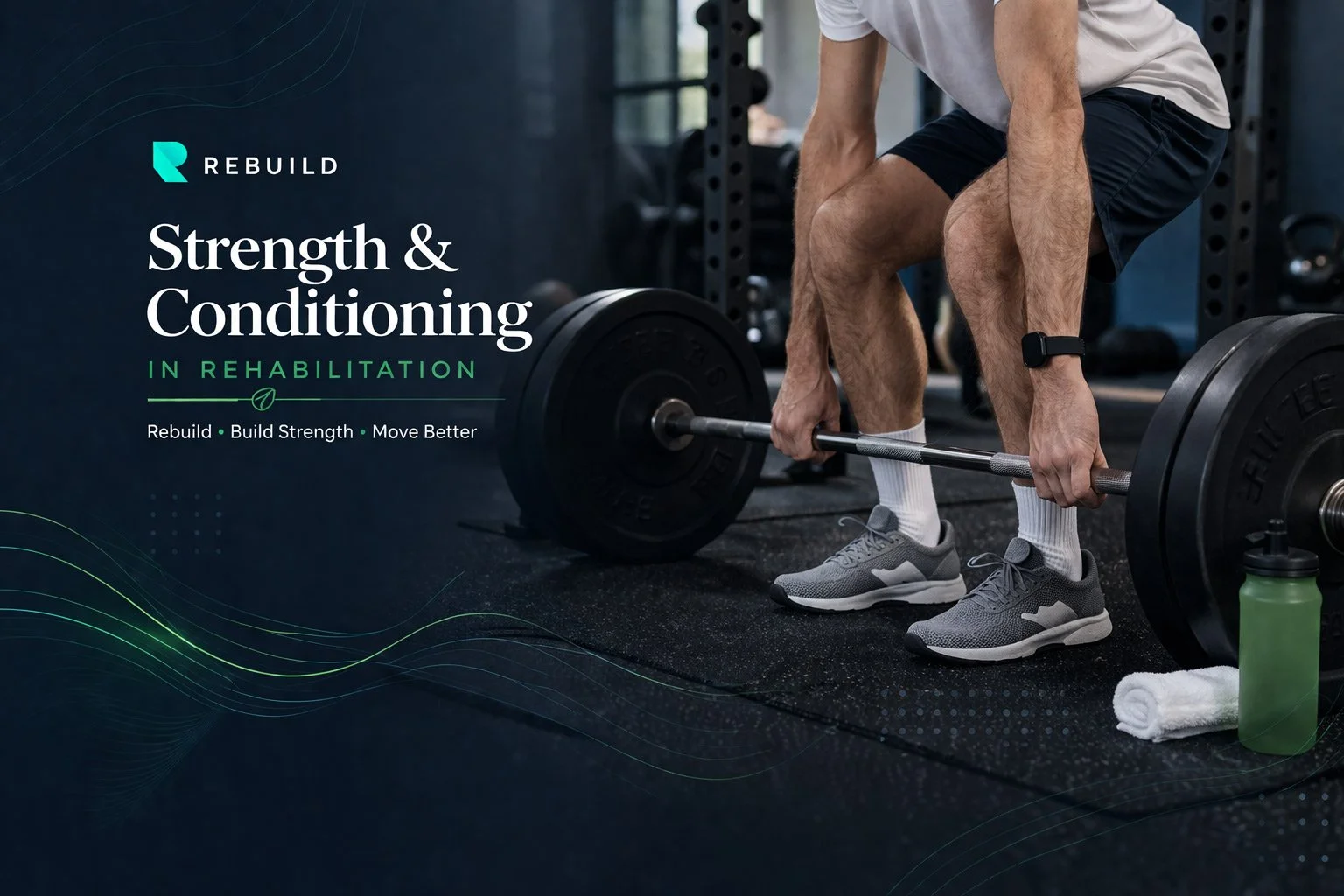
Strength in Rehabilitation: Page 5 - how to design a program
Strength training isn’t just for athletes or gym-goers — it plays a vital role in injury prevention, recovery, and long-term health. As physiotherapists, we often see people avoid strength work because they’re unsure where to start or worry it might make pain worse. In this guide, we explain why building strength matters, how it supports your body in everyday life, and how the right approach can help you move better, feel stronger, and stay injury-free.
Strength in Rehabilitation: Page 4 - Lunge
Strength training isn’t just for athletes or gym-goers — it plays a vital role in injury prevention, recovery, and long-term health. As physiotherapists, we often see people avoid strength work because they’re unsure where to start or worry it might make pain worse. In this guide, we explain why building strength matters, how it supports your body in everyday life, and how the right approach can help you move better, feel stronger, and stay injury-free.
Strength in Rehabilitation: Page 3 - Hinge
Strength training isn’t just for athletes or gym-goers — it plays a vital role in injury prevention, recovery, and long-term health. As physiotherapists, we often see people avoid strength work because they’re unsure where to start or worry it might make pain worse. In this guide, we explain why building strength matters, how it supports your body in everyday life, and how the right approach can help you move better, feel stronger, and stay injury-free.
Strength in Rehabilitation: Page 2 - Squat
Strength training isn’t just for athletes or gym-goers — it plays a vital role in injury prevention, recovery, and long-term health. As physiotherapists, we often see people avoid strength work because they’re unsure where to start or worry it might make pain worse. In this guide, we explain why building strength matters, how it supports your body in everyday life, and how the right approach can help you move better, feel stronger, and stay injury-free.
Strength in Rehabilitation
Strength training isn’t just for athletes or gym-goers — it plays a vital role in injury prevention, recovery, and long-term health. As physiotherapists, we often see people avoid strength work because they’re unsure where to start or worry it might make pain worse. In this guide, we explain why building strength matters, how it supports your body in everyday life, and how the right approach can help you move better, feel stronger, and stay injury-free.