Strength in Rehabilitation
Strength training is a corner stone of effective rehabilitation, whether recovering from injury, surgery or managing chronic conditions. It doesn’t just Rebuild strength – it restores function, increases confidence and develops long-term resilience.
Strength isn’t just about getting stronger – it’s about getting your life back. Our guided rehabilitation exercises are designed to safely rebuild your body so you can move with confidence again.
Progress doesn’t always show up right away—and that’s completely normal. Strength gains can take around six weeks or more to become noticeable, so don’t be discouraged in the early stages. What matters most is staying consistent, enjoying the process, and celebrating the small wins along the way. Keep showing up, have fun with your training, and the results will follow.
Benefits of Strength training
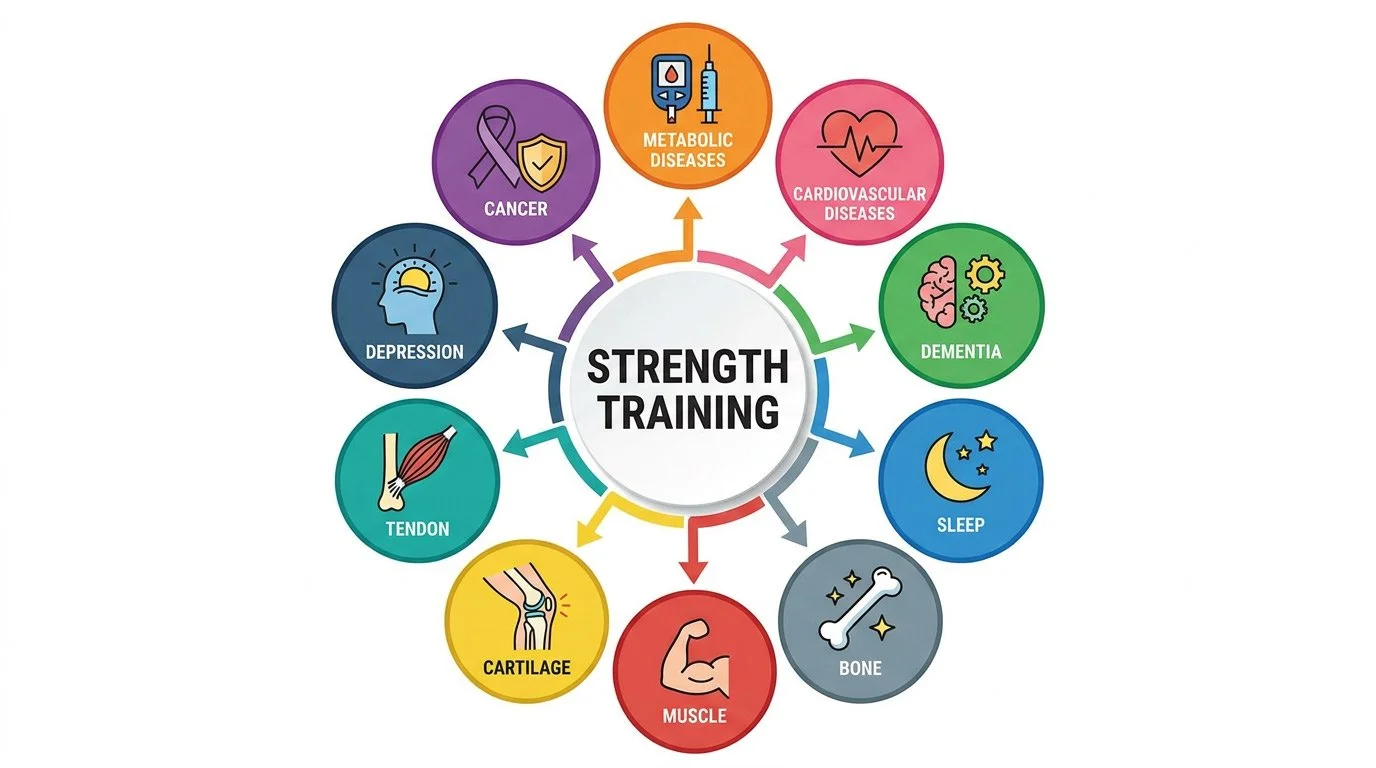
Strength training is a critical component of rehabilitation, moving beyond just injury recovery to restore muscle mass, increase joint stability, reduce pain, and prevent future injuries. By utilising progressive, targeted resistance, it enables you to regain functional mobility and safely return to your daily activities or sport. In addition, research has proven it to be beneficial in improving all the below areas.
-
‘Lifting Weights is Dangerous’
Strength training gets a bad rap for being dangerous, but studies from the National Strength and Conditioning Association (NSCA) show it’s one of the safest forms of exercise when done well. The key lies in good technique and starting slowly. Learn the best form for each exercise, use pain and discomfort as a guide, progress gradually, and listen to your body.
‘Lifting heavy weights make women ‘Bulky’’
Strength training typically does not make women "bulky" or cause rapid, massive weight gain, as women generally lack the high testosterone levels required for significant muscle hypertrophy. Instead, it promotes a leaner, more toned physique by building lean muscle, increasing metabolism, and often reducing body fat, which can improve overall body composition. Significant muscle gain (bulking) requires specific high-calorie, high-protein diets combined with intensive, long-term training, often for many years. (Reggiani & Schiaffino 2020).
‘Lifting weights, especially deadlifts and squats are bad for me and my back.’
Exercise programs that include deadlifts are a clinically effective option for the management and treatment of low back pain (Tataryn et al 2021, Stock et al 2022)
Deadlifts, are an effective, evidence-based exercise for reducing, not causing, chronic low back pain by strengthening the lumbar muscles, glutes, and core. Rather than injuring the back, proper deadlifting teaches necessary spinal mechanics and builds muscle resilience.
A free-weight-based resistance training intervention with squats can be successfully utilised to improve pain, disability and quality of life in those with low back pain (Welch et al 2015)
‘Muscle turns to fat if you stop lifting’
An analogy I won’t take credit for – This is like saying that a wooden chair can turn into a pint glass. That sounds insane and silly; wood can’t turn into glass because, well, wood is made of trees, and glass is made from liquid sand. Both of these are completely different, which is the same as muscle and fat. Muscle cannot turn into fat. What does happen, though, is that when you don’t use the muscle you have, it deteriorates. But your muscle doesn’t turn to fat. When you gain fat, it is likely because you are likely eating too much, or more than you can burn off.
For those with joint replacements‘Lifting weights will break the implant’
Implants are stronger and more resilient that they have ever been. Advances in materials science and manufacturing, such as highly cross-linked polyethylene, specialized ceramics, and 3D-printed titanium, have resulted in implants designed to last 30 to 40 years or more. Structured maximal strength training helps build muscle around the new joint, increasing resilience, stability and improves long-term function. There is no evidence to suggest resistance strength training weakens, loosens or in anyway effects a joint replacement negatively.
-
Specificity
Training should match goals. If you want to get strong – do strength training.
Progressive Overload
To get stronger, you must continually challenge your body with more stress (weight, reps, duration) than it's used to, but not so much that you get injured.
Individuality
Everyone is different. Consider age, training age, gender, fitness level, genetics, medical history.
Periodisation/ Progression
Structure your training over time in phases (periodisation) to manage overload, prevent burnout, ensuring continuous improvement. Macrocycle – the whole project e.g. run 5k, return to sportMesocycle – specific goals e.g. strength, power, endurance, speed Microcycle – what specifically you do in a week.
Recovery
Adaptation (muscle growth, fitness gains) happens during rest. Adequate sleep, nutrition, and rest days are crucial. 2 – 3 days a week strength training.
Reversibility
"Use it or lose it."
Adaptation/Diminishing returns
As you get stronger, you will need bigger stimuli for the same results, and progress slows down over time. Good news for beginners – they will make the biggest progress!!!
Variation
Changing exercises and methods prevents plateaus and boredom while still challenging the body. e.g. instead of a back squat, use a leg press or front squat.
-
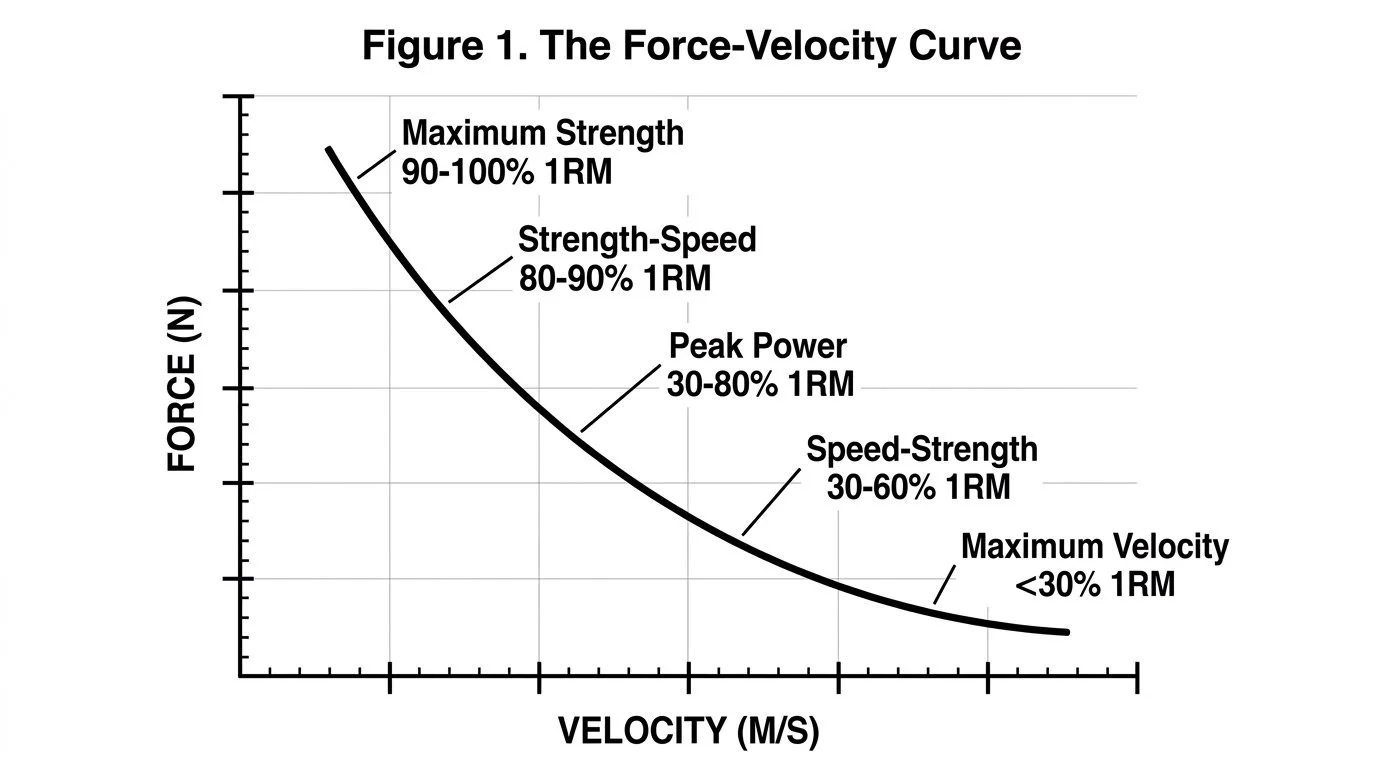
‘Muscular strength is the maximum force a muscle or muscle group can generate in a single effort against a resistance, essentially your ability to produce peak force in one contraction, like lifting the heaviest weight possible once (1RM).’ACSM & ESSA -2024 (Nuzzo et al 2024)
Saville (2025)
Strength is strength
Although most resistance training modes have demonstrated improvements in strength in inactive/untrained individuals during the first few weeks (Schoenfeld et al 2017)
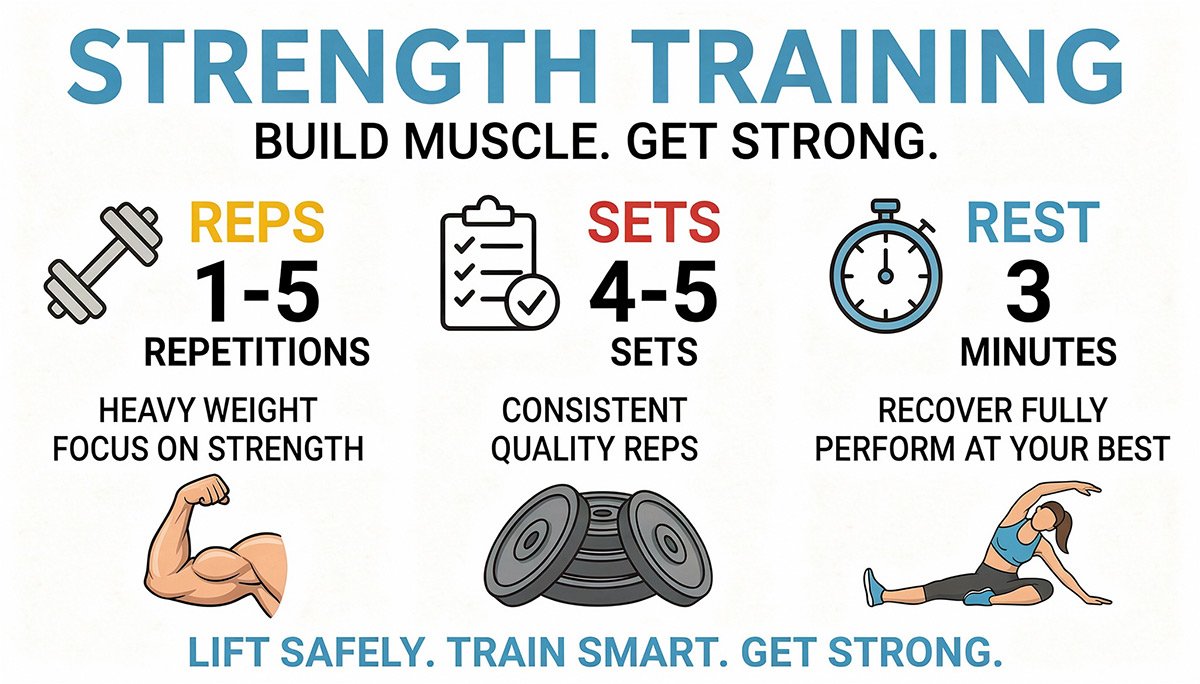
However, “strengthening programmes” and “strength training” are not the same; The most recent information from the American College of sports Medicine recommends, to develop strength, lifting over 80% of your one repetition maximum! (Currier et al 2026).
-
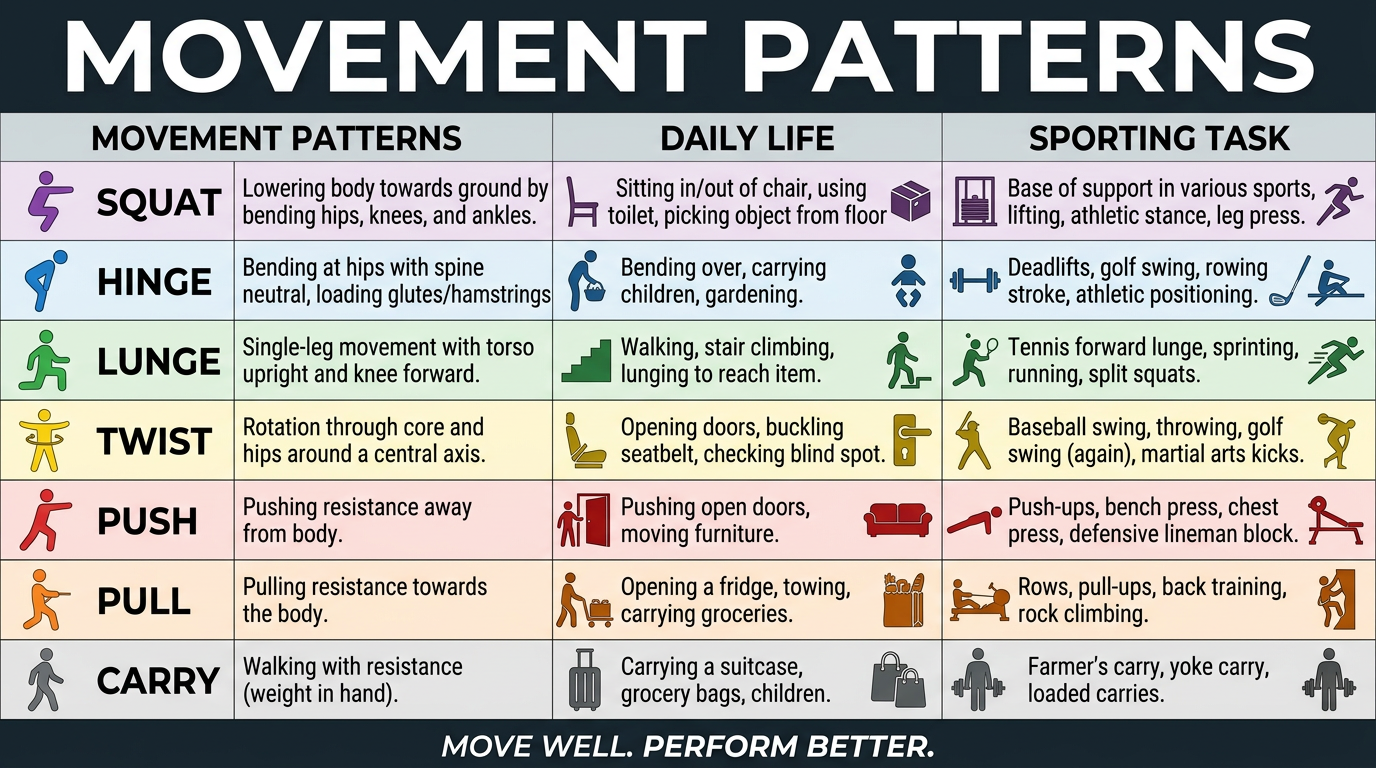
There are 7 fundamental movement patterns, that form the basis of human movement and are the foundation of all strength and conditioning programs. Not only do they help with normal day to day tasks, there is also extensive research backing them up for athletic performance and injury treatment/prevention. Almost all strength programs are based around these fundamental movement patterns.
| Pattern | Description | Daily Life | Sporting Task |
|---|---|---|---|
| Squat | The movement of lowering the hips from a standing position down and back up again | Stand up from a seat | Builds strength in legs (quads, glutes) translating to faster sprints, higher jumps, and harder hits. |
| Hinge | Bending forward at the hips while keeping your spine straight (neutral), like a door hinge, to load your glutes and hamstrings | Lift something off the floor | Creates force for swings (golf, baseball), jumps, and sprints. |
| Lunge | Any single leg movement | Up/down stairs | Directly translates to actions like running, jumping, and changing direction. |
| Twist | Rotational actions of the torso, using core muscles | Stability | Creates torque for swings (golf, baseball), throws (tennis, javelin), and punches (boxing). Allows for rapid pivots and cuts on the field or court. |
| Push | Extending a body part (like arms or legs) to propel an object away or move your body away from a surface, targeting muscles in the chest, shoulders, and triceps (upper body) or quads and glutes (lower body) | Push a door open | Crucial for power, stability, and functional strength in sports like basketball (blocking), wrestling (driving opponents), or hand off (Rugby). |
| Pull | Draw an object towards you or pull your body toward an object, targeting the back (lats, traps, rhomboids), biceps, and rear shoulders | Pull a door closed | Builds upper body strength, improves posture, and enhances functional performance for activities like climbing, rowing, swimming, and lifting. |
| Carry | Moving with added weight, building essential grip strength, core stability, posture, and full-body endurance | Carry the shopping | Allows your body to stay stable and transfer force efficiently under load, improving overall resilience for sports. |
The Exercises
Participating in an exercise program carries a certain element of risk for some people. You should consult with your physiotherapist before initiating this program to ensure your safety.
If you have any issues please do not hesitate to contact the physiotherapy department. If you feel light headed, dizzy or have issues with your breathing please contact your general practitioner (GP) immediately.
As our goal is to improve strength, we need to be specific with our exercise to ensure it will achieve this goal. This requires us to work to maximal effort. However, as this is a rehabilitation pathway we must also be mindful of pain. It is common to experience a slight increase in pain/discomfort when doing something new or different, this is normal. It is important that the pain does not exceed 3-4/10, where 10/10 is the maximum and 0/10 is no pain. If you are experiencing levels of pain above 4/10 this can cause muscle inhibition, which is the opposite to our desired goal. This is when we use our S&C principles and use varied forms of each exercise, working similar muscles groups and movement patterns, but not causing excess pain. Progressively overloading your muscles and allowing recovery days also helps with this.
Progress doesn’t always show up right away—and that’s completely normal. Strength gains can take around six weeks or more to become noticeable, so don’t be discouraged in the early stages. What matters most is staying consistent, enjoying the process, and celebrating the small wins along the way. Keep showing up, have fun with your training, and the results will follow.
Dosage
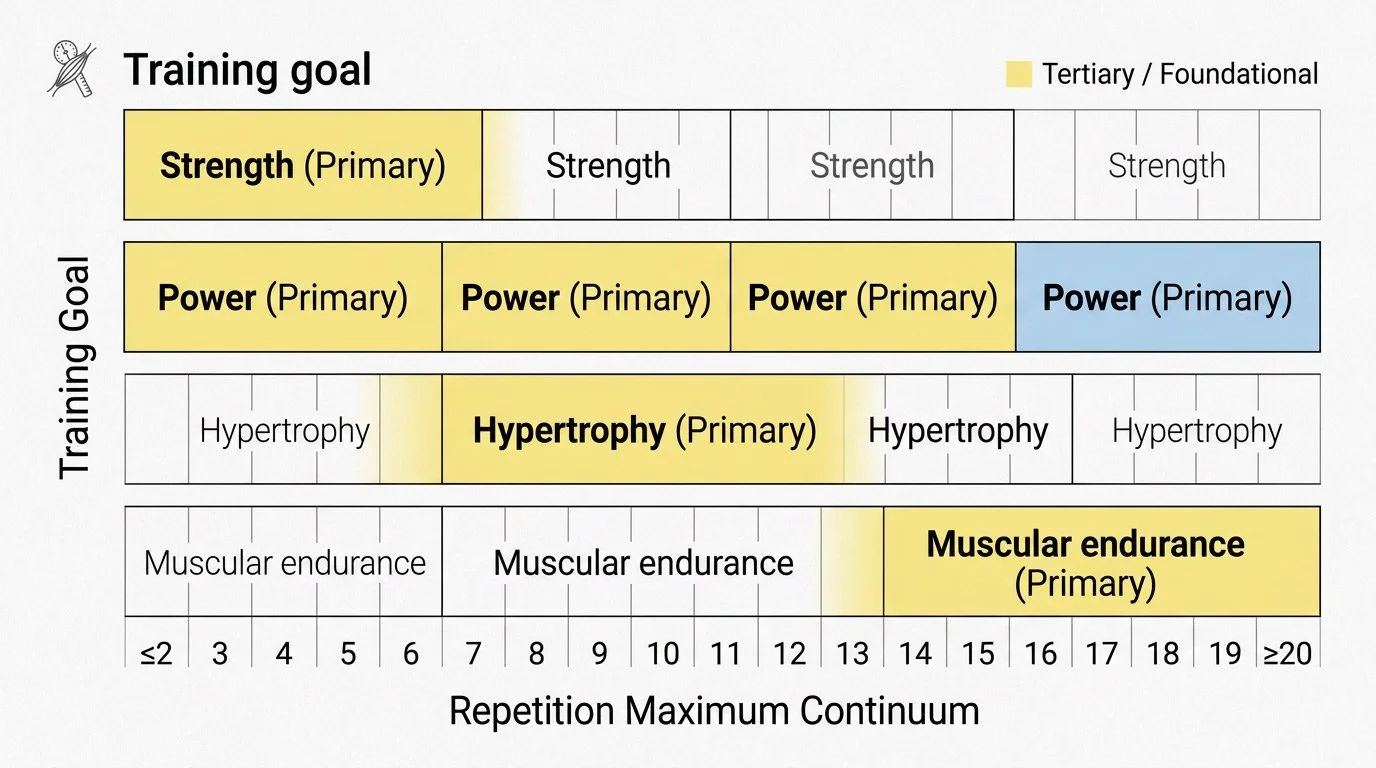
The resistance training continuum (Baechle and Earle, 2008)