
Meniscal Injuries: Anatomy, Causes, Treatment Options and Rehabilitation Pathways

Knee pain following twisting, squatting, sport, or even simple daily activities can sometimes be linked to a meniscal injury. Meniscus injuries are common in both athletes and non-athletes and treatment ranges from exercise-based rehabilitation through to surgery depending on the type and severity of the injury.
This guide covers:
Knee anatomy
Causes of meniscal injury
Types of meniscal tears
When surgery may be needed
Physiotherapy management
Rehabilitation pathways for conservative care and surgery
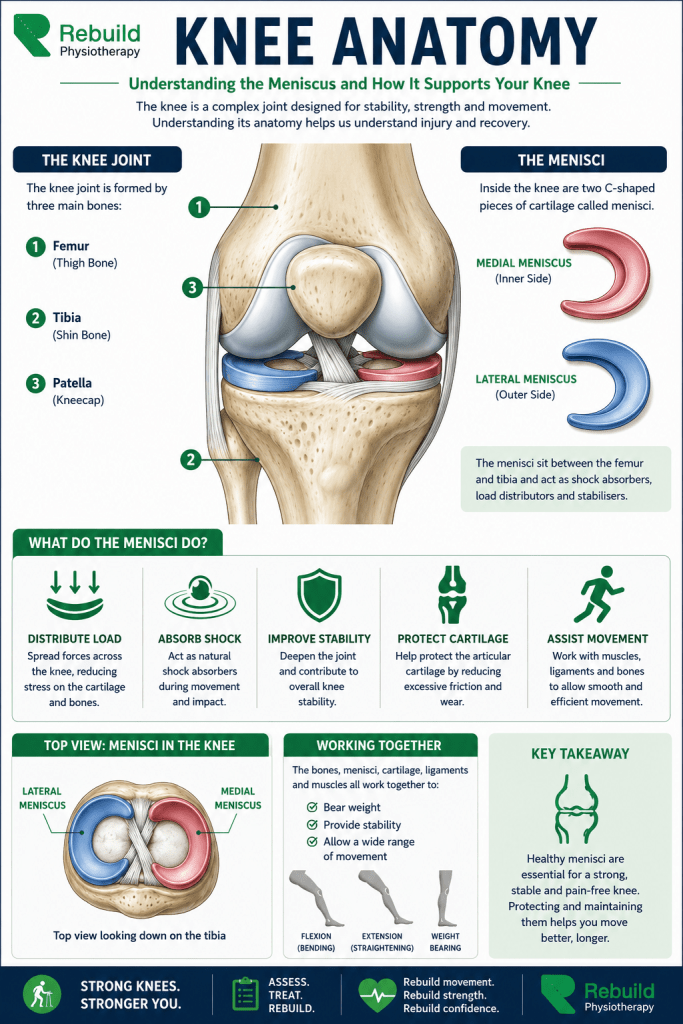
Understanding Knee Anatomy:
What Is the Meniscus?
The knee joint is formed by three bones:
Femur (thigh bone)
Tibia (shin bone)
Patella (kneecap)
Inside the knee sit two menisci:
Medial Meniscus
Located on the inner side of the knee.
Lateral Meniscus
Located on the outer side of the knee.
The menisci are crescent-shaped cartilage structures that help:
✓ Distribute load across the knee
✓ Improve shock absorption
✓ Increase joint stability
✓ Protect the articular cartilage
✓ Assist movement mechanics
Without healthy menisci, forces through the knee become more concentrated, potentially increasing stress on cartilage surfaces.
What Causes Meniscal Injuries?
Meniscal injuries may occur through:
Traumatic Injury
Common in sport or active individuals.
Examples include:
Twisting while the foot remains planted
Sudden change of direction
Pivoting movements
Deep squatting under load
Landing and rotational forces
Sports commonly associated include football, rugby, basketball and skiing.
Degenerative Changes
In middle-aged and older adults, menisci may weaken over time.
Sometimes simple activities such as:
Kneeling
Squatting
Standing from a chair
Turning suddenly
can lead to symptoms.
Degenerative tears often occur alongside cartilage wear or early osteoarthritis.
Types of Meniscal Injury
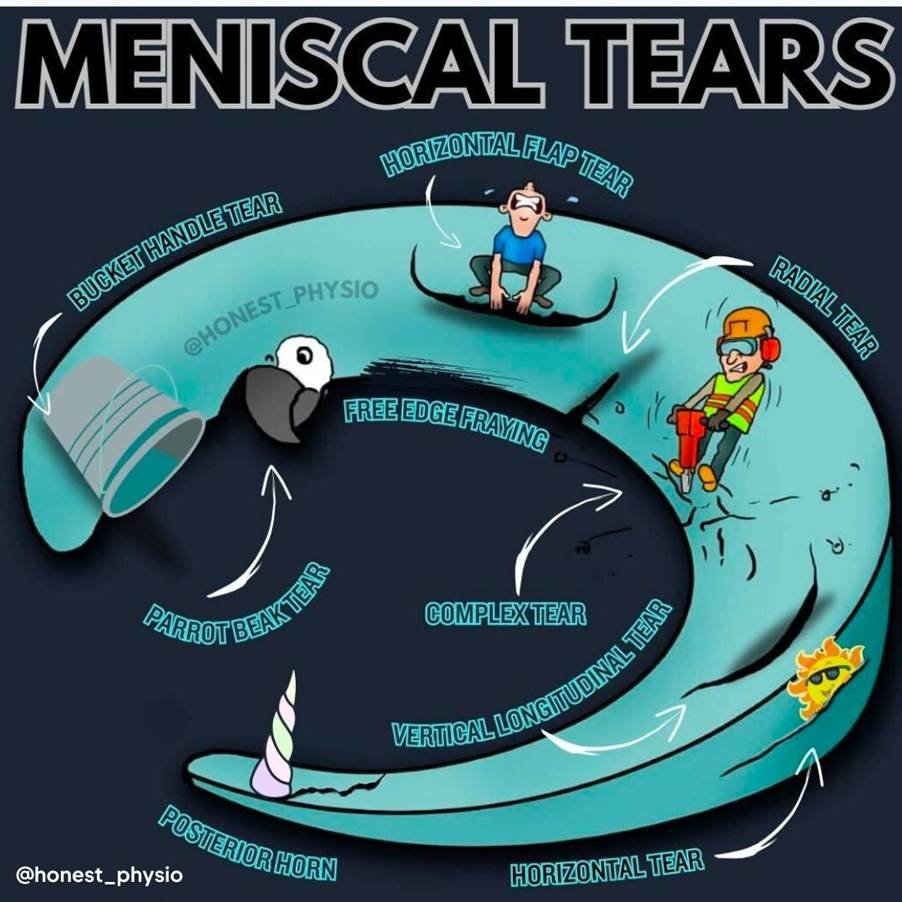
Different tear patterns influence treatment decisions.
Longitudinal Tear
Runs parallel with the meniscal fibres. May progress into a bucket handle tear if displaced.
Bucket Handle Tear
A fragment flips inward and may block knee motion.
Common symptoms:
Locking
Reduced extension
Mechanical catching
Often considered for surgical repair.
Radial Tear
Runs from inner edge outward. Can significantly affect load distribution.
Horizontal Tear
Splits upper and lower surfaces.More frequently seen in degenerative knees.
Flap Tear
Loose fragment causing clicking or catching.
Root Tear
Occurs where the meniscus attaches to bone.
Loss of root function can behave similarly to losing the entire meniscus and may accelerate cartilage overload.
Is Surgery Always Needed?
No. Many meniscal injuries improve with:
Strength training
Load management
Progressive exercise
Movement retraining
Activity modification
Surgery is usually considered when:
Possible Surgical Indicators
Locked knee
Large displaced tear
Persistent mechanical symptoms
Meniscal root injury
Failed rehabilitation
Associated ligament injury
Young athletic patients with repairable tears
Significant cartilage damage
Treatment decisions should always consider:
Age + symptoms + imaging + function + goals
MRI findings alone do not automatically mean surgery is required.