
Meniscal Injuries: Phase 2: Motor Control, Early Strengthening and Functional Rehabilitation progressing to Strength Development
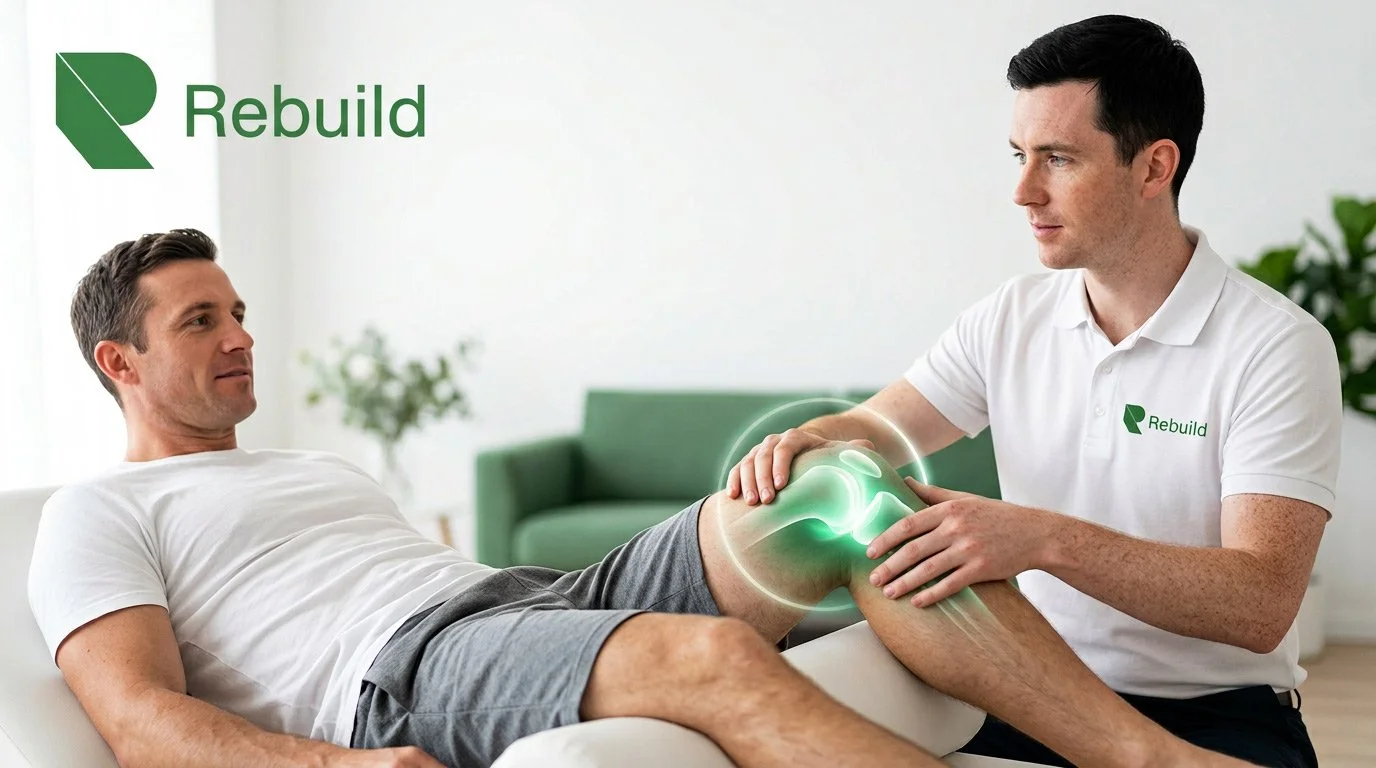
In this phase of rehabilitation, the focus shifts towards gradually increasing the amount of resistance and load your knee can comfortably tolerate. The aim is to build strength and confidence through functional movement patterns such as squatting, lunging, and hinging, while maintaining good movement control throughout.
You will begin with lower-intensity, higher-volume strength work, typically performing 10–15 repetitions for 3 sets. The emphasis during this stage is on quality of movement, control, and consistency rather than lifting heavy loads.
As your body adapts, the exercises will progressively become more challenging using a structured approach called block periodisation. This involves gradually reducing repetitions while increasing load over time.
Goals
Restore strength and endurance
Return to functional activities
Build confidence with movement
Physiotherapy Focus
Exercises progress to include:
Modified Squats
Hinge movements
Lunges (modified if needed)
Resistance band exercises
Single-leg balance work
Functional strengthening
Stationary cycling
Pool-based exercise if appropriate
| Exercise | Reps | Sets | Times a week |
|---|---|---|---|
| Single leg bridge | 10–15 per leg | 3 | 3–5 |
| Box squats | 10–15 | 3 | 3–5 |
| Supported lunges | 10–15 per leg | 3 | 3–5 |
| Side plank clam | 10–15 per side | 3 | 3–5 |
| Step ups | 10–15 per leg | 3 | 3–5 |
| Kettlebell RDL | 10–15 | 3 | 3–5 |
Single leg bridge
Lying on your back with one foot planted and the other leg lifted, drive through the heel to raise the hips. Keep the pelvis level throughout and lower under control rather than dropping.
Box squats
Sit back to a box or bench, touch lightly and stand up. The box sets a consistent depth, which lets you load the knee confidently while controlling how far you bend.
Supported Lunges
Hold a rail or frame for balance and lower the back knee towards the floor. The support takes the balance demand away so you can focus on control of the front knee.
Side plank clam
In a side plank on the knees, lift the top knee while keeping the hips stacked and still. Targets the lateral hip muscles that control the knee during single leg loading.
Step ups
Drive through the leading leg to step onto the box, then lower slowly back down. Keep the knee tracking over the middle of the foot and avoid pushing off the trailing leg.
Kettlebell RDL
Push the hips backwards with a soft knee, lowering the kettlebell close to the legs, then drive the hips forward to stand. A hinge pattern that loads the hamstrings and glutes with minimal knee bend.
Cardiovascular conditioning is also important during this phase.
