
Deep Gluteal Pain Syndrome: Phase 4
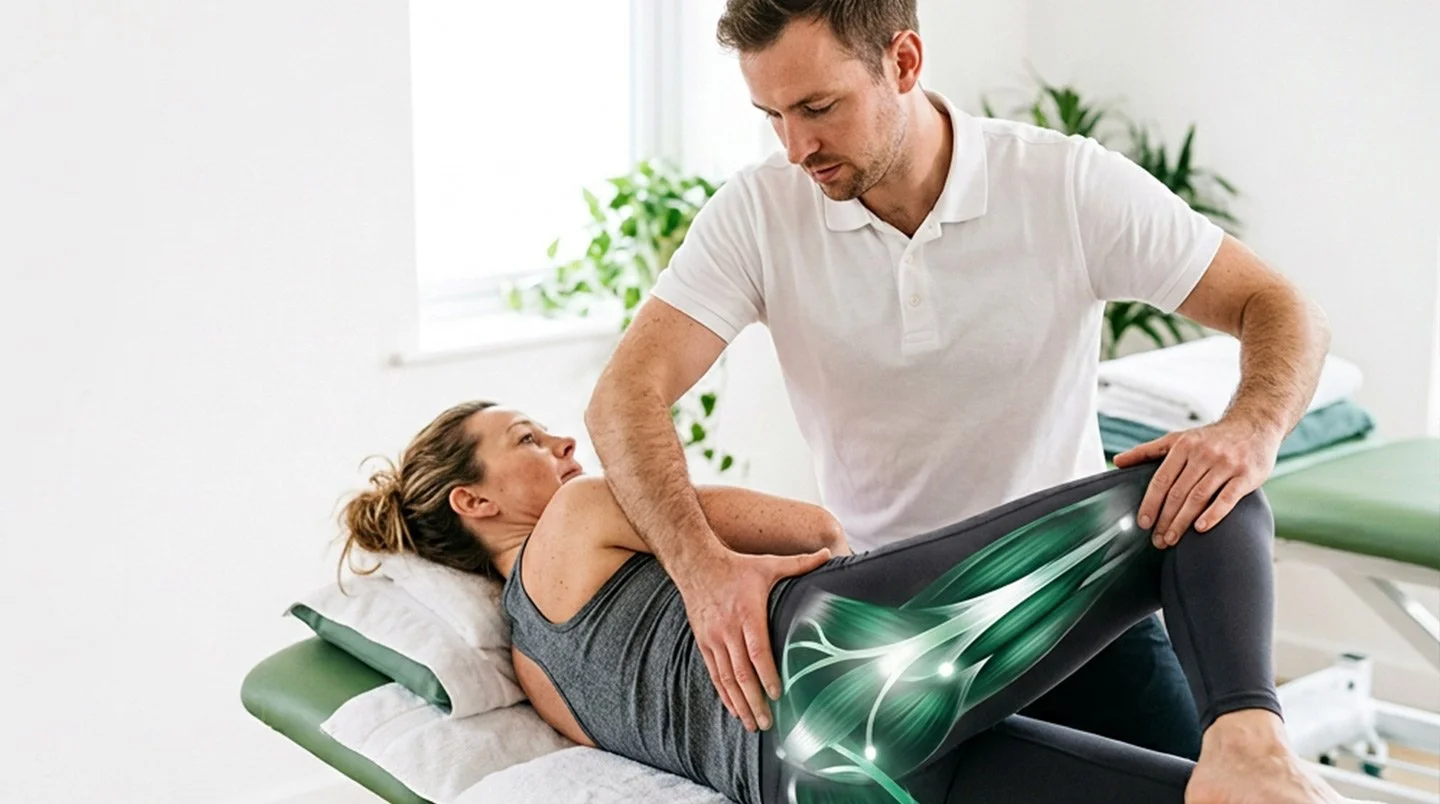
Phase 4: Return to Life and Sport
The final stage prepares you for real-world activities.
Depending on your goals, rehabilitation may include:
Running progression
Plyometrics
Direction changes
Sprint drills
Heavy strength work
Sport-specific training
Hiking
Cycling
Progression is based upon strength, movement quality and confidence—not simply the number of weeks since symptoms began.
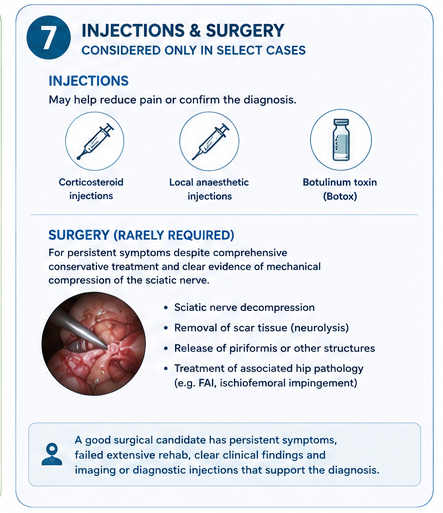
Injections
Occasionally injections may help reduce pain or confirm the diagnosis.
These include:
Corticosteroid injections
Local anaesthetic injections
Botulinum toxin (Botox)
They are generally considered when symptoms persist despite a well-structured rehabilitation programme and should be used to complement—not replace—physiotherapy.
Surgery
Fortunately, surgery is rarely required.
It is reserved for patients who continue to experience significant symptoms despite comprehensive conservative treatment and where there is clear evidence of mechanical compression of the sciatic nerve.
Procedures may include:
Arthroscopic sciatic nerve decompression
Removal of scar tissue surrounding the nerve (neurolysis)
Piriformis release
Release of other compressive structures
Treatment of associated hip pathology such as FAI
Because deep gluteal pain syndrome can have multiple contributing factors, surgery is only appropriate for carefully selected patients.
A Good Surgical Candidate
Persistent symptoms despite specialist physiotherapy
Imaging or diagnostic injections supporting the diagnosis
Clinical findings consistent with sciatic nerve entrapment
Significant impact on quality of life
Even in these individuals, rehabilitation remains essential before and after surgery to optimise recovery.
Frequently Asked Questions
Is Deep Gluteal Pain Syndrome the same as sciatica?
No.
Sciatica simply describes pain travelling along the sciatic nerve. Deep gluteal pain syndrome is one possible cause of sciatica, but problems in the lower back can produce very similar symptoms.
Will I need an MRI scan?
Not always.
Many people can be diagnosed accurately following a detailed clinical assessment. Imaging is usually reserved for more complex cases or when other conditions need to be excluded.
Should I stretch my piriformis?
Not necessarily.
For some people, aggressive stretching may actually increase irritation of the sciatic nerve. Your physiotherapist will determine whether stretching is appropriate for your specific presentation.
Can exercise make it worse?
The right exercise should not.
A structured rehabilitation programme uses progressive loading that challenges the muscles without excessively irritating the nerve.
How long does recovery take?
Many patients notice improvement within 6–12 weeks, although longstanding symptoms or more complex cases may take several months.
Recovery depends on identifying and treating the underlying causes rather than simply masking the pain.
Take Home Message
Deep gluteal pain syndrome can be frustrating, but it is highly treatable.
With expert assessment, progressive rehabilitation and a personalised treatment programme, most people return to the activities they enjoy without surgery.
At Rebuild Physiotherapy, we combine the latest evidence with extensive experience in complex hip rehabilitation to help you move with confidence again.
Rebuild. Restore. Return.