
PTTD Treatment Exercises
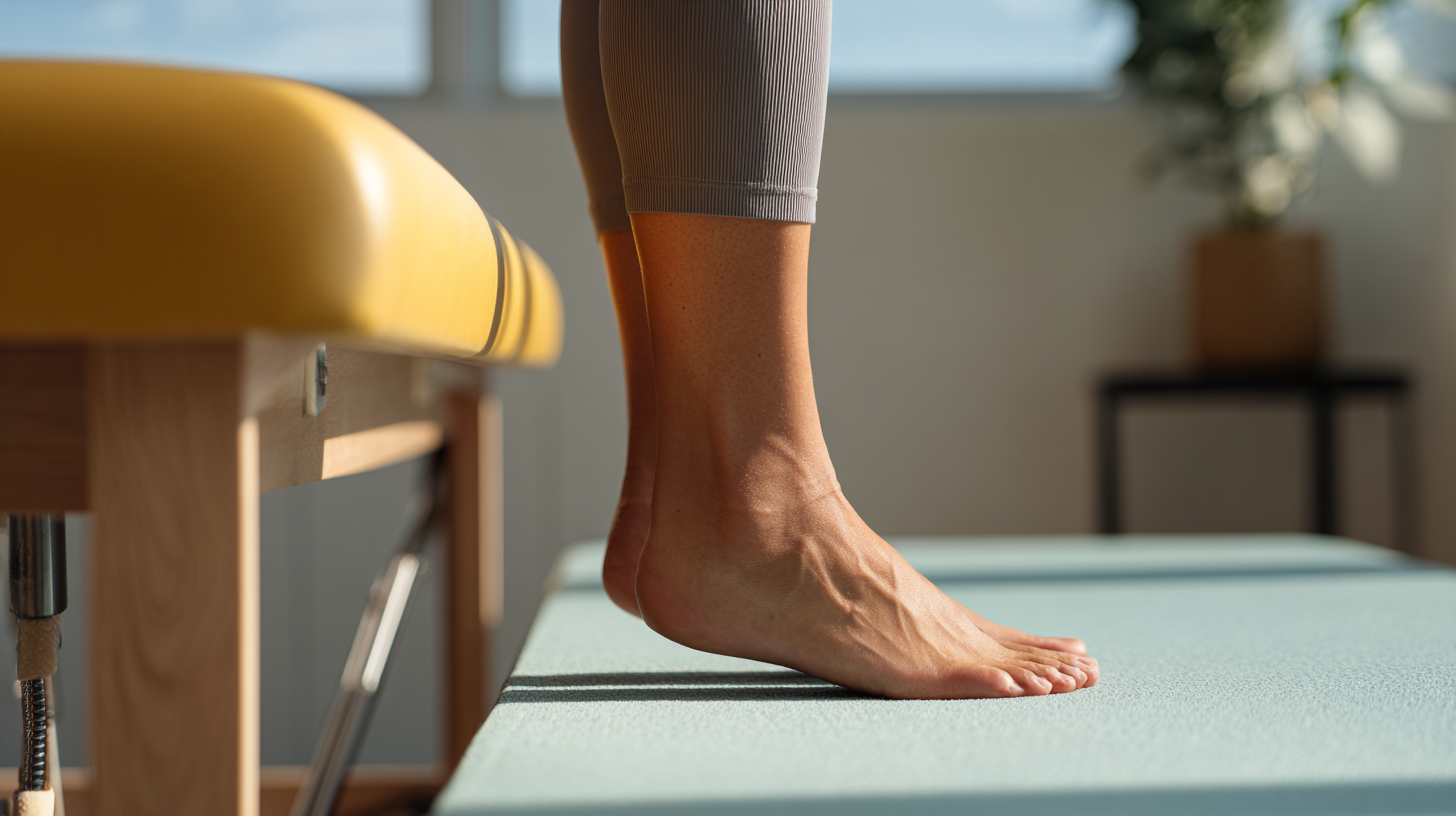
Participating in an exercise program carries a certain element of risk for some people. You should consult with your physiotherapist before initiating this program to ensure your safety.
“If you have any issues please do not hesitate to contact the physiotherapy department. If you feel light headed, dizzy or have issues with your breathing please contact your general practitioner (GP) immediately.”
How long will it take to get better?
Unfortunately, there is not definite answer to this question. There are no quick fixes and it requires active participation from the patient throughout the process. Due to the biology of tendons they tend to take longer to improve.
We would, however, expect to see improvements within 16 weeks especially if the patient continues to maintain their specific exercise program.
Level One
1. Seated Heel raises
In a seated position with a ball between your heels Squeeze the ball and push up onto your tip toes.
Hold 10 seconds repeating 10 times, completing 3 sets.
2. Isometric foot Inversion
In a comfortable position, situate your affected foot beside a stable object and push against that object by turning your foot inwards.
Hold 10 seconds repeating 10 times, completing 3 sets.
3. Single Leg Stand
Balance on your affected foot with your leg straight and also slightly bent.
Continue in either position for one minute, completing 3 sets
4. Seated Isometric Arch Hold
In a seated position attempt to create an arch under your foot pulling your toes towards you.
Hold 10 seconds repeating 10 times, completing 3 sets.
Level Two
1. Standing Heel Raises
In a standing position with a ball between your heels Squeeze the ball and push up onto your tip toes.
Hold 10 seconds repeating 10 times, completing 3 sets
2. Inversion With Band
With a band fixed to a solid object and the instep of your foot, apply tension to the band and slowly turn your foot inwards. Keep this movement controlled.
Repeat 15 times completing 3 sets.
3. Single Leg Stand
Balance on your affected foot with your leg straight and also slightly bent, then turn your head left and right.
Continue in either position for one minute, completing 3 sets.
4. Standing Isometric Arch Hold
In a standing position on the affected leg, attempt to create an arch under your foot pulling your toes towards you.
Hold 10 seconds repeating 10 times, completing 3 sets.
Level Three
1. Single Leg Heel Raises
Balance on the affected leg, you can use something to support you. Push up on your tip toes keeping the movement controlled throughout.
Hold for 5-10 seconds, repeating 15-25 times, completing 3 sets.
2. Inversion With Sideward Movement
With a band fixed to a solid object and the instep of your foot, apply tension to the band and slowly turn your foot inwards, whilst bringing your straight leg across your body. Keep this movement controlled.
Repeat 15 times completing 3 sets.
3. Single Leg Stand On Unstable Surface
Balance on your affected foot with your leg straight and slightly bent, then turn your head left and right.
Continue in either position for one minute, completing 3 sets.
4. High arch with movement
Stand close to a wall for support. Increase the arch height in your foot and maintain this throughout a walking or running motion.
Repeat 15 – 25 times completing 3 sets.
