
Trigger Finger
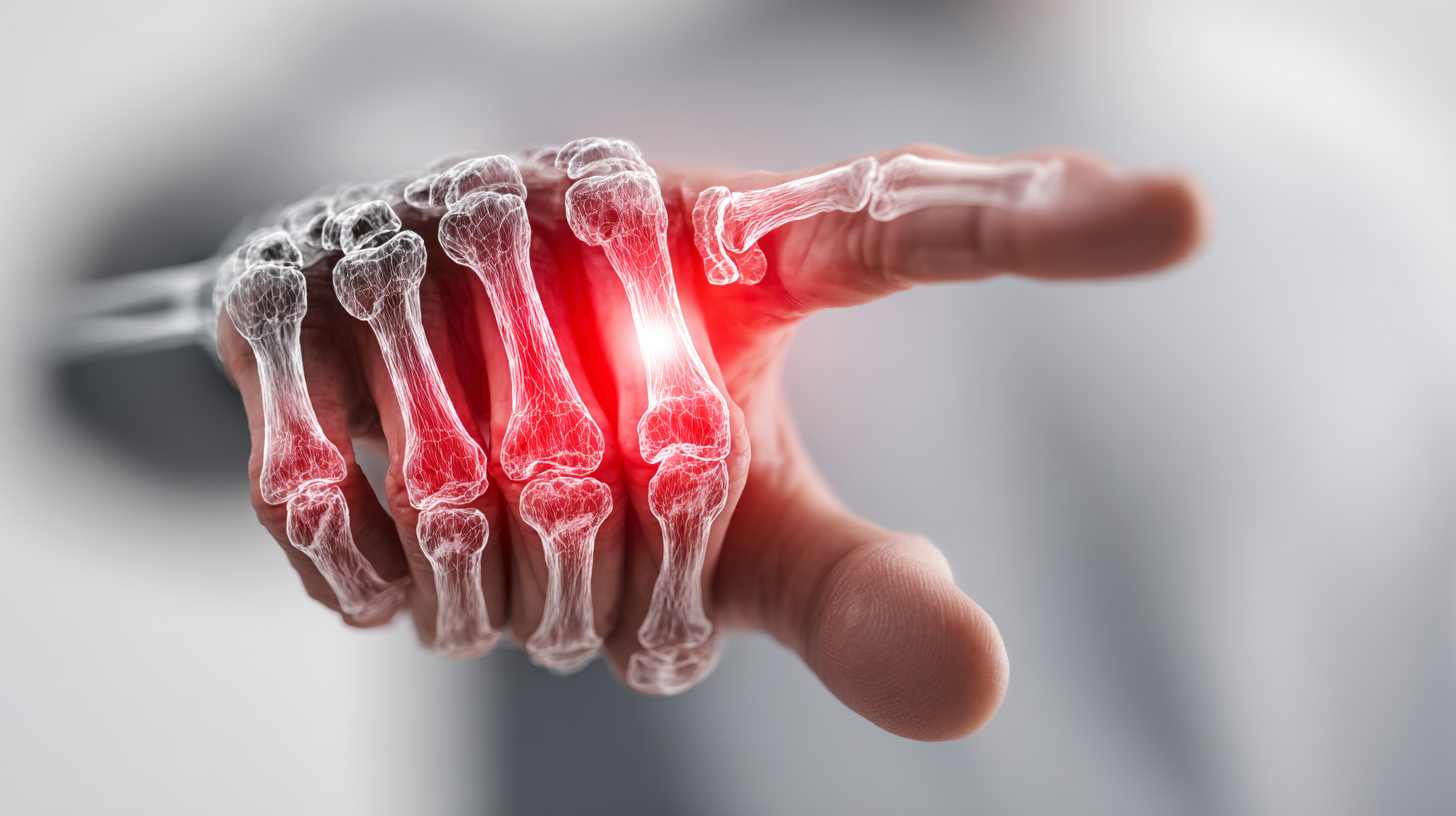
Triggering of the finger is a common, painful condition that results in the finger or thumb to click or lock as it bends towards the palm.
Cause
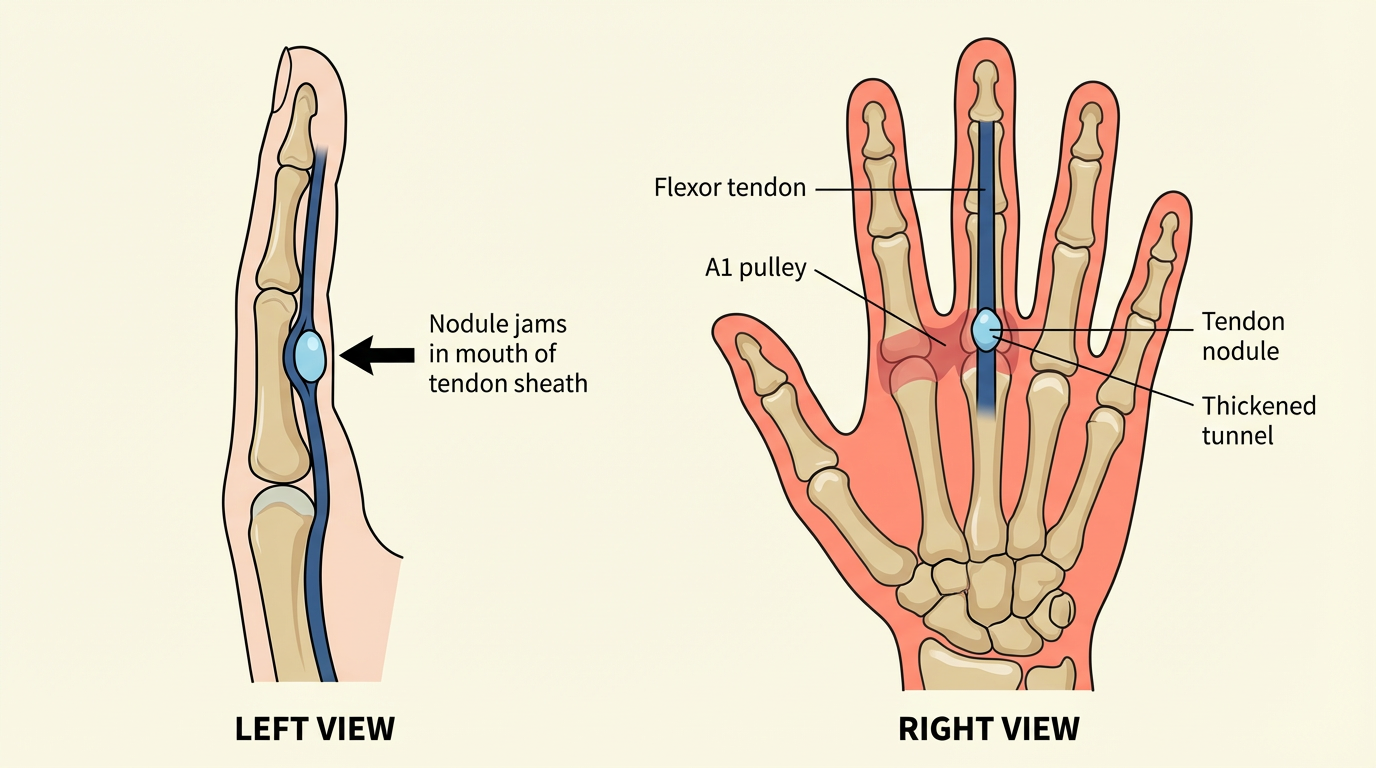
In many cases the cause is unknown. The tendons run down through a series of tight fibrous tunnels from the palm to the fingertips. Thickening at the entrance to this tunnel creates a roughness on the tendon surface. Inflammation develops causing the tendon to have trouble gliding; resulting in a catching sensation or ‘triggering’ when the finger is straightened out.
There is an association with other conditions such as diabetes, arthritis and thyroid disease. In some cases, it may be attributed to overuse or a knock on the hand but this is not a proven cause. It is not caused by osteoarthritis.
Symptoms
Pain at the site of triggering in the palm (fingers) or on the palm surface of the thumb at the middle joint, usually in a person over the age of 40.
Tenderness if you press on the site of pain.
Clicking of the digit during movement, or locking in a bent position, often worse on waking in the morning. The digit may need to be straightened with pressure from the opposite hand.
Stiffness, especially in trigger thumb where movement at the end joint is reduced.
Diagnosis
Often the diagnosis is made by clinical examination alone. There is often no need for any investigations.
Treatment
It is a generally harmless condition, and does not need to be treated if the symptoms are not bothersome. In many patients the triggering digit resolves on its own without any intervention but can be slow, up to 18 months, and not all trigger fingers do resolve spontaneously.
Conservative management
Non-operative treatment is the mainstay as symptoms often resolve without the need for an operation.
Splints
Using a small splint to hold the finger or thumb straight at night. A splint can be fitted by a hand therapist, but even a lollipop stick held on with tape can be used as a temporary splint. Holding the finger straight at night keeps the roughened segment of tendon in the tunnel and makes it smoother. There are short (day) and long (night) splints available online.
Activity modification
Adapting the way you perform certain activities or avoid any precipitating cause may help with symptoms.
Hand physiotherapy
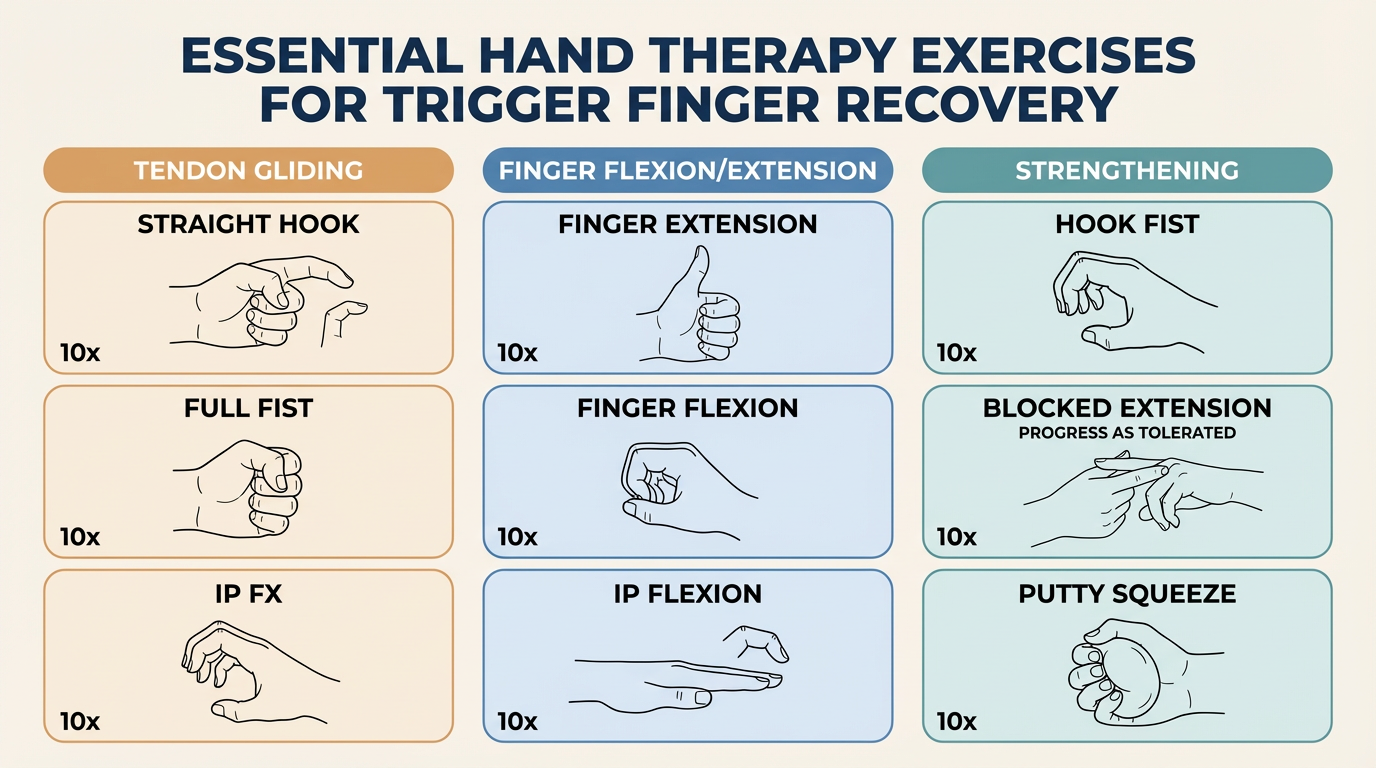
An exercise programme can help to improve tendon gliding and reduce inflammation. Gentle massage over the affected area may also help.
Steroid injections
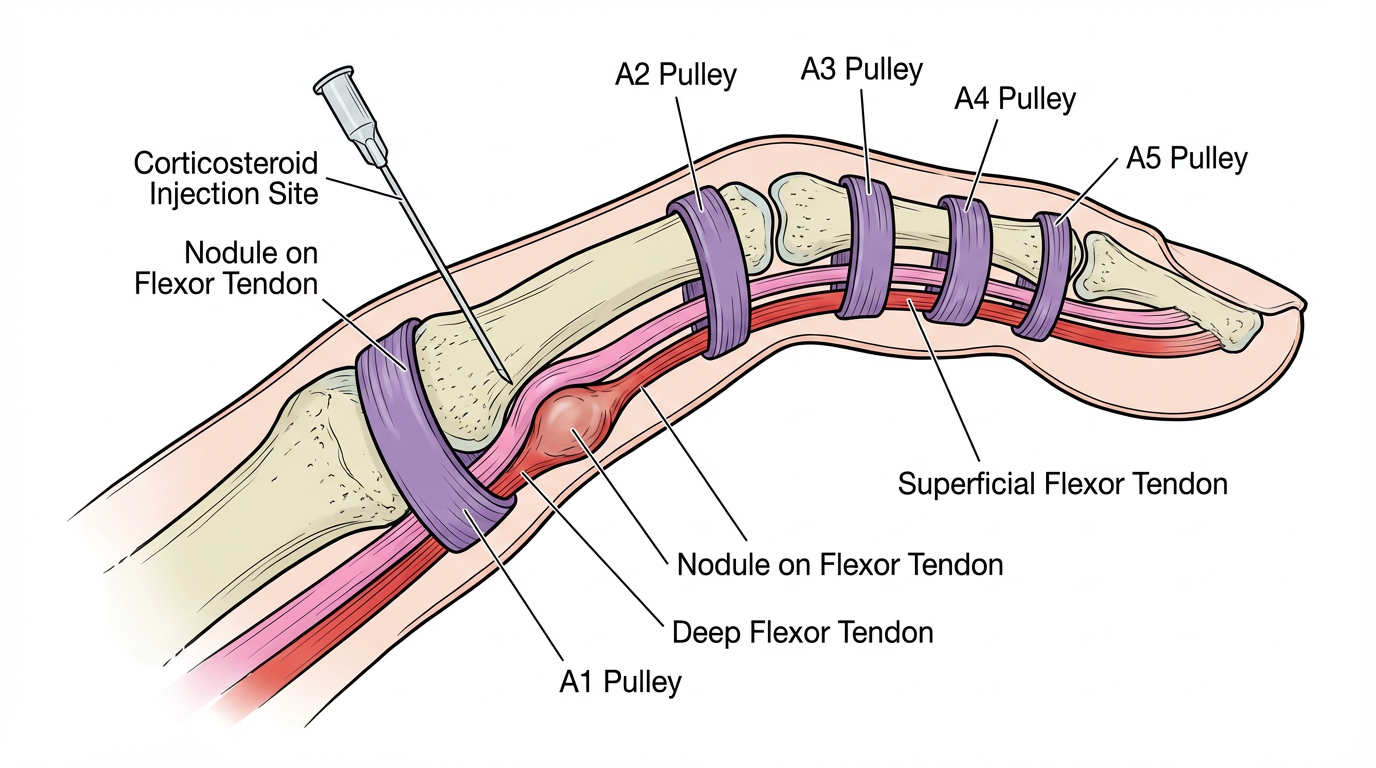
These can offer pain relief and resolve the triggering in about 70% of cases. The success rate in lower in patients with diabetes. There are small risks associated with steroid injection: Infection, tendon damage, thinning or colour change of the skin at the site of the injection and chronic pain all occur in 1 in every 2000 patients, but overall this is a very safe method of treatment. Improvement may occur within a few days of injection, but may take several weeks. A second injection is sometimes helpful, but surgery may be needed if triggering persists.
Surgery
This is used as a last resort. This involves opening the tunnel (pulley) that the tendons normally glide through and releasing or decompressing them. This creates more room for the tendons to glide. Surgery, unfortunately does not occur without risk, and potential complications include infection, nerve injury and scar tenderness. Recurrence is not commonly seen.
Percutaneous trigger finger release with a needle. Some surgeons prefer to release the tight mouth of the tunnel using a needle inserted under a local anaesthetic injection, but others feel that open surgery is more effective. The needle method is not suitable for all cases and all digits.
Surgical decompression of the tendon tunnel. The anaesthetic may be local (injected under the skin at the site of operation) regional (injected in the armpit to numb the entire arm) or a general anaesthetic. Through a small incision, and protecting nerves that lie near the tunnel, the surgeon widens the mouth of the tendon tunnel by slitting its roof. The wound will require a small dressing for 10-14 days, but light use of the hand is possible from the day of surgery and active use of the digit will aid the recovery of movement. Pain relief is usually rapid. Although the scar may be red and tender for several weeks, it is seldom troublesome in the longer term.